

Dr. Amir Sharifi | Exclusive to iKurd.net
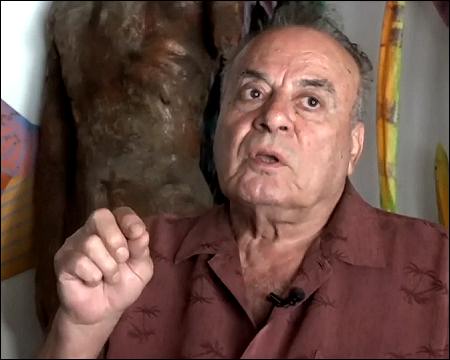
Sardar Zuhdi, a Kurdish artist in diaspora passed away on Feb 2, 2022 in Southern California, of heart attack. Known dearly to Kurds as Kak Sardar, he was born in Sulaymaniyah where he spent his formative years into becoming an avid art lover and maker.
He received his formal education in fine arts in Baghdad. His art brought him to the US in 1964; two years had not lapsed that he was granted a grant to study art in France at the Academy of Art. This experience transformed him into a flourishing artist both professionally and personally.
He worked as a design artist at NBC and practiced his distinctive and imaginative art production and displayed his artwork both paintings and sculpture at local and famous galleries ranging from Sulaymaniyah, Baghdad, to Paris, Venice, Denver, and Los Angeles for six decades.
His intellectual and artistic interests were broad as his art and career trajectories were varied and yet focused on artistic creation. Sardar’s artwork and savvy was sharpened and honed in the evolution of his thought provoking and politically probing art work , beginning with his earlier works ranging from his work produced during his student years and later on as an emerging artist during his youthful and to older years as reflected in his art work series of the Forces (1970’s) and Kurdish Torture Chambers (1980’s) both sculpture and painting produced in various media and style ranging from abstractions to his experimental series, shown in many exhibitions from his hometown, Europe to the US.
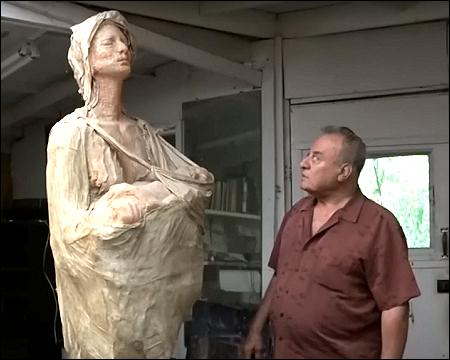
As an inquisitive artist, Sardar was never content with one medium of expression as he triangulated his ideas in three major novels he published.” Between Iraq and Hard Places” “Forces”, and “Inspiration Out of the Blue “These books reflect and reflect on the need for deeper personal and universal connections, a world without tyrants and destructive regional and global forces bent on destroying life unless humankind or the third force intervenes and brings peace. As he has put it himself about his last book “ A lot of it has been inspired by or gathered from dreams, visions, feelings, and things I have witnessed. Being an artist and a Kurd have perhaps given me different events or beliefs in my life, … I have found that there is only one thing we share, we are all the same.”
Beyond his enduring 28 year professional life and contribution to the Hollywood film and TV industries during its heydays, Sardar played a necessary part in promoting humanism and peace through the development of his art in documenting history and human rights through his sculpture and paintings, speaking to his audience and their collective empathy and universal understanding in art exhibitions among others the 1993 the United Nations 50th anniversary -Recommitment and Remembrance and -Anne Frank Exhibit- in New Port Harbor, Museum Annex, LA Municipal Art gallery, and Amnesty International (1991 At LA, CA Regional Conference.
Sardar was indeed the intellectual and political backbone of the Kurdish communities in Los Angeles; his home was the beating heart of a community that he inspired to put its torn life back together. His home, which he called “second home as I had left my one and only home, Kurdistan” was filled with his artwork, sculptures, writings that he would enthusiastically show the Kurdish and non-Kurdish guests and admirers. He loved Kurdistan, its culture, its landscapes, and people.
Kurdish movements had a revolutionary and transformative effect on his life and artwork. He would encourage disseminating information about Kurdish history, struggle , beauty, the role of women in the struggle for democracy, equity and diversity; the central tenets of Kurdishness was also ubiquitous in his critical, candid , ebullient , and outgoing dispositions and stories, the intensity and sensibility of which one could see in his art work and publications in which he made creative connections between his personal lived experiences, traumas that his nation had suffered during different stages.
Clothed stylishly and yet casually in his familiar vest, he would bustle around in Kurdish venues, hanging his backdrop at a musical venue or Irvine Global Village festival. He always enthusiastically invited and welcomed everyone to his home for exquisite Kurdish meals that guests admired and devoured. Throughout 1980-2000s, Kurdish community programs were enriched through his artistic resources and distinctive creativity. He often artistically recreated familiar scenes nostalgic for diasporic Kurds.
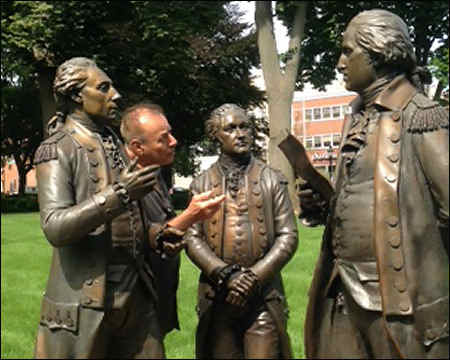
For those who knew him, Sardar was sincere, humble generous and affectionate. He was always ready with open arms to embrace new ideas, particularly the young people as he annually volunteered to serve for as art critic and referee.
For years he volunteered at an Armenian youth art competition. As he put it, “It’s my annual duty and the most important venue. I enjoy it. This is the least I can do.” He followed the world news and informed others by religiously reading Los Angeles Times, looking for news and analysis particularly about Kurds and Kurdistan.
He often truncated his speech with Kurdish and English when he spoke to me; with others he would use a mixed register of formal and informal English, describing things vividly but more than anything he always conveyed his creativity and never-ending energy, which the flow of good wine and Kurdish music augmented.
Ten days prior to his sudden death, I spoke to him on the phone. He was awaiting a reunion of friends . As usual he shared ideas and was eager to lend an ear. I can still hear his voice resonating with artistic energy of a paragon who lived life fully as he served truth and justice and challenged us all beyond any boundaries.
Dr Amir Sharifi, Co-Director of the Kurdish Human Rights Advocacy Group ( KHRAG), Los Angeles.
The opinions are those of the writer and do not necessarily represent the views of iKurd.net or its editors.
Copyright © 2022 iKurd.net. All rights reserved
Related posts:
 Mythology in the Art of Zuhdi Sardar’s Kurdish Balakian Women: From Baghdad to North Hollywood
 Iraq: Revenge and Corruption
 The Resurrection (Ba’ath) Party – Before the Iran-Iraq War
 The 19th Anniversary of the U.S. Invasion of Iraq, 20 March 2022
 Interview with the Kurdish Artist Mahabad Ibrahim Doski
 The Truth About The Saddam Hussein Affair
 Business with ISIS – Updated
 A Dialogue with Kurdish Artist Shams Sherwani
 The Double Cross of Iraq And The Discordant Death of WMD Inspector, Dr David Kelly – The 17th Anniversary
 Of Art, Money, and Kurdish Folklore – Tahir Kurd, the Artist Revisited