



Investigation Finds Fuel Switch Misstep May Have Led to Fatal Air India Crash
NEW DELHI,— A preliminary investigation into last month’s Air India crash that killed 260 people suggests that the aircraft’s engines lost power shortly after takeoff when both fuel control switches were mistakenly moved to the cutoff position, according to a report released by India’s Aircraft Accident Investigation Bureau (AAIB).
The Boeing 787 Dreamliner, flying from Ahmedabad to London, crashed minutes after liftoff on June 12, marking one of the deadliest aviation disasters globally in more than a decade.
The AAIB report, published early Saturday, pointed to cockpit confusion and the critical misplacement of engine fuel switches as key contributing factors.
Surveillance footage from Ahmedabad airport showed the deployment of the aircraft’s ram air turbine—an emergency backup power system—which activates when the engines fail. This system’s activation indicated both engines had lost thrust soon after departure.
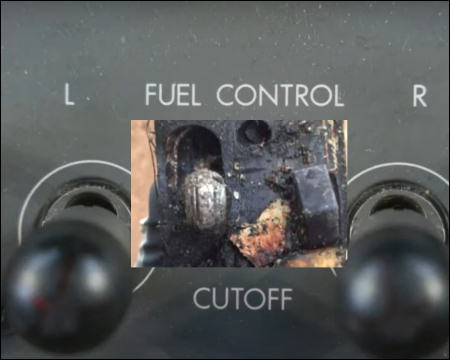
According to the cockpit voice recordings cited in the report, one of the pilots questioned the other about shutting off the fuel supply. The other pilot denied doing so. The transcript did not clarify which pilot made which statement.
Captain Sumeet Sabharwal, 56, an experienced flight instructor with over 15,000 flight hours, was commanding the flight. His co-pilot, First Officer Clive Kunder, 32, had more than 3,400 hours of flying experience.
The report states that the switches controlling fuel flow to the engines were flipped to the “cutoff” mode nearly at the same time. Investigators noted this switch-off typically occurs only when parking at a gate or during emergencies like an engine fire—not during climb-out after takeoff.
“There was no indication of an engine fire or similar emergency at that time,” the AAIB report noted. The aircraft attempted to regain power, with signs that both engines tried to relight before the crash, but the plane had already lost too much altitude.
Both fuel switches were later found in the “run” position at the crash site, further puzzling investigators as to how they were moved earlier in the flight. U.S. aviation analyst John Nance stated that it would take about one second to manually flip each switch, hinting at a possible human error.
Experts emphasized that such switches are designed to prevent accidental engagement. “They are not meant to be turned off mid-flight,” said U.S. safety consultant Anthony Brickhouse. “If it was done by a pilot, that demands a serious look.”
India’s Civil Aviation Minister Ram Mohan Naidu advised the public to wait for the final investigation report before drawing conclusions.
NBC video report.
Air India, now owned by Tata Group after its 2022 takeover from the Indian government, acknowledged the preliminary findings and said it is cooperating with the authorities.
The U.S. National Transportation Safety Board and the Federal Aviation Administration are assisting in the probe. Boeing and GE, which built the aircraft and its engines, both expressed support for the investigation.
According to the report, the aircraft reached an altitude of 650 feet before descending rapidly and crashing into a structure after hitting trees and an incinerator chimney. Most of the 242 passengers and crew died in the crash, along with 19 people on the ground.
The AAIB has recovered both the flight data and cockpit voice recorders. The final report is expected within a year.
(With files from Reuters)
Copyright © 2025 iKurd.net. All rights reserved
Related posts:
 Air India plane crashes, killing 241 of 242 people on board
 We Are Going! Destination Deep Space!
 Sabotaging Syria
 India’s Challenges in Middle East
 Syria: The Truth Lies Buried beneath an Edifice of Lies
 Delta airlines plane flips over during landing in Toronto, injuring 18
 India Can Have Working Relations With Taliban
 South Korean airliner Jeju Air crashes, killing at least 179
 Saddam Hussein’s Enemies: Paving the Road to the Invasion of Iraq
 Indian ambassador says Delhi-Cairo ties are strategic: interview