


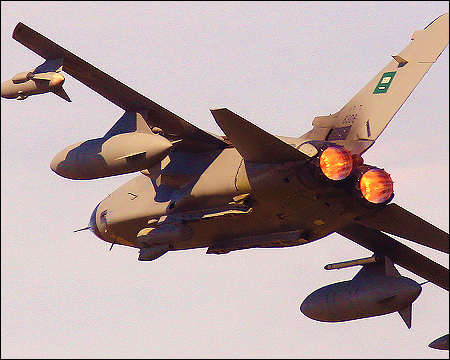
BAGHDAD,—The U.S. and Saudi forces struck Iran-backed Shiite militias in Iraq Wednesday, blaming them for drone attacks on Saudi oil facilities. Iran pushed back, warning that pinning the attacks on Tehran was a “major miscalculation.”
The strikes came the same day Oman proposed a new plan to ease the standoff over the Strait of Hormuz, the waterway that once carried roughly a fifth of the world’s oil and liquefied natural gas before the war.
Iran’s Revolutionary Guards said their naval forces intercepted three oil tankers in the strait Wednesday, halting them after the vessels ignored warnings about using an “unsafe and illegal route.”
The Guards’ navy said it still held full control of the waterway and warned that “unlawful U.S. military interference” or orders given to ships in the area would draw a response.
The U.S.-Saudi strikes in eastern Iraq followed a separate incident in which the U.S. said it intercepted Iranian ballistic missiles aimed at American targets in the region. Iran’s Guards confirmed firing several ballistic missiles at U.S. military sites in Jordan.
The exchange of attacks ended a short lull in fighting that followed President Donald Trump’s decision to halt a two-week bombing campaign, a pause Iran had appeared to match.
Saudi officials said Tuesday that air defenses shot down several drones aimed at oil sites in the kingdom’s Eastern Province.
Defense Ministry spokesperson Turki al-Maliki said the attacks were launched from Iraqi soil by Iran-aligned militias.
Hours later, U.S. Central Command and Saudi defense officials said they struck several sites in eastern Iraq allegedly used by Iran to coordinate the drone assaults.
Saudi Arabia’s Defense Ministry said it was not seeking escalation but would answer any “aggression.”
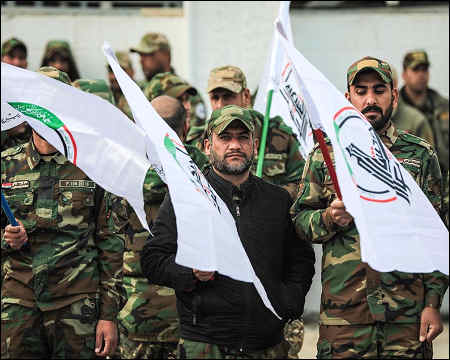
Iraq’s Popular Mobilization Forces said several of its headquarters across the country came under attack Wednesday, blaming U.S. and Saudi forces. The group said early reports pointed to several deaths and injuries, along with damage to a number of its facilities.
Oil prices climbed more than $3 a barrel Wednesday following the strikes, on fears the conflict could widen.
An unnamed Iranian defense official, speaking to state television, rejected any link between Iran and projectiles fired at Saudi targets from other countries.
The official, cited by state broadcaster IRIB, said blaming Iran for attacks on U.S. interests reflected a serious misjudgment.
U.S. Central Command said Tuesday that Iran had launched a series of ballistic missiles in an attempted surprise strike on American forces in the Middle East, adding that all missiles were intercepted.
The Revolutionary Guards said in a statement that resistance would continue “as long as threats” against Iran persisted alongside what it called unlawful and hostile actions by U.S. forces.
Seeking to defuse the standoff, Oman presented Iran with a Gulf-backed plan to jointly manage the strait, including a system of voluntary shipping fees, according to a Gulf source and a Western diplomat who spoke with Reuters Tuesday.
The plan would prevent Iran from holding sole authority over the strait, with fees paid voluntarily, the sources said.
It mirrors an arrangement used in the Strait of Malacca, where Indonesia, Malaysia and Singapore collect voluntary payments from ships to support navigation, environmental safeguards and search-and-rescue efforts.
Gulf Cooperation Council foreign ministers held a video call Tuesday to review the developments, Qatar’s Foreign Ministry said in a statement.
A U.S. official reiterated Tuesday that Washington opposes any tolls or fees on ships passing through the strait, insisting it remains an international waterway free from Iranian restrictions.
The official told Reuters that the plan under discussion would not involve fees of any kind.
Iran largely closed the strait after U.S. and Israeli strikes on its territory February 28, 2026. A subsequent agreement between Washington and Tehran partially restored passage, with more talks planned on broader disputes, including Iran’s nuclear program.
That deal fell apart in early July after Iran fired on ships using a shipping route it does not recognize.
(With files from Reuters)
Copyright © 2026 iKurd.net. All rights reserved.
Related posts:
 Iraqi Kurdistan – “Sold Out!” – Part II
 Iraq – The Cynical Swindle
 Saddam Hussein’s Enemies: Paving the Road to the Invasion of Iraq
 Business with ISIS – Updated
 Iraq: Revenge and Corruption
 The Resurrection (Ba’ath) Party – Before the Iran-Iraq War
 Saddam Hussein was a Friend to the West
 The Suffocation of Iraq Kurdistan
 Iraq Under The ‘Resistance’ Muqawama Militias
 Iraq in the Shadow of Khomeinism – Part I: Baghdad And Erbil Under Threat