

RANYA, Iraqi Kurdistan,— A Kurdish activist has sharply criticized political Islam, arguing that Turks, Arabs, and Persians have historically used Islam as a tool to marginalize and suppress the Kurds.
He notes that when ideological projects are presented under the banner of social services, they often carry the potential to sow division and bring about negative social change.
In Iraq’s Kurdistan Region (Bashur Kurdistan), the influence of political Islam has become a topic of growing controversy and serious concern, particularly regarding its impact on family structures and the region’s religious and social values. How do these Islamist influences interact with Kurdish cultural traditions, do they blend, or do they create conflict?
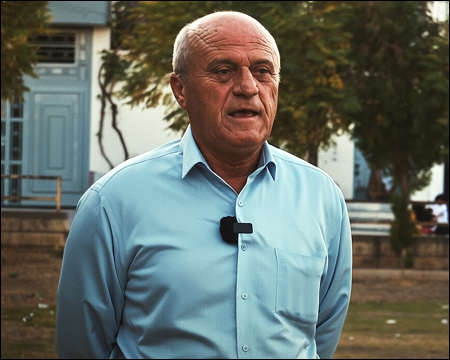
Addressing these questions, Satar Rasul, a political activist from the town of Ranya, spoke to Rojnews media outlet, offering a historical and cultural perspective on the issue.
Rasul begins by emphasizing that understanding the influence of religion requires revisiting the historical background of the region.
He points to the early stages of human civilization in the Zagros Mountains and Anatolia, areas where the Kurdish people originated and where women once held leading social roles.
Over the course of history, he explains, the concepts of power and domination emerged, beginning with ancient empires such as Sumer.
These historical transformations, he says, marked the beginning of ideological divergence, which later evolved into distinct religious and secular worldviews.
Turning to Islam, Rasul describes it as one of the most beautiful and profound religions embraced within Kurdish society. However, he underscores that even within Islam, struggles for power and authority have long existed.
According to him, neighboring nations, including Turks, Arabs, and Persians, have instrumentalized Islam as a means of domination over the Kurds. Tragically, he adds, the Kurds themselves have not managed to employ Islam in ways that serve their own collective interests.
Rasul notes that in the modern era, particularly since the 1980s and into the 21st century, various Islamist movements such as the Muslim Brotherhood, Salafism, and extremist factions have gained ground.
He emphasizes that the Muslim Brotherhood has been among the pioneers of these movements, operating through “guidance” (irshad) and social service projects as tools for spreading their ideology.
He stresses the crucial role of civil society institutions and intellectual organizations in confronting the social and cultural effects of these Islamist movements, which risk deepening societal division and undermining progressive values.
Such organizations, Rasul argues, must take an active role in raising public awareness and fostering the preservation of authentic Kurdish cultural traditions.
This debate unfolds at a time when political Islam across the Middle East, and particularly in Iraqi Kurdistan Region, is exerting harmful influence on Kurdish culture and identity. Meanwhile, even the true essence of Islam itself has come under growing scrutiny.
(With files from Rojnews)
Copyright © 2025 iKurd.net. All rights reserved
Related posts:
 A no-fly zone and safe enclave for the Kurds and other ethnicities in northern Syria
 Ocalan’s Secular Lens on a “Democratic Islam”
 A no-fly zone and safe enclave for the Kurds and other ethnicities in northern Syria
 The Resurrection (Ba’ath) Party – Before the Iran-Iraq War
 The Assassination of Abdurrahman Ghassemlou: No Friends but the Mullahs?
 Behind the Veil of Turkey’s ‘Zero Problem’ Policy – A Kurdish Perspective
 The Mustashar and the Jash – A View from the Position of ‘Iraqi National Unity’ on the ‘Descendants of Treason’
 Iraq – The Cynical Swindle
 Anonymous women’s graves highlight honor killings in Sulaimani, Iraqi Kurdistan
 A Muslim cannot be a Kurd; a Kurd cannot be a Muslim