

Kurdistan Lawmakers Paid Millions Despite Yearlong Parliamentary Deadlock
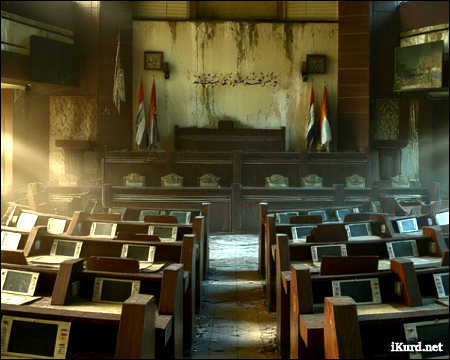
ERBIL, Iraqi Kurdistan region,— More than a year after taking their constitutional oath, members of Iraq’s Kurdistan Parliament have yet to hold a single session, despite collectively receiving billions of dinars in salaries.
According to figures provided by Sarwar Abdulrahman, head of the Pay Organization for Parliamentary Affairs, 97 lawmakers who were sworn in following the Kurdistan parliamentary elections on Oct. 20, 2024, have received salaries for nine months without conducting parliamentary work, Awene reported.
In total, those payments amount to approximately 6.72 billion Iraqi dinars.
Abdulrahman said lawmakers took the legal oath on Dec. 2, 2024, at which point their salaries were activated.
They did not receive pay for December only because no public employees were paid that month. From January through September, however, salaries were paid regularly, and lawmakers are set to receive payment for October as well.
Each parliamentarian receives a base salary of 8.2 million dinars per month. However, because parliamentary committees have not yet been formed, lawmakers do not receive the 500,000-dinar committee allowance.
After deductions of roughly 300,000 dinars for housing and related services, each lawmaker takes home about 7.7 million dinars per month. Over nine months, that totals roughly 69.3 million dinars per lawmaker.
Under the parliament’s internal rules, the first session should have included the election of the speaker, the parliamentary leadership, the formation of committees, the election of the Kurdistan Region’s president, and the designation of the largest bloc to form a government. None of these steps has taken place.
“The time during which parliament remains closed cannot be compensated,” Abdulrahman said. “A parliament that does not legislate, does not approve the budget, and does not exercise oversight raises a fundamental question: What is this parliament for? Are parliamentarians appointed simply to collect salaries?”
Three lawmakers are not receiving salaries: two from the Justice Group and one from the People’s Front. All three refused to take the legal oath after rejecting the election results.
Omar Golpi, a Justice Group lawmaker who declined to take the oath, said his bloc boycotted the swearing-in ceremony last year as a rejection of parliamentary privileges. He argued that lawmakers who did take the oath bear responsibility for the ongoing paralysis.
“They should have made serious efforts over the past year to ensure parliament did not remain closed,” Golpi said. “In our view, this parliamentary term cannot truly represent the people of Kurdistan.”
Golpi added that keeping parliament closed without justification has become a national embarrassment.
“There is no place in the world where a parliament is shut down without cause,” he said, calling on lawmakers to explain their actions to the public while continuing to benefit from material and moral privileges.
The Kurdistan Democratic Party (KDP), which holds the largest bloc in parliament, has blamed the Patriotic Union of Kurdistan (PUK) and opposition parties for the deadlock.
Mird Ali, a KDP lawmaker, said his party is in ongoing negotiations with the PUK and has engaged all political forces in an effort to reopen parliament and form a government.
“We are not the ones who paralyzed parliament,” Ali said. “Any society’s lifeline is its parliament, and its closure for nearly three years has negatively affected social, economic, and political legislation.” He added that the KDP is ready to reopen parliament within 48 hours if the PUK agrees.
The PUK, however, insists that a political agreement must be reached first on the distribution of parliamentary and government posts.
Shler Ghafour, a PUK lawmaker, said the prolonged shutdown has created a legal vacuum, leaving Kurdistan governed by a caretaker administration. She rejected claims that the KDP constitutes a functional majority.
“A majority that cannot complete a legal quorum or form a government is not truly a majority,” Ghafour said, adding that the PUK will not join a government unless it is a genuine and equal partner.
The Islamic Group has also weighed in, saying it has done everything within its power to push for parliament’s reopening and that lawmakers’ salaries are legally mandated.
Mustafa Abdullah, an Islamic Group lawmaker, said his bloc has held three press conferences outside parliament to demand accountability from all responsible parties, including the KDP and the PUK.
“Since the oath was taken, no special privileges such as drivers or security details have been granted to lawmakers,” Abdullah said.
“We have only received nine salaries, about 7.4 million dinars per month, as stipulated by law. It is not our fault that parliament remains closed. To ease our conscience, we visit our parliamentary offices every day.”
As the political standoff continues, public criticism is growing over lawmakers being paid while the Kurdistan Parliament remains effectively inactive.
(With files from Awene Newspaper)
Copyright © 2025 iKurd.net. All rights reserved.
Related posts:
 Iraqi Kurdistan – “Sold Out!” – Part II
 The Suffocation of Iraq Kurdistan
 Iraq – The Cynical Swindle
 The Mustashar and the Jash – A View from the Position of ‘Iraqi National Unity’ on the ‘Descendants of Treason’
 Kurdistan Parliament: Empty Seats, Stolen Salaries
 Iraqi Kurdistan: The Emperors’ New Clothes
 The Misleaders: Corrupt, Filthy Rich, and Proud of it
 Bafel Talabani “mentally ill and in need of treatment” says KDP’s Fazil Mirani
 Iraqi Kurdistan: An Elusive Autonomy – Lost Opportunities For Peace
 Anfal – The Black Stain on Iraqi History Spreads