

The Origin of the Persian Language
Ardishir Rashidi Kalhur | Exclusive to iKurd.net
The recent appointment of a highly accomplished Kurdish journalist as head of the Voice of America’s Kurdish, Persian, and Afghan services has triggered an outsized outcry among segments of the Persian-speaking community.
Much of this reaction reflects not concern for journalistic standards, but rather a deeply ingrained sense of ethnic entitlement—an assumption that the Persian language and identity must always dominate Iran’s political and cultural discourse.
The appointment has been interpreted by some as a symbolic “demotion” of Persian in favor of Kurdish, an interpretation that reveals longstanding misunderstandings about Iran’s history and its multiethnic composition.
This ethnocentric state of mind among the Farsi speaking population, particularly those abroad with their bombastic propaganda, is no different than the chaotic political situation witnessed in Iran. This situation is the direct result of deeply misinformed Persian population unaware of the history of Iran and their own history as a minority within over the population of ninety-two (92) million people living in the country.
This unrealistic self-image—cultivated for centuries and imposed on Iran’s non-Persian populations—is now increasingly visible to the outside world. The result is a growing identity crisis that forces difficult questions: Who are Iranians? Who are the Persians? And what is the origin of the Persian language itself? This article seeks to shed partial light on these questions.
This essay builds on earlier installments of the series “Who Are the Persians?”, previously
published on this site. The following summary highlights several foundational historical points.
1. The Medes, Founders of First Iranian State

The earliest organized government in the region now called Iran was established by the Medes in the 8th century BCE. Long before forming a centralized state, the Medes inhabited the Iranian Plateau and the Zagros Mountains for centuries. Their kingdom was centered in western Iran in the present-day Eastern Kurdistan (aka Rojhalat).
2. KingKay-Khasrow,Cyaxares(Kaysar)
The most powerful Median ruler was Kay-Khasrow, also known as Kaysar—a name from which the titles Caesar, Czar, and Kaiser later derived. Under his rule, the Assyrian
Empire was defeated and absorbed into the Median Kingdom in 609 BCE. Among the subject groups of the Medes was a minor tribe to the east, later known as the
Achaemenids (Ha-Khoy-Manish).
3. Parsian, a Title as a Functional Designation
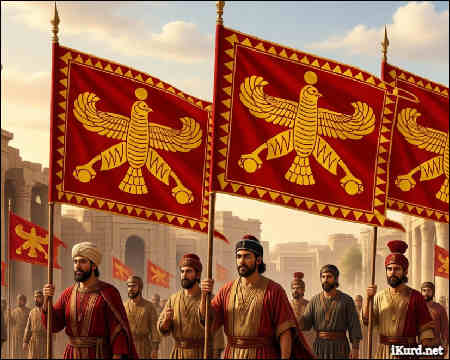
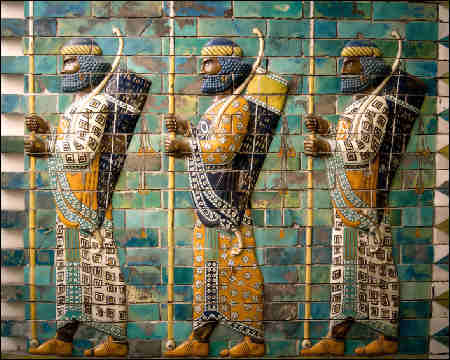
Members of the Achaemenid tribe were employed as frontier guards along the eastern borders of the Median realm, particularly against Scythian incursions. These local guards were called Parsian, the plural of Pars, a Kurdish term meaning “guard” or “protector,” derived from “pars-tin”—to guard or protect.
Thus, Parsian originally denoted a function job title, not an ethnicity or civilization. Over time, this term evolved into Persian. In essence, Persian referred to appointed border guards or regional sentinels, not to a distinct ancient nation.
4. From Ancient Guards to Modern Institutions
The legacy of this designation persisted symbolically. Under the Shah period, remnants of this tradition were romanticized as the “Immortal Guards.” In the Islamic Republic, the term reappears as Sepah-e Pasdaran—literally, the Army of Guardians of Parsian— along with its paramilitary auxiliary, the Basij.
The Origin of the Persian Language: A Variation of Dari
Western awareness of the Persian language owes much to Sir William Jones, the 18th-century Welsh orientalist and pioneering comparative linguist. According to Encyclopedia Britannica, Jones mastered 28 languages before his death in Calcutta in 1794. While this article does not claim linguistic authority, it draws on well-established philological scholarship.
Early comparative linguists classified the world’s languages into broad families, including:
- Afro-Asiatic: (Hamito-Semitic, named after the sons of Prophet Noah): Arabic, Hebrew, and related north Africa languages
- Indo-European: Encompassing Sanskrit and Hindi, Dari in Afghanistan, and through Iran, Kurdistan, Anatolian, Greek, and European languages
- Sino-Tibetan: Chinese and Tibetan
- Altaic: Including Mongolic languages
- African Language Families
- Southeast Asian and Polynesian Languages
- Indigenous Languages of the Americas
(For a comprehensive overview, see UNESCO’s World Atlas of Languages.)
Sir William Jones placed Persian—known internally as Farsi—within the Indo-Iranian branch of the Indo-European family. Notably, most Persian speakers are unfamiliar with the term Persian itself, which does not appear in classical and modern Iranian literature. Historically, the language was known as Dari, not Persian.
Dari as the Linguistic Root
The language spoken by the Achaemenid guards was a sub-dialect of Dari, modern linguistic studies describe Persian as a Dari-variant language (Dari-Vari, i.e. Variation of Dari)—a derivative rather than an original linguistic root.
The Median language, closely related to what is now Kurdish (particularly southern Kalhuri Kurdish), was written in Gutha—or Wutha a term still used in Kurdish meaning “spoken words.” The Gathas of Zoroaster were composed in this language. Zoroaster himself belonged to the Magian priestly caste of the Medes, whose fire temples were concentrated in western Iran’s Kurdish regions.

Under the Sasanian dynasty—a Kurdish-origin ruling house—both, Avestan language (Language of the Priestley Caste), and Dari (language of the militant guards), flourished as the imperial language of Iran. This era witnessed remarkable cultural achievements: music, poetry, colorful attire, NuRoj (Nowruz) celebrations, spiritual philosophy, astronomy, and the founding of the University of Gundi-Shapur (Village of Shapour), Iran’s first major center of learning. Literary works such as love story of Shirin and Farhad based in the Kurdish city of Kermanshah emerged during this period.
For more information of the Kurdish origin of the Avastan language. One can read a book written on the subject by the late Mr. Emadin Dwlatshahi, titled the “The Undiscovered Mountains of Western Iran”. In his book, Mr. Dwlatshahi establishes direct relations between Avesta texts and the modern Kurdish language. Furthermore, he located and identified the ruins of the ancient Magian fire temples in the mountains of Rojhalat (Easten Kurdistan).
The Sasanian era is widely regarded as Iran’s most prosperous and culturally vibrant period, ending in 636 CE with the Arab Islamic conquest of Kurdistan and Iran under Caliph Umar ibn al- Khattab.
From Dari to Modern Farsi
After the Islamic conquest, Dari (aka Parsi), gradually became known as Farsi. Arabic vocabulary increasingly replaced indigenous linguistic elements, to the point that modern Farsi is composed of more than 50 percent Arabic and foreign loanwords. This transformation accelerated following Turkic invasions after 900 CE.
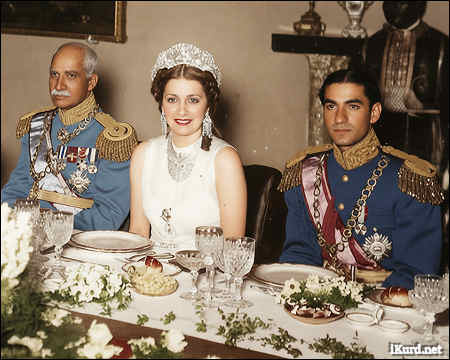
In the 20th century, aggressive Westernization under the Pahlavi regime further altered the language, divorcing it both from its Dari roots and from authentic cultural continuity. Today, many Kurdish populations in Iran—particularly in Kurdistan, Kermanshah, Ilam, and Lorestan— struggle to understand the heavily modified Farsi used in state media and international broadcasts.
Language, Power, and Assimilation
Under both monarchist and Islamic regimes, Farsi has been used as a tool of forced assimilation against non-Persian populations. Education in Farsi under the Islamic Republic has served ideological ends, producing generations mobilized for religious warfare and martyrdom, rather than civilized and a democratic cultural pluralism.
This context explains why the appointment of a Kurdish journalist to oversee Kurdish, Persian, and Dari services has provoked such hostility among Persian nationalists. The hope is that such leadership can help prevent both Persian ethnocentrism and Islamist radicalism—two ideologies that have failed to govern Iran for centuries.
Toward a Different Future for Iran
Since 1979, Persian nationalism and Islamic nationalism have fused into a single, destructive religious-nationalist ideology that has disproportionately harmed Iran’s non-Persian peoples. Real change will not come through military intervention, but through empowering Iran’s national minorities.
A prudent U.S. policy would support a decentralized power structure on one hand and empowering self-determination of national Minorites to form their own government on the other hand. Prominent among them are:
- Kurds in western Iran
- Arabs in the south
- Baloch in the southeast
Such reforms would weaken centralized authoritarianism and create models of development that even Persian-majority regions would eventually emulate.
The recent changes at the Voice of America may seem symbolic, but symbols matter. They can ignite broader transformations—toward democracy and self-determination, and peace. Only through such balance can Iran coexist peacefully within a wider stable Middle East.
Today, the United States has the power to achieve this historic change in Iran and in the Middle East, it will only require political will power to see it happen.
Ardishir Rashidi-Kalhur, the President of Kurdish American Education Society, Los Angeles, U.S.
The opinions are those of the writer and do not necessarily represent the views of iKurd.net or its editors.
Copyright © 2026 iKurd.net. All rights reserved
Related posts:
 Who Are the Persians? – Part IV
 The Sun Also Rises in Western Iran
 Who Are the Persian – Part III
 A Brief History of NuRoj, Kurdish New Year — Newroz
![Mede [Kurdish] soldier, the Apadana Palace in Persepolis, Iran](https://ikurd.net/wp-content/uploads/2017/02/The-Apadana-Palace-in-Persepolis-Iran-photo-wikipedia-150x150.jpg) Who Are the Persian – Part I
Who Are the Persian – Part I
 Who Are the Persian – Part II
 Kurdistan History in Review: Kurds and Kurdistan a Cornerstone of History
 A Root Cause Review of the Israeli-Hamas Conflict
 Who Are the Persians, Part V
 The 12-Day War: A Tactical Failure, Yet a Strategic Win for Israel