


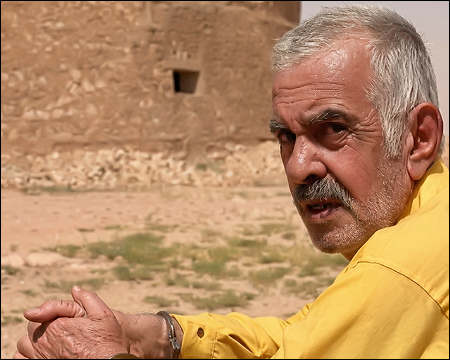
Shakhawan Shorash | Exclusive to iKurd.net
After news of Ajaj Ahmad Hardan al-Tikriti’s arrest emerged on 1 August 2025, much of the public in Kurdistan remained largely unaware of what followed. About a month ago, reports announced that the first hearing of his trial would take place at the High Criminal Court in Baghdad on 7 May 2026.
Now, on 14 May 2026, during the second session, the court has delivered its verdict and sentence. During the first hearing, complainants and survivors testified about the crimes committed by the accused. At the second hearing, the sentence was issued. The entire process moved with striking speed.
Notes and Observations: The Kurdistan Regional Government, as the representative of a nation that suffered mass victimization, should have appeared before the court with a unified team of legal experts and specialists. Instead, this did not happen. Two different parties participated with separate memoranda—revealing the same divisions that continue to surface elsewhere. Only afterward did they claim to be acting as one team.
The Patriotic Union of Kurdistan is now attempting to portray itself as having played a heroic role in the process, while the Ministry of Martyrs and Anfal Affairs in Erbil has, to a considerable extent, remained inactive.
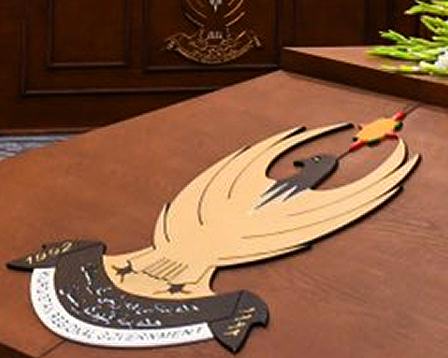
The Ministry should have taken responsibility for the case, supervised the entire process, played a meaningful role at every stage, issued regular statements, and kept the people of Kurdistan informed throughout the proceedings.
Yet not only did it fail to do this, but even today, after the court’s ruling has been issued, there has been almost no visible activity from the Ministry. Nothing regarding the decision has even been published on its official platform.
So far, no formal court report has been released, and the details remain unknown. Much of what is circulating consists largely of emotionally charged accounts and fragmented reports. However, according to reports and circulating accounts, some individuals may have been coached on what to say and how to describe the crimes of the accused. If this is true, it would represent a serious mistake.
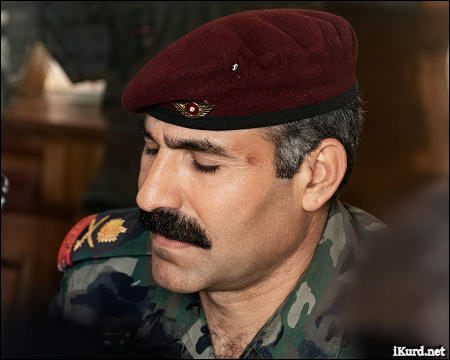
The Anfal genocide case requires neither exaggeration nor fabrication. The facts themselves are sufficient to expose the true nature of these crimes. False narratives and embellishments weaken both the legal case and the historical record.
Truth strengthens the case and ensures that the crimes are preserved accurately as historical evidence. For example, one person claims Ajaj committed a particular act, while another disputes that account and offers a different version. Such contradictions suggest confusion and a lack of expertise.
Ajaj was a security officer and oversaw one of the most notorious prison facilities. Yet his trial proceeded rapidly and with limited transparency. One participant reportedly described the proceedings as follows:
“The court sessions were conducted in a highly isolated manner. There was no visible support from Baghdad’s ministers or parliamentarians. Across both hearings, only one attendee was not affiliated with the ruling authorities. The interpreter was poor, and the Kurdish-to-Arabic translation was inadequate.”

In a free society, such a judicial process would have explored every detail and every crime—from the first day Anfal detainees were brought in to the day the last Anfal prisoner was released. The trial would likely have required many hearings and extensive investigations.
Others would also have been brought before the court, because Ajaj did not act alone, nor could he have personally carried out every crime committed within Nugra Salman prison. He commanded security institutions, military forces, and police structures. Many abuses were committed by officers and members of the security apparatus under his authority. Who were these individuals? Where are they today? Why have they not been arrested and brought to justice?
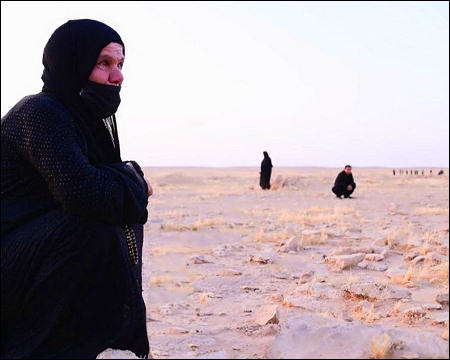
The Kurdish people remain politically weak and without sufficient protection. Otherwise, Anfal perpetrators should have been prosecuted one by one before an independent special court in Kurdistan, conducted in the Kurdish language and according to international legal standards.
In Ajaj’s case, efforts should have focused on bringing this notorious figure to Kurdistan and conducting an open, extensive, and rigorous judicial process there.
Survivors of Anfal and Halabja should not have had to travel to Baghdad and testify before Arab judges in a predominantly Iraqi-Arab environment—uncertain whether they would truly be heard, accepted, or even properly understood through flawed translation and rushed proceedings. Such circumstances can have a deeply negative psychological effect on Kurdish survivors.
Beyond that, Kurds, as a victim nation, possess a legal right to influence both the judicial process itself and the way it is conducted. Unfortunately, the authorities in the Kurdistan Region have not enabled Kurdistan to reach a position where its voice carries sufficient weight and commands attention.

Many people are celebrating and saying that Ajaj has received a death sentence. Yet capital punishment may ultimately undermine the broader Anfal case and related crimes.
First, Ajaj likely possesses extensive information, and with his execution much of that information could disappear forever.
Second, life imprisonment can be a harsher punishment than execution. Such a criminal should remain in prison, living every day with the burden of his actions and facing the consequences continuously—not be swiftly executed and, in effect, released from further accountability.
Third, life imprisonment is more consistent with contemporary international human rights norms, as the death penalty has increasingly lost support across much of the international community.
Of course, the case is not yet concluded, and its final outcome remains uncertain. In Iraq and the Kurdistan Region, unusual interventions in prison matters are not uncommon, and there are people who may seek to secure Ajaj’s release.

This concern is not imaginary; history offers examples. At one time, former Iraqi President Jalal Talabani reportedly secured the release of Tariq Ramadhan, who had been accused of participating in the Halabja chemical bombardment. Neither Iraq’s judiciary nor its executive institutions objected.
Today, officials across the Kurdistan Region are congratulating one another and praising the judiciary. Yet many of these same figures have themselves protected individuals accused of crimes greater than Ajaj’s, granted them rank and privilege, and opposed efforts to bring them to justice.
The crimes committed by Jash leaders who arrested and handed people over are no less serious than Ajaj’s own actions. The broader reality remains unchanged: hundreds of perpetrators continue to live freely throughout Kurdistan.
Shakhawan Shorash, BA and Master of political science from Southern University of Denmark and University of Copenhagen. A freelance writer concerning human right, genocide, ethnic conflicts, democratization and similar subjects. Shorash is a long-time contributing senior writer for iKurd.net, See below.
The opinions are those of the writer and do not necessarily represent the views of iKurd.net or its editors.
Copyright © 2026 iKurd.net. All rights reserved.
Related posts:
 The Arrest of Ajaj Hardan Ahmad al-Tikriti: Questions and concerns
 Anfal – The Black Stain on Iraqi History Spreads
 “Ajaj of Nugra Salman” sentenced to death in Iraq for Kurdish atrocities
 The Resurrection (Ba’ath) Party – Before the Iran-Iraq War
 The Mustashar and the Jash – A View from the Position of ‘Iraqi National Unity’ on the ‘Descendants of Treason’
 Iraq – The Cynical Swindle
 Iraq: Revenge and Corruption
 The Hit List: Killing pro-Kurds on the orders of the Turkish State – then and now
 Na’ma Fares al-Mehiawy, Iraqi officer linked to Anfal genocide, dies before any trial
 The Double Cross of Iraq And The Discordant Death of WMD Inspector, Dr David Kelly – The 17th Anniversary