


Zargata Hill: When Nawshirwan Chose Family Over Movement
Samira Ali | Exclusive to iKurd.net
Translated by iKurd.net from Kurdish Awene
Nawshirwan Mustafa awakened the people, and his heirs betrayed their trust
The death of Nawshirwan Mustafa was not just the farewell of a leader. It was the beginning of an intellectual and political assassination of that great hope for which the Kurdish street had risen.
When the late leader, at the final stage of his life, stated with self-confidence and a calm conscience, “What was my duty, I carried out as a moral and national obligation,” he in fact left a high moral standard for history.
He stepped down from the peak of power and privilege to become a shield for the oppressed and to awaken Kurdish individual awareness. But what was done after his death by his political heirs became the greatest betrayal of principles and ethics in the modern history of the region.
The heirs of Gorran turned that great mass movement into a sacrifice for their personal ambitions and into pursuit of a few symbolic positions and financial privileges. They embraced the corrupt authority that they themselves had once considered the cause of the people’s destruction.
They did not preserve the dignity of the opposition; instead, they became partners in looting and oppression.
The history after the death of Nawshirwan Mustafa is a history of political opportunism, maneuvering, and the pursuit of positions and posts.
The difference between the two eras is this: Nawshirwan Mustafa was ready to sacrifice every position he held for the sake of the awareness and dignity of his people, while the current political traders of Gorran have sold the dignity and trust of their supporters merely to remain under the shadow of power.
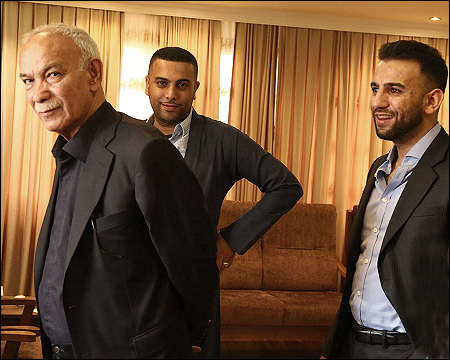
Another important point worth reflecting on is that the greatest setback began when the main property and assets of this movement (Zargata Hill), instead of remaining as a public institution, were transferred by Nawshirwan himself into the names of his sons.
This step fundamentally changed the nature of the movement and completely shook public trust, as it turned a national project into a family inheritance.
From here, a serious historical question arises: why was this great movement unable to achieve lasting influence and carry out deep-rooted reform? Is the reason only the power-seeking behavior of its heirs? Or was it also the personality and leadership style of Nawshirwan Mustafa himself that caused the Movement to become so tightly bound to his personal figure that after him it lost the ability to sustain itself?
When these current office-seeking leaders mention the late leader’s name or repeat his slogans, it is not only mockery and disrespect toward that history, but also a form of concealment of the great shame in which they live.
This article was originally published in the Kurdish language in Awene Newspaper on May 19, 2026.
The opinions are those of the writer and do not necessarily represent the views of iKurd.net or its editors.
Copyright © 2026 iKurd.net. All rights reserved.
Related posts:
 The Resurrection (Ba’ath) Party – Before the Iran-Iraq War
 Iraqi Kurdistan: The Emperors’ New Clothes
 The Truth About The Saddam Hussein Affair
 The Mustashar and the Jash – A View from the Position of ‘Iraqi National Unity’ on the ‘Descendants of Treason’
 Sabotaging Syria
 Business with ISIS – Updated
 Iraq – The Cynical Swindle
 Iraq: Revenge and Corruption
 The Kurds Will Never Succeed Without Great Leaders
 Iraqi Kurdistan: An Elusive Autonomy – Lost Opportunities For Peace