

The Parliamentary Approval of the Dissolution of the PKK
Shakhawan Shorash | Exclusive to iKurd.net
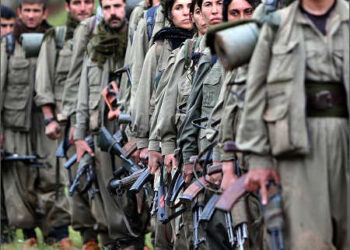
The “Law” on Strengthening National Consensus and Social Unity, approved by a majority vote in the Turkish Parliament on August 10, 2026, addresses several issues related to the release of certain prisoners, procedures for surrender, and the dissolution of the Kurdistan Workers’ Party (PKK).
Despite these measures, the law contains no explicit or implicit reference to the cultural, political, or national rights of the Kurdish people. Notably, the word “Kurd” does not appear in the legislation.
This omission is politically significant because it suggests that the framework established by the Turkish state approaches the issue primarily through the categories of security, disarmament, and social cohesion rather than through recognition of the Kurdish question as a national and political issue.
According to the provisions of the law, the release of prisoners appears to depend largely on the nature and length of their sentences. Individuals serving sentences of five or ten years may be eligible for release, whereas those serving heavier sentences are excluded.
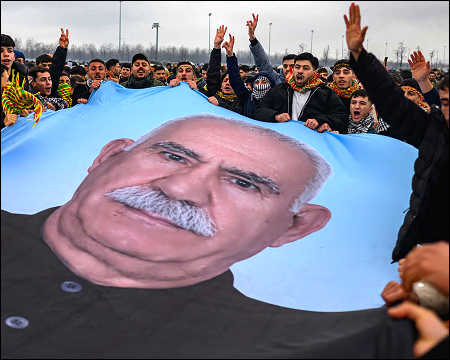
The legislation does not explicitly address the release of Abdullah Öcalan, the imprisoned leader of the PKK. This omission suggests that Turkey may be retaining Öcalan’s status as a political instrument within the broader process.
The committee established to oversee the implementation of the law is composed of senior officials from the Turkish state, including the Vice President, the Minister of Justice, the Minister of Interior, the Minister of National Defense, the Secretary General of the Presidency, the head of the National Intelligence Organization, MIT, and the Secretary General of the National Security Council.

The composition of this body raises questions concerning the political character of the process and the degree to which it can be regarded as a genuine peace initiative.
To illustrate the problem, one might hypothetically imagine a similar committee during the Baathist period in Iraq being composed of senior figures such as Izzat al Douri, Ali Hassan al Majid, Adnan Khairallah, Sultan Hashim, and Nizar al Khazraji and being tasked with implementing a law concerning the disarmament and surrender of a Kurdish political organization in Southern [Iraqi] Kurdistan.
Such a hypothetical comparison demonstrates the extent to which the composition of a body responsible for implementing a political agreement can shape expectations concerning its objectives and outcomes.

From the perspective advanced in this analysis, the senior Turkish officials responsible for implementing the law have historically represented policies that have been deeply hostile to Kurdish political and national rights. Their role in the current process is therefore likely to be primarily administrative and security oriented. They are expected to implement the provisions concerning prisoners and the surrender of PKK members, rather than address the underlying political and national dimensions of the Kurdish question.
The process described by the PKK as a peace process and as an expression of Turkish Kurdish brotherhood can therefore be interpreted differently from the way it is presented by the Turkish state. From the perspective of the present argument, the process ultimately involves the acceptance of the dissolution of the PKK and the termination of its armed struggle under the supervision of Turkish state institutions.

The PKK has nevertheless rejected the current legal framework and has identified the release of Öcalan as a fundamental condition. At the same time, the PKK has not necessarily insisted that the legislation explicitly recognize the concepts of Kurd and Kurdistan or formally enumerate the national rights of the approximately 30 to 40 million Kurds.
From its earliest political formulations, the PKK increasingly emphasized equality between Kurds and Turks rather than pursuing the establishment of Kurdish autonomy or a federal region.
Within this framework, Turkey is envisioned not as a state belonging exclusively to Turks, but as a political community in which Kurds and Turks possess equal rights.
The concept of achieving freedom and equality among the peoples of Turkey has been central to the political discourse associated with Öcalan. He has repeatedly advocated a model based on democratic coexistence, equality between Turks and Kurds, and the transformation of the traditional nation state through the development of a democratic society. Within this political framework, the concept of a democratic socialist society has also acquired particular importance.
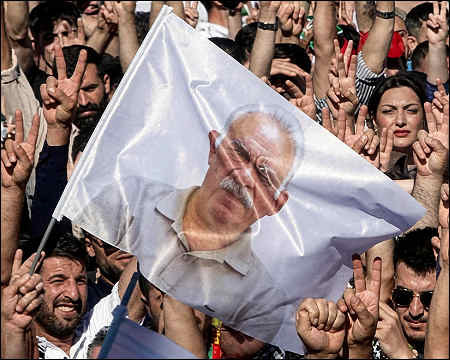
This perspective can be understood partly as a return to the historical relationship between Turks and Kurds during the establishment of the Turkish Republic. Öcalan’s political discourse frequently refers to the promises of Turkish Kurdish cooperation made by Mustafa Kemal before the establishment of the Republic in 1923.
Kurds played an important role in the Turkish national struggle and in the establishment of the Republic. According to this interpretation, however, the political promises made to the Kurds were subsequently abandoned.
Once the Turkish state consolidated its power, its policies toward the Kurds increasingly emphasized centralization, assimilation, and the suppression of Kurdish cultural and political expression, alongside violent campaigns and mass killings.
From this perspective, the fundamental problem is not simply the failure to implement particular political promises, but the development of a state structure based on a narrowly defined Turkish national identity. Öcalan’s argument is therefore that the political framework established during the twentieth century should be reconsidered and that the relationship between Kurds and Turks should be reconstructed on the basis of equality and democratic coexistence.
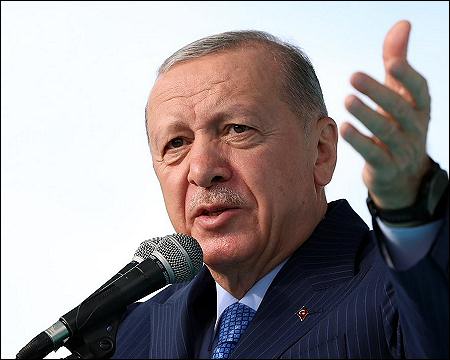
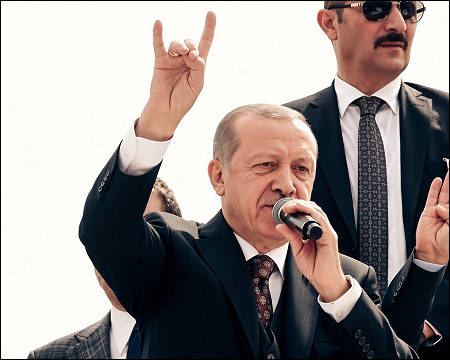
President Recep Tayyip Erdoğan has also repeatedly emphasized the idea that Turks and Kurds constitute a single political and social body and cannot be separated from one another.
He has presented himself as a defender of Kurdish rights in neighboring countries as well.
However, from the viewpoint expressed in this analysis, there is a substantial contradiction between such political rhetoric and Turkey’s regional and domestic practices.
Turkey has maintained military control over parts of Western Kurdistan and parts of Southern Kurdistan. The Turkish state has also conducted military operations against Kurdish groups in the region and has maintained a policy of military pressure in areas inhabited by Kurds.
The treatment of Kirkuk and the continuing disputes over its political and demographic identity are presented here as further examples of the contradiction between the rhetoric of Turkish Kurdish unity and the practices of Turkish nationalism.
The fundamental disagreement between the PKK and the Turkish state therefore concerns the nature of the problem itself. Öcalan and the PKK have increasingly presented their political project in terms of democratic society, equality, and a transformation of the relationship between the different peoples of Turkey.
The Turkish state, by contrast, has framed the process primarily in terms of eliminating the PKK and ending armed conflict. The Turkish government has described the initiative as “Turkey Without Terror,” a formulation that implicitly defines the PKK as a terrorist threat and identifies the elimination of that threat as the principal objective of the process.
These two approaches represent fundamentally different interpretations of the same political development. One emphasizes equality, political participation, and the rights of peoples. The other prioritizes national security and the elimination of an organization considered to constitute a security threat.
Most importantly, the latter framework does not necessarily recognize the existence of a distinct Kurdish national question within Turkey. The Turkish state frames the problem primarily as one of terrorism, whereas Öcalan and the PKK present the process as an opportunity to usher in a new era of equality and freedom in Turkey, reflecting what can be described as an idealistic or utopian vision.
This distinction is particularly important when assessing whether the current process can legitimately be described as a peace process. A conventional peace process generally presupposes the existence of a conflict between two political actors or communities.
It requires mutual recognition of the existence of the conflict, negotiations between the parties, discussion of political demands, and some form of reciprocal accommodation. From the perspective developed here, these conditions have not been adequately established in the current Turkish Kurdish process.

Öcalan’s letters and political statements may be interpreted as advocating a transformation of Turkish society through democratic coexistence, Turkish Kurdish equality, and political unity.
However, they do not necessarily correspond to a conventional negotiation between two formally recognized parties. The Turkish state, from this perspective, has interpreted these proposals primarily as an opportunity to achieve its own national security objectives and to bring the PKK’s armed struggle to an end.
For this reason, the terminology used by the Turkish government is politically important. The initiative was initially described as “Turkey Without Terror” and has subsequently been associated with the concept of “National Consensus and Social Unity.”
The change in terminology does not necessarily indicate a transformation in the underlying political framework. Indeed, the concept of national consensus raises a fundamental question: how can national consensus be established when the national identity and political rights of a people numbering in the tens of millions are not explicitly recognized?
This raises a further question concerning the characterization of the Kurdish issue as a social problem. The Kurdish question cannot, from the perspective of this analysis, be reduced to a matter of social cohesion or citizenship.
The concept of “social unity” is therefore considered inadequate because it shifts attention away from the political and national dimensions of the Kurdish question. In this interpretation, the Turkish state continues to approach the issue primarily through the protection of Turkish national interests rather than through recognition of Kurdish national rights.
At the same time, it is necessary to distinguish between the end of armed struggle and the end of political struggle. In a previous analysis, I argued that the era of armed struggle has passed and that contemporary forms of political struggle should be developed in ways that do not turn territory and human life into instruments of war.
The PKK has similarly indicated that the transformation of its methods does not necessarily mean the disappearance of its political movement. Rather, it suggests a transformation in the methods through which political objectives are pursued.
The future will determine how the PKK conducts its political activities following the end of armed conflict. What appears increasingly clear, however, is that the PKK and Öcalan are prepared to consider ending the armed struggle and laying down their weapons. The release of Öcalan remains particularly important in this regard.
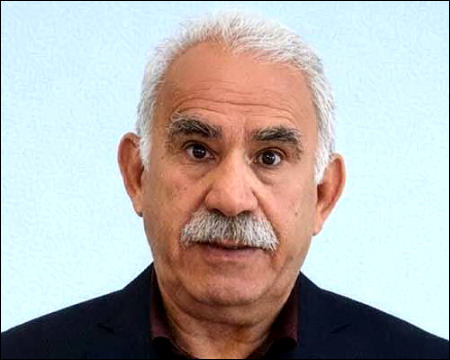
If Öcalan were released, it is conceivable that the PKK would be more willing to accept the legal framework established by Turkey, despite the absence of explicit recognition of Kurdish national rights.
This would nevertheless leave several unresolved questions. Not all prisoners would necessarily be released, and many members of the PKK leadership and rank and file might remain outside the scope of any amnesty or release provisions.
The difference between the original expectations surrounding the process and the measures currently proposed by Turkey is therefore significant. At an earlier stage, some Western officials and observers expressed the expectation that the process might produce some form of cultural or political recognition for the Kurds. The measures currently under consideration, however, do not clearly indicate such a development.
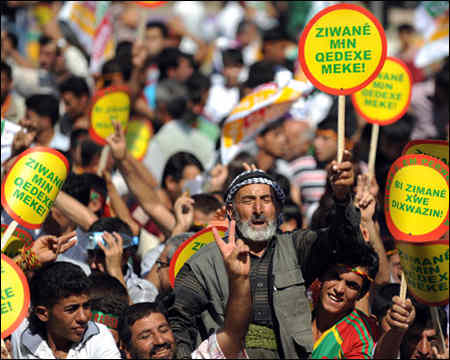
There is no explicit recognition of Kurdish cultural, political, or national rights, nor does the legislation establish a political framework for addressing the underlying national question.
The Kurdish question therefore cannot, from this perspective, be adequately understood as a question of social cohesion or ordinary citizenship rights.
It extends beyond the formal principle of equality among citizens because it concerns the political status, collective identity, historical homeland, and national rights of the Kurdish people.
The discourse of Turkish Kurdish brotherhood cannot, by itself, resolve these underlying questions. The language of brotherhood risks reproducing the traditional Turkish conception of citizenship, in which Kurds may be formally recognized as citizens of Turkey but are, in practice, denied equal political and national status.
Consequently, ending the armed conflict between Turkey and the PKK should not automatically be equated with resolving the Kurdish question. The termination of armed hostilities may constitute an important historical development, but it does not in itself establish political equality, recognize Kurdish collective rights, or resolve the historical disputes concerning identity, territory, political representation, and cultural freedom.
The Kurdish nation has a homeland that has been unjustly occupied, divided, and subjected to political control by several states, including Turkey. The argument further maintains that these states have pursued policies of assimilation, demographic transformation, political suppression, and restrictions on Kurdish national and cultural expression.
Such policies can be understood, in part, as forms of regional colonialism through which the resources and wealth of Kurdistan have been appropriated, and, in part, as manifestations of ethnic nationalism aimed at altering the demographic composition of Kurdish-inhabited areas, suppressing Kurdish national identity and values, and displacing Kurdish populations from their homeland.
In their most extreme forms, these policies have also involved mass violence and massacres against Kurds, which, in some cases, have been characterized as genocidal, ultimately seeking to undermine the existence of the Kurds as a distinct nation.
Shakhawan Shorash, BA and Master of political science from Southern University of Denmark and University of Copenhagen. A freelance writer concerning human right, genocide, ethnic conflicts, democratization and similar subjects. Shorash is a long-time contributing senior writer for iKurd.net, See below.
The opinions are those of the writer and do not necessarily represent the views of iKurd.net or its editors.
A Kurdish version of this article is available in Awene Newspaper.
Copyright © 2026 iKurd.net. All rights reserved.
Related posts:
 Turkey: The Psychological War Against the Kurds Through the PKK – Part I
 Business with ISIS – Updated
 The PKK’s Personality Cult: Changing Influences – Part II
 What makes a good NATO ally? The Case of Turkey
 Debunked PKK Leader Ocalan Will Never Be Set Free
 Distorting the Kurdish Question in Turkey
 Turkey: Nato’s Islamic State Member
 There is no hope in Ocalan’s unilateral peace initiative
 Can Apo Save The Kurds?
 Ocalan calls to ‘dissolve’ PKK and urges its fighters to lay down arms