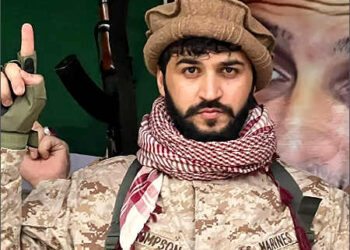


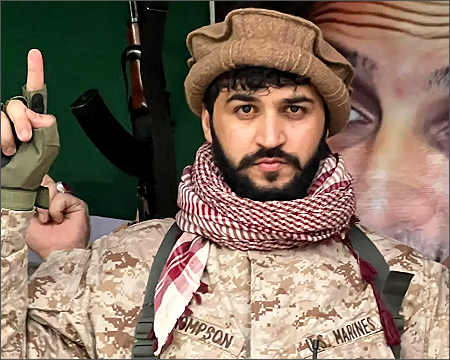
An exclusive interview with Commander Rubin Sattar of the National Resistance Front (NRF) of Afghanistan
Manish Rai | Exclusive to iKurd.net
For the past few months, Taliban forces in Northern Afghanistan, particularly in the provinces of Badakhshan and Panjshir, have been subjected to nearly daily attacks by anti-Taliban factions such as the National Resistance Front (NRF), Afghanistan Freedom Front (AFF), and the recently established Sipah e-Mihan.
The Taliban has recently intensified its deployment in these restive regions and has initiated covert operations to locate resistance commanders. Haseeb Panjshiri, also known as Koye Markaz, the operations commander of NRF, was slain in an ambush by Taliban special forces in the Salang valley as a consequence of these operations.
Commander Rubin Sattar, who previously served as Hajeeb Pajshiri’s deputy, was interviewed by Manish Rai, a geopolitical analyst of the Af-Pak region. Sattar currently serves as the commander of the special operations unit of the National Resistance Front (NRF), Unit 01.
Commander Sattar has launched a series of daring attacks on Taliban forces in the aftermath of the killing of the NRF operations commander. The most notable of these attacks was the one on the Taliban military hospital in the capital, Kabul.
It should be noted that the National Resistance Front (NRF) is the largest anti-Taliban resistance group, and it is believed to have 5,000 fighters, the majority of whom are former Afghan National Army (ANA) soldiers.
Question: Recently, NRF suffered a major setback when its famous operations commander, Hajeeb Panjshiri, was killed in an ambush by the Taliban special forces. Many analysts believe that it won’t be easy for NRF to recover from the loss of its main commander. What is your opinion about it?
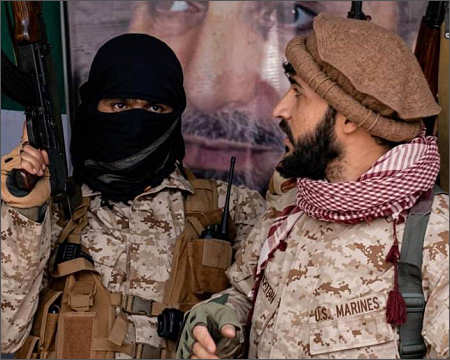
Commander Sattar: The loss of Commander Hasib Panjshiri is undoubtedly a major blow to all freedom fighters; however, it is clear that throughout history, the price of victory has always been sacrifice—a path on which the martyred Commander (Ahmad Shah Massoud) and dozens of other commanders laid down their lives.
The school of thought of the National Resistance, founded by the National Hero, is not shaken by the loss of its commanders; rather, their martyrdom serves as an example for other fighters and freedom-seekers, making them more committed and stronger than ever in their resolve to defeat the enemy and end oppression and tyranny.
Thus, we can say with certainty that we remain committed and stronger than before, and the path of Commander Hasib Panjshiri continues.
Question: Many supporters of the NRF, especially from Panjshir, have known you as Commander Haseeb Panjshiri’s right-hand man. Please tell us what Haseeb Panjshiri meant to you and also how you idolize the late Ahmad Shah Masood.
Sattar: Commander Hasib Panjshiri was a dedicated and honourable Mujahid who stood firm and fought not only against the Taliban over the past five years but also—during the era of the Republic—against the business suit-wearing backers of the terrorist Taliban.
The martyred Hasib began his struggle against oppression and injustice long ago and ultimately sacrificed his life for this cause. Commander Hasib Panjshiri stands as a model of steadfastness and self-sacrifice for us all in the pursuit of victory.
As for the National Hero, the martyred Ahmad Shah Massoud, his character is known to the entire world; he fought against a global superpower to defend his homeland and was later martyred while battling the Taliban and international terrorists. Our struggle is inspired by the ideology of the National Hero Ahmad Shah Massoud, and eventually, we will honourably bring the path he bequeathed to us to fruition.
Question: It is a trend that most of the commanders always had an alias name. Like Commander Haseeb Panjshiri, who was known as Koye Markaz, do you have an alias name?
Sattar: My name is Rubin Sattar, and I do not use a pseudonym.
Question: What are your objectives in the near future?
Sattar: Our goal for the near future is to consolidate fighters to expand guerrilla operations against the Taliban in the central and major provinces of Afghanistan.
Question: In the NRF organization, you have a rank of Marshal; could you please describe your areas of responsibility in NRF and how many forces you command?
Sattar: I am responsible for Unit 01, an operational unit that conducts missions against specific Taliban targets in the capital and the provinces. Unit 01 is organized into urban guerrilla cells tasked with identifying targets and executing operations.
Question: In the last few days, you have carried out some bold attacks, particularly one at the Taliban military hospital in Kabul. Are these attacks just to avenge the killing of Commander Haseeb Panjshiri, or is there a military strategy behind these attacks?
Sattar: Our operations in Kabul aim to challenge the Taliban and strike at their various structures. We plan our operations based on thorough assessments, taking every precaution to prevent civilian casualties.
Although the Taliban attempts to conceal their presence and the reality on the ground, resistance forces maintain an active presence in various locations and continue to carry out their plans. Also, soon the Taliban will witness major military setbacks.
Question: What are your views on major investors in Afghanistan, such as China? Furthermore, there have been some reports in the media recently that some anti-Taliban groups have received support from Pakistan. What is your view on this alleged support from Pakistan?
Sattar: Investment and economic growth are vital for our society, and we strongly support any activity that genuinely contributes to the welfare and well-being of our people.
However, under current circumstances—given the rule of a terrorist group in Afghanistan and the lack of transparency regarding revenue and expenditures—investing or engaging with this group is not in the interest of any nation.
The Taliban is a group founded on oppression and terror that rejects human rights, denies women the right to education and freedom, and has turned the country into a safe haven for terrorists.
Regarding international support for the Resistance Front, it can be stated that the National Resistance Front is a grassroots coalition of fighters drawn from the very fabric of Afghan society, striving for the liberation of their homeland. No foreign nation holds sway over the Front, and its ideals and objectives remain unequivocal.
Furthermore, the leadership of the National Resistance Front has repeatedly issued a clear message to the international community—and neighbouring countries in particular—urging them to support the Afghan people in their struggle against terrorism and their quest to break free from the grip of terrorists.
Undoubtedly, the dominance and presence of this terrorist group in Afghanistan serve the interests of no nation; the group’s extremist ideology—currently taking root and expanding—will inevitably transform this territory once again into a launchpad for the spread of terrorism across the region and to other parts of the world.
Manish Rai, a senior long-time contributing writer for iKurd.net, see below.
Copyright © 2026 iKurd.net. All rights reserved.
Related posts:
 In most parts of Afghanistan, the resistance is present: National Resistance Front
 Northern Afghanistan Poses Some Challenges for Taliban
 We will be carrying big attacks against Taliban: The Afghanistan Freedom Front
 Why Anti-Taliban Resistance Should be Supported
 Pakistan’s Policy blunders have turned the Taliban into an adversary
 National Mobilizations Will Push Back Taliban: General Ata Mohammad Noor
 India Can Have Working Relations With Taliban
 Tough Road Ahead for Taliban
 India Should not Panic about Afghanistan
 Pakistan Should Realise That Taliban is Out of its Orbit