


Salih Zhajlayi | Exclusive to iKurd.net
Translated by iKurd.net from Kurdish Awene.
Was Mam Jalal a Charismatic Leader of the Kurdish People?
From the beginning of the September Revolution, Mam Jalal [Jalal Talabani] emerged as a prominent leader in the Kurdish national struggle, playing a significant role on both the political and military fronts. Mam Jalal had a number of personal qualities that distinguished him from others.
Among them, he was an educated and well-read person. He was fearless, brave, and a fighter. He had the ability to lead military operations, unite and motivate people, and earn their trust. He also had strong diplomatic skills, which made him internationally recognized as a prominent Kurdish leader. He was capable of resolving problems and was an experienced mediator.

He quickly rose to senior positions. When he broke away from Mulla Mustafa in 1964, he was a member of the Political Bureau. It is also said that Mulla Mustafa was very fond of him. When the split took place, Mam Jalal did not join the opposing faction until the final stage of the separation. Eventually, he joined Ibrahim Ahmad’s faction.
When the Patriotic Union of Kurdistan (PUK) resumed its armed struggle in 1976, he was recognized as the PUK’s Secretary-General and the movement’s elder brother.
Now, the question is this: Do the qualities we have mentioned in connection with Mam Jalal, along with hundreds of other qualities that were part of his personality but which we have not mentioned, prove that he deserves to be remembered as a charismatic Kurdish leader? If not, why not? And what qualities and characteristics should a charismatic leader possess?
First, I will discuss the qualities of a charismatic leader.
First: A charismatic leader must have a clear vision and the ability to see the future. He must be able to create a hopeful picture of the future for his followers.
Second: Courage in decision-making. This means being willing to face opposition and make decisions that can shape the future.
Third: He must be far-sighted. He must be determined and firm in demanding the rights of his people and securing those rights in the constitution. He must not be fooled by verbal promises or consider them sufficient.
To determine whether Mam Jalal was truly a charismatic leader, meaning whether he possessed the qualities of charismatic leadership, what I write below about Mam Jalal will provide the answer to the question raised above.
Some time ago, I wrote an article titled “Two Major Strategic Mistakes Made by Mam Jalal and Two Major Strategic Mistakes Made by President Massoud Barzani,” which I discussed in the fifth part of this series of articles. Now, I want to discuss in detail the two major strategic mistakes made by the late Mam Jalal.
After reading this, you can also decide for yourself whether Mam Jalal was a charismatic leader or the opposite.
I also want to make one thing clear: Making two or more mistakes does not diminish the greatness of either leader. Mam Jalal will always be Mam Jalal, and President Barzani will always be President Barzani. Every person and every leader in the world makes mistakes. No one lives without making mistakes or having shortcomings and imperfections. No one is free from mistakes.
What matters here is acknowledging your mistakes and trying not to repeat them.
Mam Jalal’s First Major Strategic Mistake
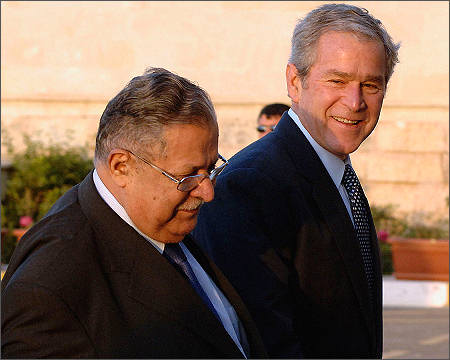
Accepting the Position of President of the Republic of Iraq
Following the fall of Saddam Hussein’s government on July 13, 2003, the Governing Council was established under the leadership of Paul Bremer. Mam Jalal was one of its members.
Mam Jalal became Iraq’s first elected president following the 2005 elections. He was also the first president to serve under the permanent constitution, which was approved in 2006.
By the time Mam Jalal became president, the political situation throughout Iraq was extremely difficult, unstable, and chaotic. There was virtually no Iraqi army left. In contrast, the Peshmerga forces were at the height of their strength. Paul Bremer relied on the Peshmerga to provide security throughout Iraq. The Shia and Sunni communities were constantly experiencing internal conflicts. There were also disputes within the Shia and Sunni communities themselves over positions, ranks, and personal interests.
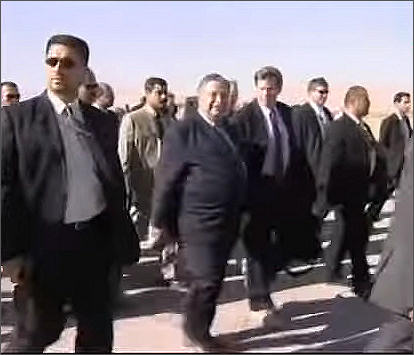
At that time, Mam Jalal was a highly prominent and influential figure. He consistently played a role in bringing people together and maintaining peace among different groups. He was known as the “safety valve.” Paul Bremer also placed great importance on Mam Jalal because he needed him to calm the situation. Mam Jalal, in turn, was capable of playing a positive role and serving as an effective mediator.
If the Kurds had had a well-prepared strategy at that time, with a firm determination to secure their rights, and if Mam Jalal himself had devoted most of his time in Baghdad to securing Kurdish rights, this would have presented a rare historical opportunity to secure Kurdish rights in the new Iraqi constitution.
This was because there was no functioning Iraqi government or established authority at the time, and Paul Bremer urgently needed Kurdish cooperation to consolidate the authority of the coalition forces.
Unfortunately, however, Kurdish leaders were so busy pursuing positions, ranks, and money that they devoted less than half that attention to the rights of the Kurdish people.
Instead of insisting on the return of the occupied and Arabized territories, they were asking for government positions and official titles.
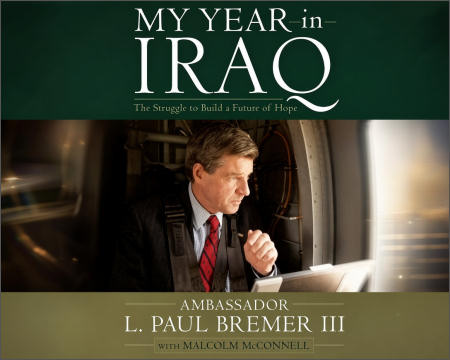
Paul Bremer, the American civil administrator in Baghdad at the time, wrote in his memoirs: “I was very afraid that Massoud and Mam Jalal would ask me for Kirkuk. Fortunately, however, when they came to see me, they asked for money and government positions.”
He said that he was very pleased and satisfied their requests by giving them money.
It is also said that Mam Jalal became angry and frustrated with Paul Bremer because, at first, Bremer was unwilling to accept Mam Jalal as president of Iraq.
Why was it a mistake for Mam Jalal to accept the position of President of Iraq?
Under the constitution, the position of president is largely ceremonial. In other words, the president does not have real decision-making authority. The president’s duties mainly include receiving foreign ambassadors and attending certain meetings and international ceremonies, as well as activities related to the Arab League and Socialist International.
For many years, the Kurds had shed their blood to secure their rights and recover their occupied lands. Yet now, they were accepting the presidency, even though the president is constitutionally required to swear an oath to defend the unity of Iraqi territory.
This directly conflicted with the interests of the Kurdish people.

It is in the interests of the Kurds for Iraq to be divided rather than remain united. Therefore, accepting this position on behalf of the Kurds, especially by Mam Jalal, was like putting a lock on his own mouth and making it impossible for him to demand Kurdish rights, because doing so could conflict with the constitution.
Instead of firmly insisting that all occupied and Arabized territories be returned to the Kurds in accordance with the constitution, Kurdish leaders agreed to the inclusion of the term “disputed territories” in the constitution. In doing so, they themselves cast doubt on whether those Arabized territories actually belonged to the Kurds.
If Mam Jalal had refused to accept the presidency or any other government position, and had not asked Paul Bremer for money, he could have returned to Qal’a Chwalan and remained there. He could have told Paul Bremer:
“We sincerely thank you for overthrowing Saddam Hussein’s government. We also fulfilled our responsibilities and cooperated with you. But now, we must tell you something: We have been shedding our blood for many years over Kirkuk and the other occupied territories. Therefore, the time has come for you to return our rights to us. That is what a position means to me, not the position of President of the Republic.”
At that time, Iraq was engulfed in chaos and internal conflicts. Paul Bremer would have been forced to travel by helicopter to Qal’a Chwalan repeatedly, seeking Kurdish assistance on almost every issue, almost every day.

At that point, even if it had not been possible to return Kirkuk to the territory of Kurdistan or officially determine the borders of Kurdistan, Mam Jalal could at least have negotiated with him to remove the constitutional term “disputed territories,” recognize those areas as Kurdish territories, and establish a new law to determine how they should be dealt with.
Kurdish leaders should have insisted on the implementation of Article 140 of the constitution.
But when Mam Jalal went to Baghdad, he became preoccupied with negotiating positions and money with Paul Bremer. He devoted his time to resolving disputes between Shia and Sunni groups and dealing with one political issue after another. He forgot why he had gone to Baghdad and whom he was supposed to represent.
This is exactly what we are witnessing today.
The Arabs who had been settled on Kurdish lands and had fled following the fall of Saddam Hussein’s government were allowed to return after Mam Jalal became president.
Instead of ensuring that they would never return to the lands they had previously taken from the Kurds, Mam Jalal allowed them to return to please his Arab brothers and preserve Kurdish-Arab brotherhood.
What did Mam Jalal do for the Kurds during his two terms as president, which lasted eight years?

When he visited his own “Jerusalem”, Kirkuk, a city over which so much blood had been shed, he made a statement intended to please the Turkmen and Arabs. He said that government positions in the city should be divided equally among the three communities, with 33 percent going to the Turkmen, 33 percent to the Arabs, and the remaining 33 percent to the Kurds.
With this historic decision, Mam Jalal immediately and without hesitation demonstrated that Kirkuk was not a Kurdish city. He effectively handed over the city’s identity and status to the Arabs and Turkmen. Today, you can see for yourselves that Kirkuk’s governor is a Turkmen.
In addition, he visited the village of Bashir, a Turkmen village that Saddam had burned down, and arranged for it to be rebuilt from the ground up in the name of Kurdish-Turkmen brotherhood.
After all this, look at what is happening in Kirkuk today: An Arab soldier put a rope around the neck of a Kurdish farmer simply because the farmer was defending his own land. Instead of punishing the soldier, the authorities punished the Kurdish farmer and fined him one million dinars.
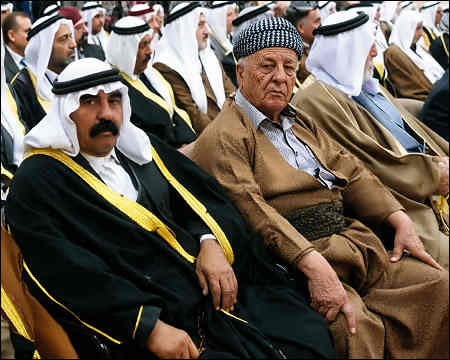
Now, in Khanaqin, the government is arresting people who have protested against the Arabization of the city.
So let me ask: What are the Kurdish president, ministers, officials, and members of parliament doing in Baghdad? If they do not speak out against such crimes committed against the Kurds, what will they speak out about?
Instead of demonstrating his greatness in the eyes of his own people, Mam Jalal tried to make other countries and those around him recognize the Kurdish people through his own ideas, opinions, and personal reputation.
This, in itself, is a sign of making an entire nation appear smaller by placing its identity and standing under the shadow of one individual.
This was also why Mam Jalal could not sacrifice himself for his people. On the contrary, he sacrificed his people and their land for himself.
Therefore, what is happening to the Kurdish people today is the result of the path Mam Jalal paved for them, a path that those who came after him have continued to follow.
Now is the time to ask: Mam Jalal served as President of Iraq for eight years with the support of the Kurdish people. What did he do for the Kurds?
When you answer that question honestly, you will also find the answer to this question:
**Was Mam Jalal a charismatic leader of the Kurdish people, or was he not?**
Salih Zhajlayi, one of the political figures in Sulaimani city, Iraqi Kurdistan, and formerly the Deputy Head of the General Assembly of the Gorran (Change) Movement, is currently working independently in Sulaimani.
This article was originally published in the Kurdish language in Awene Newspaper on October 29, 2026.
The opinions are those of the writer and do not necessarily represent the views of iKurd.net or its editors.
Copyright © 2026 iKurd.net. All rights reserved.
Related posts:
 Iraqi Kurdistan: An Elusive Autonomy – Lost Opportunities For Peace
 Kirkuk – Wars of Deception And Elections
 Why Massoud Barzani failed to become a charismatic Kurdish leader?
 The Resurrection (Ba’ath) Party – Before the Iran-Iraq War
 Iran’s Grip on Kirkuk
 Saddam Hussein was a Friend to the West
 The Mustashar and the Jash – A View from the Position of ‘Iraqi National Unity’ on the ‘Descendants of Treason’
 The Suffocation of Iraq Kurdistan
 Iraq – The Cynical Swindle
 Iraqi Kurdistan – “Sold Out!” – Part II