

No to Family and Sectarian Rule
Othman Haji Marif | Exclusive to iKurd.net
Translated by iKurd.net from Kurdish Awene
The family and sectarian rule of militias, which has become an imposed form of power over Iraq and Kurdistan, is a necessary tool of bourgeois power for managing capital and capitalism.
It is not merely a tool for misleading the masses. It has become a structure for production, investment, and the management of power, wealth, and capital accumulation, practiced every day within state institutions and society.
Family and sectarian rule does not eliminate or resolve class conflict. Rather, it is a distorted form of bourgeois organization in Kurdistan and Iraq, directed against wage labor, serving the interests of capitalists, the bourgeoisie, and their political power.
Families and sectarian forces are the biggest beneficiaries and have become the holders of the greatest privileges, taking control of all the wealth and resources of Kurdistan and turning plunder, looting, and corruption into official practices.

Family and militia rule has created a Pharaoh-like lifestyle for itself and its families. At the same time, it has trapped and restricted people’s lives, holding them like prisoners and hostages within a closed system. On the other hand, they do not accept responsibility in any way for people’s lives and needs.
This form of government in Iraq and Kurdistan is not simply a way of thinking. It is a complete political, economic, and social system for maintaining exploitation. In other words, it is a system that takes control of the key centers of political power, government positions, contracts, and the wealth of land and natural resources, and even education, health, and social services, and divides control over them among themselves.
This is not simply a “family and sectarian culture.” It is a system of interests that reproduces and protects itself through state institutions, media organizations, political parties, religious leaders, and even people’s everyday behavior.
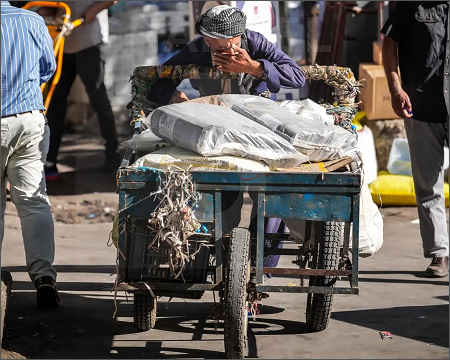
This family and sectarian rule has brought greater benefits to a section of the bourgeoisie in Iraq and Kurdistan. It is used to impose and deepen class inequality and to further impoverish and exploit workers, poor people, and low-income communities, while society is governed in pursuit of the greatest possible accumulation of capital.
In Iraq, there are millions of citizens who are Shia Muslims and who are poor and low-income. There are also millions of Sunni Muslims who are poor and economically disadvantaged under sectarian and militia rule.

At the same time, there are hundreds of thousands of Kurdish citizens who are poor and low-income under the rule of both the Barzani and Talabani families.
Yet every protest by people for their rights and demands is met with a “red line.” All forms of protest are prohibited. You are not supposed to criticize the leaders because they “represent you.” You are not supposed to demand your rights because “your sect and your nation” will be targeted. For this reason, they have organized several militia forces to act against you.
In this sense, family and sectarian rule turns social anger into identity-based fear. In this way, they seek to eliminate class conflict and instead make conflict between groups dominant. On the surface, these groups may appear to be equal, but they are equal only outwardly. The ruling class, in all its family and sectarian forms, benefits from this division and reproduces its own power through this division.
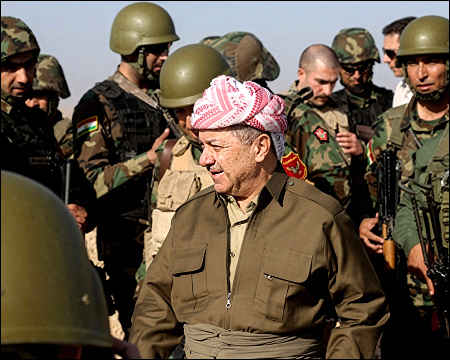
Today, we are facing a more complicated structure. We are not only standing against Arab and Kurdish bourgeois nationalism; family and sectarian rule, along with their militias, are also practiced as forms of nationalism, and their power has been treated as sacred. They present themselves as loyal representatives and symbols of religion and the nation, and as sacred figures whom people are expected to obey.
The reason some people defend this system is not simply ignorance. It is also because they benefit from it and have become attached to it, or because they fear any alternative system that offers them no guarantees. Based on this reality, they have created a large army of supporters and beneficiaries.
Just as commodities and markets hide the relations of production, family and sectarian rule also conceal the relations of capitalist exploitation. It presents itself as “destiny,” when in reality it is simply an organized instrument of domination. Therefore, dismantling and ending this system is a necessary, humane, and vital task.
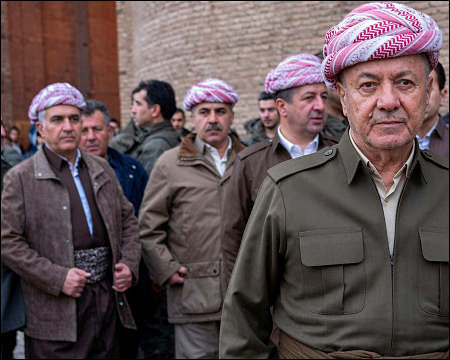
Ending this system is a task of today’s struggle and mass protest. It requires dismantling the material interests and networks of power that function as if they were an eternal form of rule controlled by families and sectarian forces.
Family and sectarian rule cannot be dismantled through reforms within the same structure of that power. We have only one path: family and sectarian rule must be ended forever, and the “state and power” itself must be freed from their control and dominance.
Ending family and sectarian rule does not mean promoting theories that are disconnected from class struggle. Rather, it means practically organizing to create greater space for class struggle and for people to enter the political arena and participate directly in political power.
Ending family and sectarian rule does not mean asking people to give up their religion, sect, or nationality. Rather, it means that religious, sectarian, and family-based identities must no longer be part of the structure of state power. The state must be defined on the basis of citizenship.
The struggle to end family and sectarian rule is a theoretical and practical challenge on the ground, aimed at waging a real struggle against this power as a political system rooted in class relations. It means working to increase the role and influence of workers, working people, and the dissatisfied masses in ending this rule, and removing fear, division, and hopelessness in the effort to secure a better life.
The struggle to end family and sectarian rule today comes from the reality that widespread mass dissatisfaction and protest exist across Iraq and Kurdistan. It is a powerful mass phenomenon.
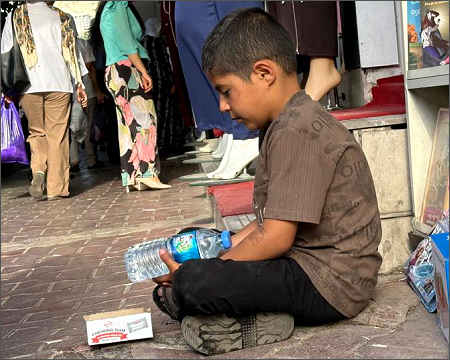
We must raise the slogans “No to Family and Sectarian Rule” and “End Family Rule” and work on them. What matters is taking the initiative and leading in organizing these protests and strengthening them through daily struggle, step by step, until this form of rule is ended and people’s role in political power is secured.
When public pressure and participation grow, all state institutions and centers of power must be removed from their control. At present, demands must move toward institutional change: in the judiciary, public finances, the media, and oversight of security institutions.
If only individuals are replaced within the same framework of family and sectarian forces, the same problem will happen again. Institutions must instead be built in such a way that no family, sect, party, or individual can control all forms of power.
The demands must be specific, such as judicial independence, accountability for security forces, unconditional political freedom, freedom of the press, the unification of armed forces under the authority of legal and official institutions, transparency in income and public finances, and so on.
When people want family and sectarian rule to end, they must not simply replace “one family or sect” with another. A system must be established that does not allow any family, sect, or party with militia power to dominate. A system must be established in which armed forces, finances, security, and political institutions are brought under the authority of public institutions and subject to their control.

No individual, family, sect, party, or group has the right to consider public power its private property. In other words, we must move toward a new era and create a system of power that provides the basis for the direct role and participation of people in political power.
The goal of the struggle is not to replace the ruling family with another family. The goal is to create a system in which no family or sect can take the people’s power for itself.
This sectarian, family-based, militia, and reactionary rule is not worthy of the modern, freedom-loving people of Iraq and Kurdistan. It is illegitimate, unlawful, antisocial, and immoral. It is against human rights and humanity. It is destroying people’s lives and the future of Iraq and Kurdistan. It is vital that our struggle, in connection with the rights and demands of the people, focus on ending these forms of rule.
This article was originally published in the Kurdish language in Awene Newspaper on October 1, 2026.
The views expressed are solely those of the author and do not necessarily reflect the opinions of iKurd.net or its editorial team.
Copyright © 2026 iKurd.net. All rights reserved
Related posts:
 The Resurrection (Ba’ath) Party – Before the Iran-Iraq War
 Iraqi Kurdistan: The Emperors’ New Clothes
 Business with ISIS – Updated
 Iraq: Revenge and Corruption
 Iraqi Kurdistan – “Sold Out!” – Part II
 Iraq: A State of Surveillance – Databases, Tracking And Corruption
 Iraq – The Cynical Swindle
 Iraq in the Shadow of Khomeinism – Part III: Iraq is NOT Iran!
 The Mustashar and the Jash – A View from the Position of ‘Iraqi National Unity’ on the ‘Descendants of Treason’
 Barzani and Talabani families are above law in Kurdistan of Iraq