

U.S. Department of State
WASHINGTON,— The United States imposed sanctions on the International Criminal Court on Friday, escalating the Trump administration’s longstanding dispute with the institution and creating new tensions with European allies.
The announcement came hours after South African jurist Navi Pillay, a former member of the court’s Appeals Chamber, received the Nobel Peace Prize.
The ICC, which has 125 member states, condemned Washington’s decision as an “assault on the rule of law and on the very foundations of the international legal order.” It called on its members to defend the court.
“The Court cannot stand alone. Its fate now rests also in the hands of the states that created it,” the institution said. It warned that the issue extended beyond the court itself to the international order founded on the rule of law, adding, “History will judge this moment.”
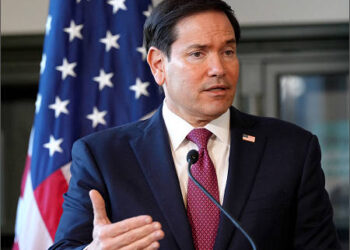
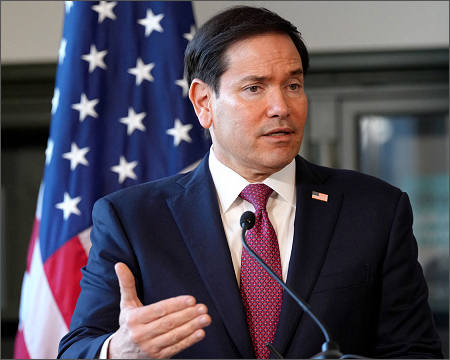
U.S. Secretary of State Marco Rubio said the administration would not permit the ICC to prosecute Americans.
“President Trump will never allow the International Criminal Court to prosecute Americans,” Rubio said in a statement first published by Reuters.
He said Washington would prohibit transactions with what he called a “rogue court,” seeking to cut its resources and impair its ability to function.
The Treasury Department announced a six-month initial grace period, along with exemptions covering some telecommunications, software, pension payments and transactions involving detainees.
Rubio said the measures were intended to give the ICC and its member states time to address U.S. objections. The sanctions could be adjusted if those concerns were not resolved.
Established in 2002, the ICC prosecutes war crimes, crimes against humanity and genocide. The Trump administration has repeatedly challenged its authority, previously imposing sanctions on prosecutors and judges.
The latest measures expand the potential impact by exposing companies that provide services to the court to penalties.
Washington has objected to ICC arrest warrants against Israeli officials, including Prime Minister Benjamin Netanyahu. It has also criticized the court’s earlier investigation into actions by U.S. soldiers in Afghanistan. The ICC says that investigation is “deprioritized.”
Deputy Prosecutor Nazhat Shameem Khan told Reuters that the sanctions were designed to weaken international rule of law and undermine an independent judicial institution. She said the court would continue its work across its investigations and prosecutions.
The ICC has publicly indicted more than 70 people in cases involving international conflicts and political leaders.
Its targets have included Netanyahu, Hamas figures, Russian President Vladimir Putin, former Sudanese President Omar al-Bashir and former Libyan leader Muammar Gaddafi.
Charges against Kenyan President William Ruto and former Kenyan President Uhuru Kenyatta were withdrawn.
The Nobel Peace Prize committee cited political pressure on international legal institutions in awarding the prize to Pillay. She served on the ICC’s Appeals Chamber from 2003 to 2008.
The committee described the award as an expression of support for international tribunals when “judges and institutions of international law are under political attack.”
“An international legal system in which war criminals are held to account and the victims of abuse see justice served is a precondition for a peaceful world,” the committee said.
The court’s membership includes every European Union country and every NATO member except the United States and Turkey. Its headquarters are in the Netherlands, a member of both the EU and NATO.
Sanctions imposed by Washington generally bar U.S.-based companies from working with designated organizations. Banks may close their accounts, insurers may withdraw coverage, and software companies may stop providing services.
The Trump administration imposed targeted sanctions on ICC officials during his first term, but Biden rescinded them. Washington announced a new round of sanctions just days after Trump returned to office in January 2025.
The court had been preparing for the possibility of broader restrictions for months. Officials moved office computers away from Microsoft software to open-source alternatives and made new arrangements for banking and health insurance.
ICC Registrar Osvaldo Zavala Giler called on the European Union earlier this week to prepare a “blocking mechanism” to protect European countries against the extraterritorial effects of U.S. sanctions.
Rubio said the administration had postponed the action while waiting for the ICC and countries that joined its founding Rome Statute to address U.S. concerns. He said those efforts had not succeeded.
“Either the ICC will end its threats, or we will end the ICC,” Rubio said. He urged U.S. allies that are members of the court, many of which depend on American service members for their defense, to curb its activities.
(With files from Reuters)
Copyright © 2026 iKurd.net. All rights reserved.
Related posts:
 US president Trump imposes sanctions on International Criminal Court
 ICC issues arrest warrants for Israel’s Netanyahu, Gallant, and Hamas leader
 Iraqi Kurdistan – “Sold Out!” – Part II
 Business with ISIS – Updated
 Navi Pillay, former ICC judge, wins 2026 Nobel Peace Prize
 What makes a good NATO ally? The Case of Turkey
 The Resurrection (Ba’ath) Party – Before the Iran-Iraq War
 Saddam Hussein’s Enemies: Paving the Road to the Invasion of Iraq
 Saddam Hussein was a Friend to the West
 Iraq: Revenge and Corruption