

Language is not merely a tool for communication; it is the ultimate repository of a nationʼs identity, history, and dignity. For the Kurdish people, reclaiming and protecting their linguistic heritage has been an uphill battle against centuries of marginalization, forced assimilation, and geopolitical erasure.
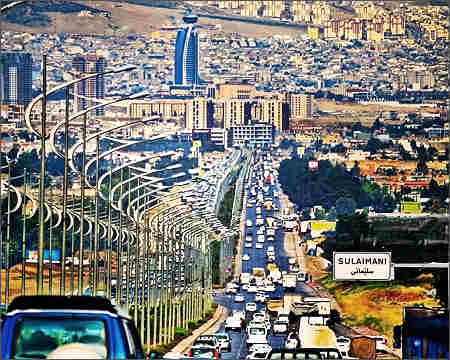
Today, a subtle yet profound linguistic injustice continues to plague the Kurdistan Region of Iraq (KRI): the persistence of foreign, arabized, or colonial-era adaptations of Kurdish city names in international media, official documentation, and even foreign-language outlets within Kurdistan itself. Nowhere is this battle more poignant than in Silêmanî (or Slemani).
1. The Crucible of Kurdish Toponymy: Silêmanî’s Heritage
Founded in 1784 by Ibrahim Pasha Baban and named in honor of his father, Sulaiman Pasha, Silêmanî has long served as the cultural, literary, and political heartland of the Kurdish nation. It is the city of poets, intellectuals, and revolutionaries—an urban center whose very founding was an assertion of Kurdish autonomy.
Yet, on the global stage, this historic name has been rendered through Ottoman and administrative Arabic registers as Sulaymaniyah (ﺳﻠﯾﻣﺎﻧﯾﺔ). Reclaiming Silêmanî across international discourse is not an exercise in academic pedantry; it is an act of historical justice and cultural self-determination.
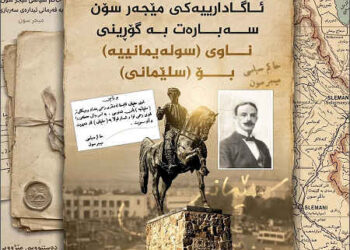
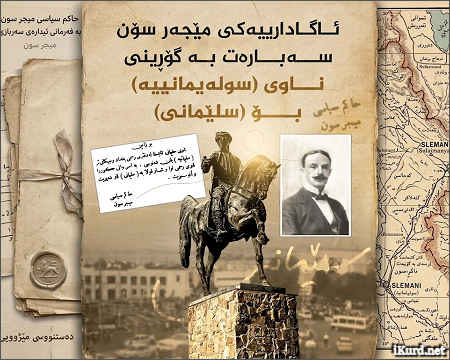
2. The 1920 Precedent: Major Noel and Administrative Correction

The argument for standardizing Silêmanî globally rests on a clear, documented administrative precedent established over a century ago:
- Colonial Correction: In 1920, British political officer Major Ely Bannister Soane (1881–1923) officially issued administrative instructions to revert official documentation from the Ottoman/Arabized Suleymaniyah back to the authentic local Kurdish form, Silêmanî.
- Institutional Regression: Despite this early 20th-century correction, mid-to-late 20th-century state centralization in Iraq re-imposed Sulaymaniyah across international mapping, civil registries, and foreign affairs.
- The Current Paradox: More than three decades after the establishment of the Kurdistan Regional Government (KRG), official channels and local Kurdish media broadcasting in foreign languages (such as English, Arabic, Turkish, and Persian) still routinely default to Sulaymaniyah.
3. The European Precedent: Respecting Indigenous Toponymy
Democracies across Europe demonstrate that autonomous regions possess both the legal right and moral authority to establish their native place names on the global map:
| Region | Reclaimed Native Toponym | Exonym / Ex-Official Name | Global Adoption Milestones |
| Galicia | A Coruña | La Coruña (Castilian) | Full recognition in EU administrative databases, international aviation, and transport maps. |
| Catalonia | Girona & Lleida | Gerona, Lérida (Castilian) | Standardized across global travel services, international press, and official Spanish state records. |
| Basque Country | Donostia | San Sebastián (Castilian) | Promoted co-officially and widely adopted across international cultural and academic networks. |
| Ukraine | Kyiv | Kiev (Russian) |
Successful KyivNotKiev campaign led to global mediaa doption (AP, BBC, Reuters) and UNGEGN re-indexing. |
Ukraineʼs successful campaign proved that global media consensus and international mapping databases (UNGEGN, ISO) adapt swiftly when a government actively and systematically champions its native nomenclature.
4. A 3-Step Action Plan for the Silêmanî Governorate and the KRG
To turn toponymic policy into global reality, the Silêmanî Governorate, The Kurdistan Regional Government, the Kurdistan Parliament, and regional media syndicates must execute a coordinated strategy:
-
Diplomatic Mandate: The KRG Department of Foreign Relations must issue an official executive policy mandating Silêmanî as the official Latin transliteration in all international correspondence, official portals, and diplomatic representation.
-
Media Stylebook Uniformity: Kurdish media outlets operating in foreign languages must update their stylebooks to replace Sulaymaniyah with Silêmanî, setting the benchmark for foreign correspondents.
-
Global Database Re-Indexing: KRG foreign representation offices should formally petition the UN Group of Experts on Geographical Names (UNGEGN), ISO, and major digital mapping services (Google Maps, OpenStreetMap, Apple Maps) to primary-index the city under Silêmanî.
A nation that cannot name its own cities in the global lexicon leaves a vital flank of its identity unprotected. By drawing inspiration from Europeʼs linguistic autonomies and honoring its own 1920 administrative precedent, the KRG has both the historical justification and modern obligation to ensure that Silêmanî is called by its true name, in every language, across the entire world.
As Silêmanî celebrates its founding anniversary on the 14th of November, let us mark the occasion by asserting and reclaiming its authentic name!
Scherco R Baban, a son of Silêmanî.
Scherco R. Baban, an independent researcher and analyst specializing in Kurdish Question and The Middle Eastern security, economical and cultural dynamics.
The opinions are those of the writer and do not necessarily represent the views of iKurd.net or its editors.
Copyright © 2026 iKurd.net. All rights reserved.
Hewlêr: Erbil is becoming Al-Arbil and Silêmanî Al-Sulaymaniyeh
Related posts:
 A Century Ago, Lynette Soane, Hailed the Kurds as “my friends” Rather Than “Kurdish Brigands”
 Iraqi Kurdistan – “Sold Out!” – Part II
 Iraq – The Cynical Swindle
 Kurdish Women Are Our Intellectual Firepower
 The Cultural War against the Kurdish Nation. Cultural Boycott and Resistance
 Business with ISIS – Updated
 Iraq: Revenge and Corruption
 The Misleaders: Corrupt, Filthy Rich, and Proud of it
 What makes a good NATO ally? The Case of Turkey
 The Resurrection (Ba’ath) Party – Before the Iran-Iraq War