

BRUSSELS,— A Belgian national accused of taking part in acts of genocide and crimes against humanity targeting the Yazidi minority in Iraq and Syria went on trial in absentia Thursday in Brussels, marking Belgium’s first prosecution related to mass atrocities committed against the Yazidis.
The defendant, Sammy Djedou, a former Islamic State (IS) militant, was reported by the Pentagon to have been killed in a 2016 airstrike in Raqqa, Syria.
However, Belgian authorities never received formal confirmation of his death and decided to move forward with legal proceedings in his absence.
Prosecutors accuse Djedou of taking part in the IS campaign of extermination and sexual enslavement of Yazidis beginning in 2014.
He faces charges of genocide and crimes against humanity, including the alleged rape and trafficking of Yazidi women and girls.
According to court documents, three Yazidi victims have been identified, two of whom were minors when the alleged crimes took place between November 2014 and December 2016.
Two of them have joined the case as civil plaintiffs. All three are expected to testify before the criminal court during the one-week trial.
The Belgian counterterrorism case draws heavily on testimony and evidence collected by journalists and humanitarian organizations that documented IS atrocities following the collapse of its last stronghold in Baghouz, Syria, in 2019.
Accused Jihadist from Brussels
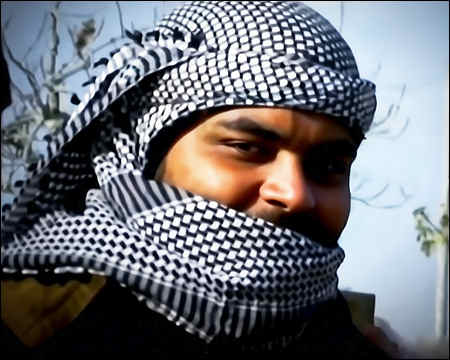
Born in Brussels in August 1989 to a Belgian mother and an Ivorian father, Djedou converted to Islam at the age of 15 and traveled to Syria in October 2012 to join IS, according to investigators.
He was later believed to have become a senior member of the group’s external operations branch, which planned attacks in Europe.
Djedou had previously been sentenced in Belgium to 13 years in prison in 2021 for leading a terrorist organization.
He was also convicted during a 2022 trial linked to networks that supported the November 13, 2015 attacks in Paris that killed 130 people, though he did not receive an additional sentence in that case.
Yazidis abandoned by Barzani, massacred by Islamic State
The Yazidis, a Kurdish-speaking minority practicing a pre-Islamic faith, were mainly based in northern Iraq before the Islamic State launched a campaign of mass killings and abductions against them in August 2014. The United Nations has described the group’s actions as genocide.
According to the UN, thousands of Yazidi women and girls were kidnapped, raped, and sold into slavery, while men and boys were executed or forced into combat roles.
Prosecutors in the Brussels case say that IS institutionalized the sexual enslavement of Yazidi women, using it as part of its economic and ideological system.
In August 2014, IS fighters attacked Sinjar (Shingal) district in northwest Iraq, home to hundreds of thousands of Yazidis. The assault came after militia forces loyal to then-Kurdistan President Massoud Barzani reportedly withdrew from the area without resistance, leaving Yazidi civilians exposed to IS fighters.
Thousands of Yazidis fled to Mount Sinjar, where they were besieged without access to food and water.
Many were killed or captured. Women and girls were subjected to sexual violence and enslavement, while men and boys were murdered or forced to fight.
A previously unpublished report by the Kurdistan Regional Government stated that about 18,000 Peshmerga militants under Barzani’s command retreated without defending the area during the August 3, 2014 assault.
Nearly 10,000 Yazidis were killed and more than 6,800 women and children were enslaved, according to the report.
Although thousands have since been rescued, about 3,000 Yazidis remain missing, official data show. Many survivors and Kurdish political figures continue to blame Barzani and the Kurdistan Democratic Party (KDP) leadership for failing to protect the community.
The United Nations in November 2015 described the massacre as a possible genocide, stating that IS actions against the Yazidis met the criteria for extermination and crimes against humanity.
The Brussels trial is expected to conclude next week. The court will determine whether Djedou can be found guilty in absentia, despite his presumed death.
Prosecutors say the case aims to give justice to Yazidi survivors and set a precedent for future war crimes prosecutions in Europe.
(With files from AFP | Agencies)
Copyright © 2025 iKurd.net. All rights reserved.
Related posts:
 Business with ISIS – Updated
 Belgian court finds Islamic State jihadist guilty of Yazidi genocide
 Iraqi court issues warrant for Yazidi commander Qassim Shasho for Islam remarks
 Yazidi woman kidnapped by IS rescued in Gaza by joint Israeli-US operation
 IS woman charged in Sweden for enslaving Yazidis in Syria
 French IS suspect to face trial for enslaving Yazidi teenager in Syria
 The Iraqi-KDP agreement overrides Yazidi interests
 Yazidi woman rescued from IS in Gaza arrives in Germany
 Syria: Revisiting The Caesar Torture Victim Photographs
 Swiss parliament recognizes Islamic State crimes against Yazidis as genocide