


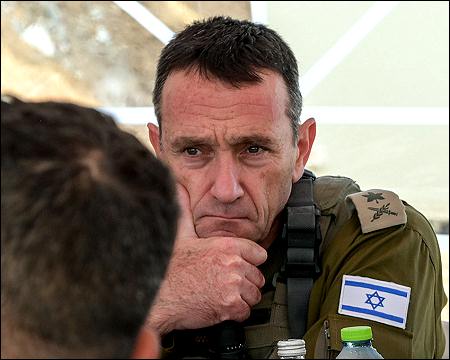
JERUSALEM,— Israel’s military chief, Lieutenant General Herzi Halevi, announced Tuesday he will step down on March 6, 2024, following the devastating October 7, 2023, Islamic State-style attack by Hamas militants from Gaza that left more than 1,200 Israelis dead and over 250 taken hostage.
The announcement comes as the nation grapples with the aftermath of its worst-ever security breach.
Halevi, who has served in the Israel Defense Forces (IDF) for over four decades, said he is taking full responsibility for the military’s failure to prevent the attack. “The IDF, under my leadership, did not fulfill its duty to protect the citizens of Israel on October 7,” he wrote in a resignation letter addressed to Defense Minister Israel Katz. “This failure will remain with me every moment of my life.”
Halevi’s resignation, though widely anticipated, underscores the accountability demanded by the Israeli public after the attack, which exposed severe intelligence and operational lapses. In a televised address, Halevi promised a thorough investigation into the military’s failures, pledging to present the findings to the defense ministry and make them public as much as security considerations allow.
Despite calls from citizens and activists, Prime Minister Benjamin Netanyahu’s government has resisted launching a state inquiry into its role in the crisis, fueling further criticism.
Reports suggest Halevi’s resignation could be followed by those of other senior military leaders. The Maariv news outlet reported that the navy and air force commanders are expected to step down soon. Major-General Yaron Finkelman, head of the IDF’s Southern Command, has already announced his resignation.
“I hope this act of accountability inspires similar action in our government,” former Israeli diplomat Zeev Harel told Reuters. Activist Gil Ashkenazy echoed those sentiments, stating, “Our prime minister should take a cue from Halevi’s leadership and accept responsibility.”
The attack triggered a 15-month-long war between Israel and Hamas, leaving Gaza devastated. Israeli airstrikes and bombardments have killed reportedly thousands of Gazans, according to local officials, and destroyed much of Gaza’s infrastructure.
As part of a recently brokered ceasefire deal, Hamas has released three hostages, with plans for 33 more releases in the coming weeks. However, at least 94 hostages remain in Gaza, with concerns that some may not have survived captivity.
Halevi’s handling of the war has drawn both praise and criticism. Hardliners in Netanyahu’s government, including Finance Minister Bezalel Smotrich, accused Halevi of being too lenient in the Gaza campaign.

While Smotrich acknowledged Halevi’s achievements in crippling Hamas’ military capabilities, he held him partially responsible for the October 7 attack and what he described as insufficient efforts to dismantle Hamas’ political infrastructure.
“The failures of October 7 must be weighed alongside Halevi’s decades of service and military successes,” Smotrich said. “However, our next phase of operations must ensure complete victory, particularly in the West Bank.”
Defense Minister Katz expressed gratitude for Halevi’s service, assuring the public of an orderly process to appoint his successor. Netanyahu has accepted Halevi’s resignation, signaling a pivotal shift in Israel’s military leadership.
As the nation prepares for potential renewed hostilities, Halevi stated that Israel’s military remains strong and resilient. “Despite the setbacks, the IDF has achieved significant successes, restoring its status as a formidable force in the region,” he said.
The coming months will test that resolve as Israel navigates a complex and volatile security landscape.
(With files from Reuters)
Copyright © 2025 iKurd.net. All rights reserved
Related posts:
 Internal Revolt Against Hamas in Gaza Was Already Underway
 The War of Attrition on Lebanon
 The Resurrection (Ba’ath) Party – Before the Iran-Iraq War
 Israel kills Hamas leader Yahya Sinwar, mastermind of the brutal October 7 attack
 Israel marks October 7 anniversary of Hamas deadly attack
 Israel authorizes plan to control Gaza City
 A Root Cause Review of the Israeli-Hamas Conflict
 Hamas releases video of starving, skeletally thin Israeli hostage
 Rebuilding Gaza, learning from the past
 Islamic Jihad a Headache for Hamas