Ardishir Rashidi Kalhur | Exclusive to iKurd.net
Causing Iran in Decline
Severely battered by the war with the United States and Israel, the surviving leadership of the Islamic Republic of Iran has entered irreversible cultural and political decline. Much of the population are now living in a state of deep depression and despondency.
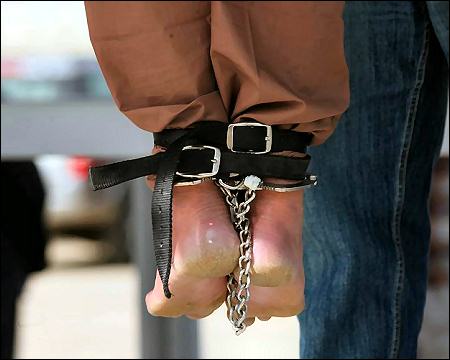
With no hope in sight, the regime that came to power under a Shiite ideology centered on martyrdom and victimhood has, in view of many, evolved into a cruel and lawless oppressor of its own people.
It has been accused of killing thousands, suppressing dissent, and lashing out against neighboring states and national minorities, particularly the Kurdish population both within Iran and across the border in the Kurdistan Region of Iraq. These actions, critics argue, reflect the desperate political condition in which Iran now finds itself.
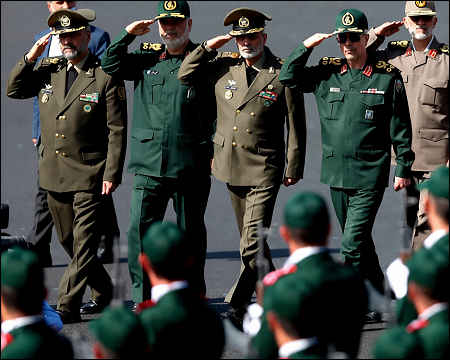
Iran’s most formidable instrument of repression is the Islamic Revolutionary Guard Corps (IRGC). According to this perspective, its principal responsibilities are: (1) to preserve the territorial integrity of the Iranian state by any means deemed necessary, with little regard for human life or fundamental rights; (2) to strengthen Iran’s military power, including the pursuit of advanced strategic nuclear capabilities, as a counterweight to Israel and Western military alliances; and (3) to maintain control over the Strait of Hormuz, a strategically vital maritime chokepoint through which a significant portion of the world’s oil supply passes.
The effort to achieve all of these objectives has led to a new wave of bombardments against Iranian cities and military installations. The apparent objective is to compel Iran either to accept military defeat or to endure a prolonged campaign of sustained military pressure and economic attrition until its capacity to resist is exhausted.
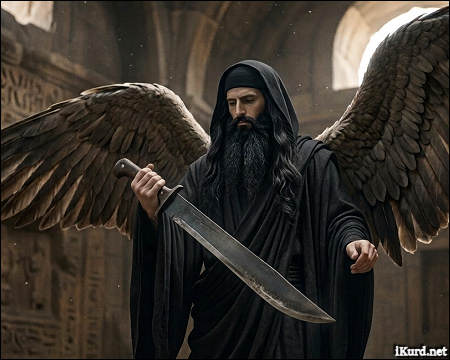
In Islamic tradition, Azrael (not to be confused with the word Israel) is the Angel of Death, who appears at the end of a person’s life to receive the departing soul. In religious belief, the soul’s ultimate destination is determined by God’s judgment according to the individual’s deeds during life.
According to Islamic tradition, Azrael is one of four principal archangels, alongside Jibril (Gabriel), Mikail (Michael), and Israfil (Raphael). These angels are believed to carry out God’s commands in governing various aspects of the created order and humanity’s existence from birth until death.
Readers may notice that the names of these archangels end with the suffix “-el” or one of its linguistic variants. In the Semitic languages, El is an ancient word for “God” and appears in many biblical and Near Eastern personal names.
Some writers have argued that this element is historically related to the Arabic word Allah, while others distinguish between the two based on linguistic and historical evidence. For a more detailed discussion of the origin and meaning of “El,” please refer to the previously published article on this site.
Understanding the Yazidis of Kurdistan
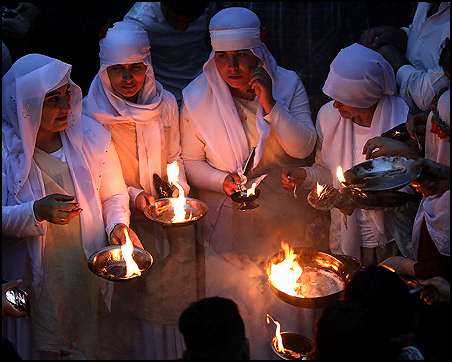
According to many religious traditions, among the mortal sins that may condemn a soul are acts that violate fundamental moral principles. By the standards of a genuinely peaceful faith and modern civil society, such grave transgressions may include hatred, violence, murder, theft, jealousy, perjury, prostitution, and numerous other acts that inflict harm upon individuals and society.
For a more complete discussion of mortal sins, readers may wish to consult a religious or spiritual leader whose conduct reflects the moral principles they teach. Good luck with your search.
History, however, reminds us that religious institutions and ideological movements are not immune from moral failure. Mosques, madrasas, nationalist Christian churches, and extremist movements such as Kahanism, like all human institutions, have at times been associated with intolerance, violence, or injustice. No institution or ideology can claim moral perfection merely by virtue of its religious or political identity.
These are among the moral standards that humanity has gradually established through millennia of civilization. Although cultures and religions differ in their ethical teachings, there remains a broad consensus that hatred, cruelty, dishonesty, and the taking of innocent life are immoral, while justice, compassion, truthfulness, and respect for human dignity are virtues worthy of pursuit.
Religious Perjury
From a Judaic theological perspective, some scholars argue that the Qur’an incorporates and reinterprets figures and narratives that first appear in the Hebrew Bible. The names and roles of the archangels in Islam — including Jibril (Gabriel), Mikail (Michael), Israfil (Raphael), and Azrael — bear clear parallels to angelic figures found in earlier Jewish and Christian traditions.
Critics who view these adaptations as unauthorized or false may characterize them as a form of religious plagiarism or misappropriation, whereas Muslims regard them as authentic revelations that reaffirm and complete earlier scriptures. The validity of either position ultimately depends upon one’s religious convictions.
If one accepts the premise that knowingly misrepresenting divine revelation constitutes a grave moral offense, then such an act could be regarded as a mortal sin deserving of God’s judgment. In Islamic belief, Azrael, the Angel of Death, carries out God’s command in receiving the souls of the deceased; he is not an independent agent who determines guilt or innocence.

Beyond these theological disputes, the Islamic Republic of Iran has been widely criticized for its treatment of political opponents, ethnic and religious minorities, and neighboring states. Critics argue that the state’s ideology — combining religious fundamentalism with an authoritarian interpretation of Iranian nationalism — has contributed to repression, discrimination, and regional conflict.
These criticisms, however, are directed at the policies and conduct of the Iranian government and its security institutions, rather than at the Iranian people as a whole or all followers of Islam.
If one is interested in the etymology of the word Tehran (in Kurdish pronounced Taran), some writers have proposed that it derives from the Kurdish expression “Ta-Raan, Tarranin, Tarrani,” meaning “those who have been expelled into exile because of their misconduct.” This interpretation is not accepted by mainstream historical linguistics, but it has been advanced by some authors searching for an alternative and meaningful explanation of the city’s name.
To those who embrace this interpretation, the name appears symbolically fitting. Since the establishment of the Islamic Republic, thousands of former residents of Tehran, together with many other Iranians, have left the country and now live abroad in exile or in the diaspora. Many continue to hope for the day when they can return to the city they once called home.
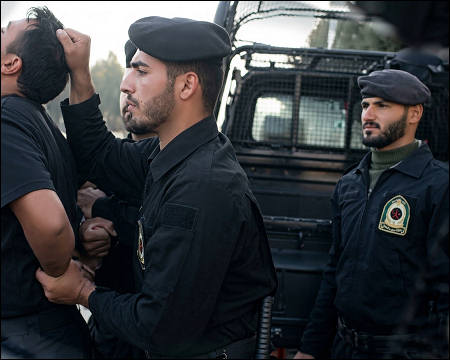
Critics of the Islamic Republic argue that Tehran has been transformed by a ruling establishment dominated by radical Shiite clerics whose political ideology has profoundly reshaped the country’s institutions and society. Some commentators draw historical parallels between revolutionary militancy and earlier movements in Persian history, including the Nizari Isma’ili movement associated with Hasan-i Sabbah and the medieval Assassins.
Now that Iran finds itself in what many critics describe as a political and moral purgatory, the country’s prolonged crises have brought immense suffering to its people.
In the view of those critics, the Islamic Republic has reached a point from which meaningful reform is no longer possible, leaving the country at a historic crossroads.
Some observers argue that establishing a genuinely democratic Iran — one founded upon respect for human rights, the rule of law, and the right of self-determination for the country’s non-Persian national communities — will remain exceedingly difficult so long as political power continues to be concentrated in a centralized state dominated by Persian militants.
They contend that, whether represented by the present ruling establishment or by certain opposition movements, competing political factions often seek to preserve centralized authority from Tehran rather than fundamentally reimagine the relationship between the state and Iran’s diverse national, ethnic, and linguistic communities.
From this perspective, the challenge facing Iran is not merely replacing one government with another, but transforming the political structure itself so that all citizens and national communities enjoy equal rights, political representation, and constitutional protection by willful association or separation.
Without such structural change, critics argue, the succession of one ruling group by another risks perpetuating the same cycle of authoritarianism, with Tehran continuing to symbolize centralized power long after the current regime has passed into history.
The former Iranian monarchy, according to its critics, also bears responsibility for a legacy of political myths and historical distortions. These critics contend that the Pahlavi state promoted an idealized narrative of an uninterrupted Persian imperial civilization while downplaying the complex and multiethnic character of the ancient Iranian world.
They further argue that the Cyrus Cylinder, often celebrated as an early declaration of human rights, has been presented in ways that exaggerate its significance. Many historians regard the inscription as a Babylonian royal proclamation written in the traditional Mesopotamian style rather than as a modern charter of universal human rights. Critics therefore contend that modern political interpretations of the Cylinder have projected contemporary ideals onto an ancient document.
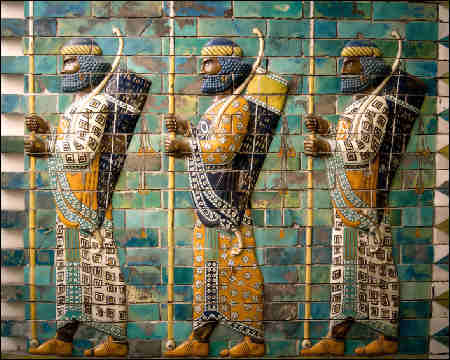
Some scholars also challenge nationalist narratives that attribute the entirety of ancient Iranian civilization exclusively to the Persians, who were indeed the original hired military guards serving under the Medes.
They argue instead that the development of the region and Iranian civilization was shaped by numerous peoples, including the Sumerians, the Elamites, and the Medes as the predecessors of modern Kurdish culture. From this perspective, claims of exclusive Persian ownership of that heritage amount to historical falsehood and misrepresentation rather than balanced scholarly accounts of history.
Viewed through the theological framework presented in this essay, political falsehoods, cultural appropriation, historical distortion, and religious hypocrisy constitute grave moral offenses. Consequently, the Angel of Death, Azrael, serves as a symbolic reminder that no ruler, dynasty, or ideology is exempt from divine judgment. Whether monarchist or Islamist, any regime that builds its legitimacy upon deception, oppression, and injustice must ultimately answer for its deeds before history — and, according to the beliefs of the faithful, before the judgment of the civilized world and ultimately before God.
What Comes After Death
From dust to dust, life shall rise anew — but not for a country known as Iran. Instead, what once bore that name may become a region within a transformed Middle East.
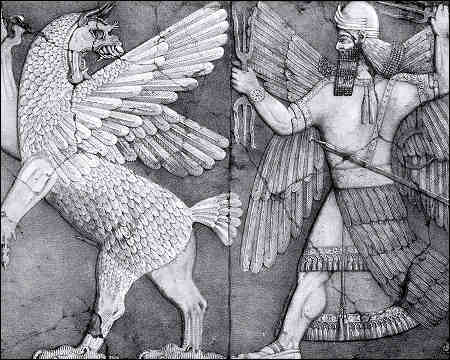
In ancient Sumerian mythology, Tiamat is the primordial being associated with the chaotic waters of creation. She represents disorder and the untamed forces that precede the formation of the world.
According to the myth, Tiamat is defeated by her offspring, Marduk, who divides her body and fashions from it the heavens and the earth. Having subdued chaos, Marduk establishes order and becomes the supreme deity of ancient Babylon.
The moral symbolism of this story is that creation emerges from chaos. The destruction of the old gives rise to a new order, transforming darkness and disorder into a structured and flourishing world. As a literary metaphor, it suggests that periods of profound upheaval can become the foundation upon which a new era is built.
Like Tiamat in the ancient Mesopotamian myth, Iran and its successive regimes are portrayed as forces that have produced prolonged chaos and disorder, both within the country’s borders and throughout the wider region. In this interpretation, the time has come to bring an end to the existing political structure and to replace it with a new political order.
Drawing upon the symbolism of Marduk’s defeat of Tiamat, the argument proposes that the existing Iranian state should be dissolved and replaced by separate political entities in which the country’s diverse national minorities may freely determine their own futures.
Such a transformation, it argues, should be guided not by vengeance or conquest, but by the principles of self-determination, human rights, democratic governance, and peaceful coexistence, consistent with the standards of modern civil society and international law. Through this process, new states could emerge in which the aspirations and cultural identities of their peoples are recognized and protected.
Conclusion

In conclusion, if Iran were to face political collapse, national minorities such as the long-struggling Kurds of Rojhelat (Eastern Kurdistan) may seek to establish their own governing institutions rather than remain tied to longstanding forms of Persian religious nationalism.
Likewise, the Arab population of the southern province of Khuzestan could seek closer political and security cooperation with neighboring Arab states and communities. The Baloch people, who have their own long history of political and social struggle, may also pursue closer relations with the Baloch population across the border in Pakistan, with whom they share historical, cultural, and predominantly Sunni Muslim ties.
Under such a scenario, the remaining Iranian state could require an internationally supervised transition to restore political stability, economic recovery, and effective governance. One possible approach would be a United Nations–mandated transitional administration, supported by major international powers, including the United States, with the objective of facilitating security, reconstruction, humanitarian assistance, and the eventual establishment of representative and accountable institutions in accordance with international law.
Ardishir Rashidi-Kalhur, the President of Kurdish American Education Society, Los Angeles, U.S.
The opinions are those of the writer and do not necessarily represent the views of iKurd.net or its editors.
Copyright © 2026 iKurd.net. All rights reserved.
Related posts:
 The Resurrection (Ba’ath) Party – Before the Iran-Iraq War
 The Assassination of Abdurrahman Ghassemlou: No Friends but the Mullahs?
 The Sun Also Rises in Western Iran
 Iran, a Failed Country by Enemies Within
 Iran – Toxic Theocracy – Part I
 The Suffocation of Iraq Kurdistan
 What makes a good NATO ally? The Case of Turkey
 Business with ISIS – Updated
 Who Are the Persians, Part V
 Iraq: Revenge and Corruption