

The United States will persist in advocating for a civilian-led, inclusive government, State Department says
WASHINGTON,— The United States is closely watching developments in Syria as it assesses future policy, but immediate sanctions relief remains unlikely, a State Department spokesperson said Friday.
“We are evaluating the actions of Syria’s interim leadership on multiple fronts as we consider the direction of U.S. policy,” State Department spokesperson Tammy Bruce told reporters during a daily briefing.
Bruce reiterated Washington’s stance in favor of an inclusive, civilian-led government capable of managing national institutions effectively.
Her remarks provide a rare look into the Trump administration’s approach to Syria, a subject on which officials have largely remained silent since President Donald Trump took office on January 20.
A central issue for U.S. policymakers is whether Washington will ease sanctions imposed on Syria and the future of American military presence in Syrian Kurdistan (Rojava) in the country’s northeast.
Syria remains under extensive Western sanctions, initially imposed during the rule of former President Bashar al-Assad. Assad was removed from power late last year by opposition forces led by the Islamist group Hayat Tahrir al-Sham (HTS), a former affiliate of al Qaeda.
Asked whether the U.S. was considering lifting sanctions, Bruce said, “There has been no change in our position, and no plans to alter it at this time.”
However, she noted that certain exemptions remain in place. In January, the previous Biden administration authorized a temporary six-month exemption for transactions involving Syrian government institutions.
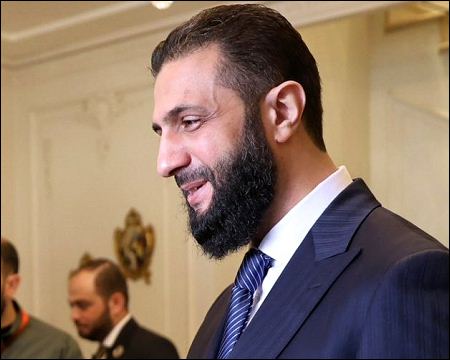
Despite the transition of power in Damascus, Washington continues to classify HTS as a terrorist organization. Interim President Ahmed Sharaa, a former HTS leader, officially cut ties with al Qaeda in 2016, and HTS was formally dissolved earlier this year.
Sanctions remain a major challenge for Sharaa’s administration. The United Nations estimates that nine out of ten Syrians live in poverty.
The U.S. has repeatedly urged Syria’s new leadership to promote inclusivity. “For long-term stability, it is essential that the government ensures equal protection for all Syrians,” Bruce said, referencing recent violence in the coastal region.
Earlier this month, clashes erupted after Sunni Islamist-led security forces claimed they were targeted by pro-Assad militants. The attack led to widespread killings of Alawites, marking the deadliest outbreak of violence since Assad’s removal in December following 14 years of conflict.
Sharaa has vowed to hold those responsible accountable, including members of his own administration if necessary.
In a statement on March 9, U.S. Secretary of State Marco Rubio condemned the killings, attributing them to “radical Islamist terrorists, including foreign fighters,” and reaffirmed Washington’s support for Syria’s religious and ethnic minorities.
(With files from Reuters)
Copyright © 2025 iKurd.net. All rights reserved
Related posts:
 Syria: A ‘Caliphate’ by Any Other Name — Would Smell the Same
 Stealing Syria
 The Resurrection (Ba’ath) Party – Before the Iran-Iraq War
 Business with ISIS – Updated
 The Islamic State of Syria? (Al Dawla al-Islamiya fi al-Sham)
 Syria: Revisiting The Caesar Torture Victim Photographs
 Hostages to Jihad – Austin Tice, The Long Missing American in Syria – Part One
 Syria: The Hijacking of the Arab Spring: From ISIS to Hayat Tahrir al-Sham
 Sabotaging Syria
 Syria: The Truth Lies Buried beneath an Edifice of Lies