

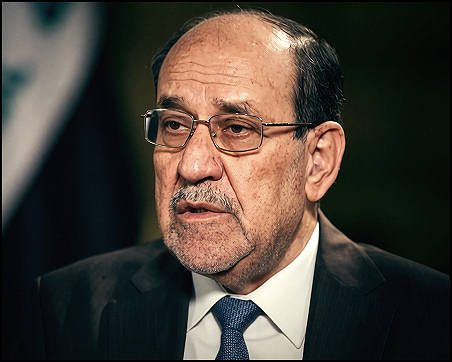
BAGHDAD,— Iraq’s main Shiite political alliance has endorsed former Prime Minister Nouri al-Maliki as the country’s next premier, a move that positions him to return to power after more than a decade.
The Coordination Framework, a coalition of Shiite factions with varying ties to Iran, said Saturday that it had “decided, by majority vote, to nominate” Maliki, 75, as the candidate for the post.
The group emphasized his “political and administrative experience and his record in running the state.”
Maliki previously served as Iraq’s prime minister from 2006 to 2014, the only leader to hold two terms since the U.S.-led invasion that ended Saddam Hussein’s rule.
He has been a central figure in Iraqi politics for decades and maintains significant influence despite controversies during his earlier terms, including accusations of fueling sectarian tensions and failing to stop the rise of the Islamic State group in 2014.
After Iraq’s November general election, the Coordination Framework emerged as the largest parliamentary bloc.
The alliance has conducted extensive discussions with Sunni and Kurdish parties to determine leadership positions across the government.
Iraq’s parliament recently elected a speaker and is expected to convene next to choose a new president, who will then appoint the prime minister to replace the current leader, Mohammed Shia al-Sudani. By convention, the prime minister is a Shiite Muslim, the speaker is Sunni, and the largely ceremonial presidency is held by a Kurd.
Observers note that Maliki’s return comes amid significant shifts in regional politics, including waning Iranian influence and rising tensions with Washington.
While Maliki is often seen as aligned with Tehran, he has previously coordinated with U.S. officials during his tenure, making him a figure both sides have engaged with.
Iraq has long been a battleground for U.S.-Iran influence. Diplomats told AFP last month that Washington has pressed the Iraqi government to limit the power of Iran-backed Shiite militias, many of which hold seats in parliament and have expanded their political and financial influence.
Maliki will likely face the challenge of balancing these internal and external pressures while forming a government.
Analysts say the task will be complicated, with expectations that Maliki address Washington’s demands without alienating Iran-linked factions, a delicate balancing act in Iraq’s divided political landscape.
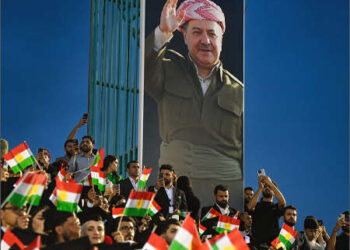
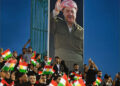
Massoud Barzani, tribal leader and president of the Kurdistan Democratic Party KDP in Kurdistan region, praised Iraq’s Shiite Coordination Framework on Saturday for nominating Nouri al-Maliki as its candidate for prime minister.
Caretaker Prime Minister of Kurdistan Masrour Barzani congratulated Maliki and expressed his backing for efforts aimed at addressing the country’s political and economic challenges.
The leader of the Patriotic Union of Kurdistan PUK party, Bafel Talabani, said on Sunday that he supports the nomination of Nouri al-Maliki for the position of Iraq’s prime minister.
In a statement, Talabani said the decision by the Coordination Framework could help speed up the constitutional and legal steps needed to form a new government. He said completing the process quickly would be important for political stability in the country.
In a separate statement, Sarwa Abdul Wahid, head of the New Generation Movement NGM bloc in the Iraqi parliament, also welcomed al-Maliki’s nomination for the post of prime minister.
(With files from AFP | Agencies)
Copyright © 2026 iKurd.net. All rights reserved.
Related posts:
 The Terror Instructor – Nouri al-Maliki
 The Resurrection (Ba’ath) Party – Before the Iran-Iraq War
 LOSING IRAQ — to Iran
 Iraq: A State of Surveillance – Databases, Tracking And Corruption
 Saddam Hussein was a Friend to the West
 The Suffocation of Iraq Kurdistan
 Iraq: Revenge and Corruption
 Iraqi Kurdistan – “Sold Out!” – Part II
 Iraq in the Shadow of Khomeinism – Part III: Iraq is NOT Iran!
 Saddam Hussein’s Enemies: Paving the Road to the Invasion of Iraq