

Arab Republics? A Modern Identity Hoax
If a country’s name includes ‘Arab,’ it signals that it is not truly an Arab country.
Sara Hussein | Exclusive to iKurd.net
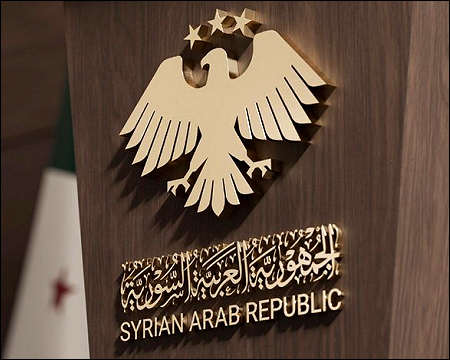
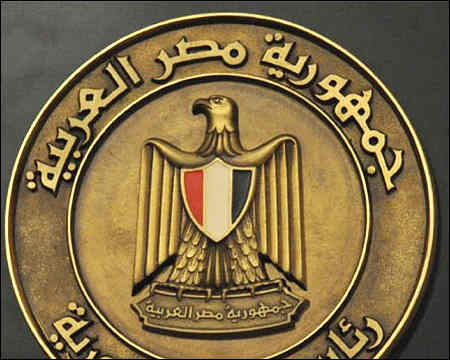
Across the Middle East and North Africa, several countries formally embed “Arab” into their constitutional titles: the Syrian Arab Republic, the Arab Republic of Egypt, the United Arab Emirates, and historically Libya (which previously incorporated “Arab” in its official name like Libyan Arab Republic, Great Socialist People’s Libyan Arab Jamahiriya). Even Saudi Arabia embeds Arab identity directly in the word “Arabia.”
Yet these states are not ethnically homogeneous. Their lands were not historically Arab in origin. Their major cities are often not originally Arabic in name. In several cases, even their demographic realities contradict the ethnic label.
The inclusion of “Arab” in official state titles is not a neutral geographic description. It is a political artifact — a 20th-century nationalist construction that institutionalizes one identity above others.
The Historical Homeland of Arab Tribes
Historically, Arab tribes originated in the Arabian Peninsula , particularly in what is today Saudi Arabia and surrounding Gulf regions. Classical Arab genealogical and linguistic traditions trace early Arab tribal formations to the Peninsula, where Arabic developed as a Semitic language among tribal societies long before the Islamic period. The Arabian Peninsula was therefore the historical core of early Arab tribal identity.
The Levant, Mesopotamia, and North Africa were not originally Arab lands in an ethnic or civilizational sense. They became Arabic-speaking over centuries through conquest, administration, trade, intermarriage, and religious transformation — not because their original populations were ethnically Arab.
Ancient Civilizations Preceded Arab Rule
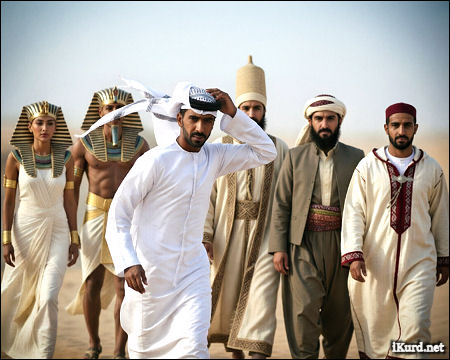
Long before the 7th-century Arab-Islamic expansions, the regions now labeled as “Arab” states were home to some of the world’s oldest civilizations:
- Syria: Arameans, Phoenicians, Greeks, Romans
- Iraq: Sumerians, Akkadians, Babylonians, Assyrians
- Egypt: Pharaonic civilization stretching back over 5,000 years
- Libya and North Africa: Amazigh (Berber), Greek, Roman cultures
- The Gulf region: Persian, Mesopotamian, and tribal trade networks
Even today, most major city names across these countries are not originally Arabic:
- Syria: Damascus (Aramaic), Aleppo, Homs (Emesa), Latakia (Laodicea, Greek)…
- Iraq: Baghdad, Basra, Mosul, Nineveh (Assyrian and Akkadian origins)
- Egypt: Alexandria (Greek), Luxor/Thebes (Egyptian)
- Jordan: Amman (Rabbath Ammon), Petra (Nabataean)
- Libya: Tripoli, Benghazi (Greek, Phoenician)
- Saudi Arabia: Mecca, Yathrib,… names rooted in pre-Islamic and regional histories from Aramaic-Syriac origins.
These names survived because they were deeply rooted long before Arab political dominance. Arab identity was layered onto pre-existing civilizations rather than replacing them entirely.
Speaking Arabic Does Not Automatically Mean Ethnically Arab
A critical distinction is often overlooked: speaking Arabic does not automatically make a population ethnically Arab in origin.
People in Iraq, Egypt, Syria, Libya, Tunisia, Morocco, and across North Africa are primarily Arabic-speaking today. But many descend from ancient Mesopotamian, Pharaonic, Amazigh, Levantine, and other indigenous populations. They were culturally and linguistically Arabized over centuries.
Latin America and Spanish Language
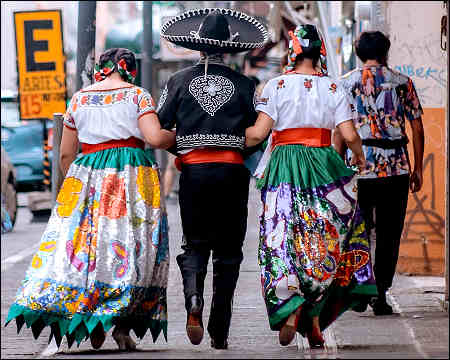
The same principle can be seen in Latin America. Spanish is an official language in 20 countries, including Mexico, Guatemala, Honduras, El Salvador, Nicaragua, Costa Rica, Panama, Colombia, Peru, Chile, Argentina, Bolivia, Paraguay, Uruguay, Venezuela, Ecuador, Dominican Republic, Cuba, and others.
Yet speaking Spanish does not make the population ethnically Spanish. They are primarily indigenous, mestizo, or mixed populations who adopted Spanish through colonial history. They are Spanish-speaking, not Spanish.
Similarly, many populations across the Middle East and North Africa are Arabic-speaking, but that does not make them ethnically Arab.
African Countries and Official Colonial Languages
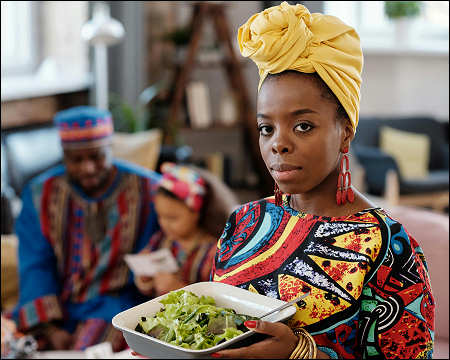
The same principle applies to African countries with French or English as official languages. French is an official language in 29 African countries, and English is official in many others. This does not mean that people in Mali, Senegal, Ivory Coast, Kenya, or Nigeria are French or English ethnically. They are local populations who speak the language due to historical colonization.
Notice the contrast: no African country officially calls itself the “French Republic of Mali” or the “English Republic of Kenya.” Yet in the Middle East and North Africa, many countries call themselves “Arab Republic of…” or “Arab Kingdom,” even when the majority of the population is not ethnically Arab. This highlights the political, not demographic, motivation for using “Arab” in official state names.
Arabization Was Cultural — Not Total Ethnic Replacement
Following the 7th-century expansions, Arabic became the administrative and religious language of expanding Islamic empires. Over centuries:
- Aramaic declined in the Levant
- Coptic declined in Egypt
- Indigenous North African languages were marginalized
- Administrative systems adopted Arabic
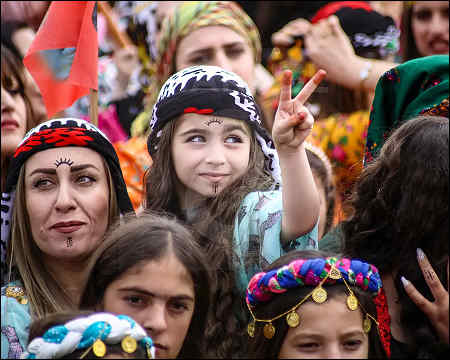
However, linguistic Arabization did not mean that entire populations were replaced. Societies remained multi-ethnic:
- Kurds in Syria and Iraq (Kurdistan)
- Assyrians and Chaldeans in Mesopotamia
- Copts in Egypt
- Amazigh in Libya, Tunisia, Morocco, and Algeria
- Druze, Alawites, Armenians, Yazidis
Modern states labeled “Arab” are in reality multi-ethnic societies with layered identities.
The 20th-Century Nationalist Project
The embedding of “Arab” into official country names was largely a 20th-century political decision influenced by Pan-Arabism after the collapse of the Ottoman Empire.
Arab nationalism served several purposes:
- Unifying fragmented territories after colonial rule
- Creating regional solidarity
- Strengthening centralized state authority
- Suppressing separatist or minority movements
This was not an ancient naming tradition. It was modern state-building.
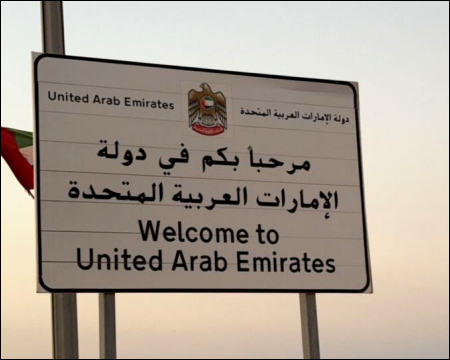
The UAE: A Demographic Contrast
The United Arab Emirates illustrates how symbolic the label can be.
2025 estimates:
- Total population: ~11.3 million
- Emirati nationals: ~1.3 million (~11.5%)
- Foreign residents: ~10 million+ (~88.5%)
English dominates commerce. Hindi, Urdu, Tagalog, and other languages shape daily life. The economy depends heavily on expatriate labor.
The majority of residents are not ethnically Arab nationals. Yet the state name emphasizes “Arab” identity, reflecting the heritage of ruling families rather than the demographic composition of the country.
Structural Problems With Ethnic State Naming
1. It Marginalizes Minorities
Constitutionally embedding one ethnic identity can symbolically exclude others.
2. It Misrepresents History
These lands were not originally Arab in civilizational origin.
3. It Institutionalizes Ethnic Nationalism
Modern states increasingly define themselves by citizenship, not ethnicity.
4. It Creates Identity Hierarchies
Names shape perception. A neutral civic title emphasizes shared belonging.
Conclusion

Arab tribes historically emerged in the Arabian Peninsula, particularly in what is now Saudi Arabia. Over centuries, Arabic language and culture spread far beyond that region.
But the historical origin of Arab identity does not automatically define the foundational identity of every Arabic-speaking country today.
Embedding “Arab” into constitutional state names transforms a cultural and linguistic identity into an institutional hierarchy.
In diverse societies with layered histories, civic identity provides a more inclusive framework than ethnic labeling.
A modern state can honor Arabic language and culture without constitutionally defining itself through a single inherited ethnic category.
If a country’s name contains “Arab,” it usually signals that it is not truly an Arab country, and the term was often added to give it an Arab identity artificially. Likewise, a country labeled “Islamic” does not mean it is fully Muslim; the name is often a political or symbolic gesture rather than an accurate reflection of the population.
Sara Hussein, a Kurdish writer living abroad, she focuses on politics, culture, and religion. She is a contributing writer for iKurd.net.
The opinions are those of the writer and do not necessarily represent the views of iKurd.net or its editors.
Copyright © 2026 iKurd.net. All rights reserved
Related posts:
 The Resurrection (Ba’ath) Party – Before the Iran-Iraq War
 Business with ISIS – Updated
 The Sun Also Rises in Western Iran
 Indian ambassador says Delhi-Cairo ties are strategic: interview
 Who Are the Persians? – Part VI
 The Introduction of a Standard Kurdish
 Iraq: Revenge and Corruption
 Behind the Veil of Turkey’s ‘Zero Problem’ Policy – A Kurdish Perspective
 What makes a good NATO ally? The Case of Turkey
 Saddam Hussein was a Friend to the West