

The Political Unraveling of Iran
Ardishir Rashidi Kalhur | Exclusive to iKurd.net
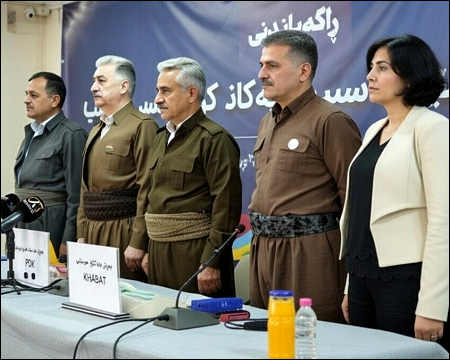
The recent assembly of the Kurdish parties from Eastern Kurdistan on February 22, 2026 in Southern [Iraqi] Kurdistan, to form a united coalition is a historic giant step toward defending and protecting the defenseless Kurdish people in Iran against the regime in Tehran and rekindling their long-held spirit of independence.
This show of unity among Kurds has generated an offensive reaction from the opportunistic son of the former dictator of Iran and his Los Angeles-based mountebank Persian nationalists. The inevitable outcome behind the Kurdish unity follows from ancient to recent history, marked by a series of tyrannical dictators attempting to rule the people of the region.
The last 47 years of brutal treatment of the Iranian people by this theocratic regime—with special emphasis on the oppression of the Kurdish people, who have fought the regime for cultural and political rights since 1979—make this clear.
The Kurds carry a deep historical memory, recollecting the similar brutality committed against the Kurdish population when the deposed Shah, father of the disregarded son, was in power.
It follows from the laws of nature that this force compels the Kurds to forge onward toward greater unity and away from the Farsi-centric country that is Iran.
The second law of thermodynamics, known as the law of entropy (the Greek word for “transformation”), states that over time every system tends toward decay, disorder, disintegration, and eventual death. In thermodynamics, entropy can be measured quantitatively through cyclical processes such as those of an engine and its energy efficiency. The less efficient the system, the sooner it faces disorder and death.
Some describe “negentropy” or “syntropy” as the opposite of entropy. If entropy leads to eventual death, can syntropy be assumed to mark the start of life? How does life begin? What forces of convergence, coalescence, order, and integration emerge from the dead, decayed, and decomposed bodies of the past to organize different elements into a new form of life or a marvelous new system? Life coming out of death, the new coming out of the old.
Unlike entropy, which can be measured scientifically, no known scientific formula quantifies syntropy—the starting point of life that grows and multiplies in all its new and amazing diversities.
One of the early applications of this natural law to social studies was proposed by Professor Kenneth D. Bailey under the title “Social Entropy Theory.” By this theory, he evaluated social status and cultural behaviors as measures of entropy in a society.
In the definition of the natural laws of entropy (the second law of thermodynamics) applied to society, the process occurs over “time.” In social science, this “over time” is nothing but “history”—the history of a given society that defines its social entropy.
In the case of Iran, it is well beyond reasonable doubt that the country and its system are in a state of social entropy. With thousands of years of historical decay, disorder, chaos, and disintegration, we see today the visible signs of its end-of-life condition. The internal and external rise of political tensions leading to the current war and violence in and over Iran is equivalent to the rise of internal entropy accelerating Iran’s demise.
If the history of Iran can be compared to a rope—with ancient history at one end and the present situation at the other—you will see a weakened rope with fraying ends, none of whose strands want to remain united. Holding the rope from breakup has been the “Gordian Knot” at the center of power in Teheran, the capital of world terrorism.
A quick review of ancient history shows that Iran was referred to as a geographic area, not a homogeneous people with a common culture, language, and history that could form a strong chain of unity. The fact of these different strands of people, each unique with their own culture, explains the inevitable disintegration of Iran. History identifies the following peoples in the present-day geographic area of Iran and the wider region of the Middle East:
-

Zagros mountains Lorestan province, Iranian Kurdistan, 2011. Photo: Creative Commons/Ninara/flickr The ancient peoples of the Zagros Mountains in Western Iran, among whom the Sumerians, Gutians, and Elamites are prominent. In Northern Mesopotamia, the Kurdish culture of Khair-Besh-Ke (Gobekli, or Gopke Tepe) has been discovered by modern archaeologists, historians, theologians of ancient faiths, and scholars of the Old Testament. Their history dates back 3 to 10 millennia BC; they are credited as founders of human civilization since historic and prehistoric times.
-
The Medes, who also rose in the Zagros Mountains beginning about 1700 BC and developed an advanced civilization built upon the history of the former cultures. The Magian belief system developed under the most powerful king of the Medes, Kaysar (Kaiser), the third king. Groups 1 and 2 collectively formed the cultural heritage and identity of modern Kurds and Kurdistan.
-
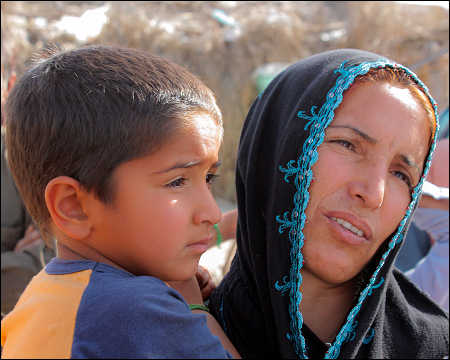
The Baloch or Baluch are a people who live mainly in the Balochistan region of the southeastern-most edge of the Iranian plateau in Pakistan, Iran, and Afghanistan, as well as in the Arabian Peninsula, 2017. Photo: Creative Commons/wikimedia The Scythians, ancestors of the Baloch people, whose land Baluchistan is divided between the dysfunctional nation- states of Iran, Pakistan, and Afghanistan.
-
The Achaemenids who were vassals of the Medes assigned as border guards (Parsian/Parsian=Border-Keepers). The etymology of the word “Persian” is a Kurdish/Medic word that means “guard” and was a job title. Their cultural heritage derives from the Achaemenid tribe (600–700 BC). The most well-known was Cyrus, whose mother was from the house of the Medes.
-
The Parthians, who after Alexander the Great ousted the Persians became the powerful political culture ruling the Parthian Empire. Today’s Parthians inhabit the northern provinces of Gilan, Mazandaran, and eastern Khorasan.
These five major strands of cultures within the geographic map of Iran are the political forces of history who are now actively shattering the artificially held-together Iran. This is the unrepairable and uncontrollable snapping of the fraying rope making Iran to reach the end of the rope!
Among the present oppositions are the following groups, each with their own political agenda:
-
The Islamic Reformists: Persian-speaking Islamic Shia groups within the regime who want cultural reforms such as removal of the hijab and are willing to do business with the West. These groups oppose giving cultural and political rights to non-Persian national minorities in Iran.
-
The Shahis: ultra-nationalist Persian-speaking remnants of the former Shah regime, represented by Reza the son of the former dictator. Interestingly, other Persian-speaking groups such as the terrorist group MEK and other leftist groups have shown willingness to join the Shahis to save Iran from breakup and maintain a centralized political system ruling from Tehran. These groups are hard at work to sway the IRGC to abandon the regime and join them to control and rule Iran after the regime falls. Their motto is “The Old Dictator is Dead, Long Live the New Dictator!”
-
The Kurdish Opposition Groups: Their history of fighting for independence is centuries old, filled with battles against regime after regime and the groups mentioned above. The Kurds demand a decentralized Iran with full rights to Kurdish autonomy and self-determination. To this demand, the son of the former dictator has issued a threat that the Kurds will pay a heavy price worse than the past if they take steps toward self-rule and independence.
The Kurdish people have shown a strong reaction to the threatening statement issued by the son of the former dictator attacking the Kurdish people and their political parties. This has clearly revealed the true nature of the son of the former dictator and has unmasked him as no democratic leader but yet another bloodthirsty dictator eager to perpetuate the cycle.
-
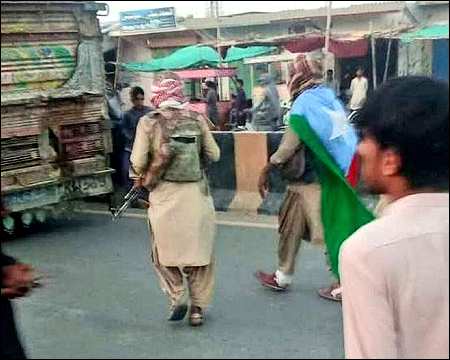
Baloch Liberation Army (BLA) freedom fighters have reportedly taken control of Mangocher city in Kalat district, seizing government buildings and military installations, Balochistan, Pakistan, May 2, 2025. Photo: Screengrab/video/X The Baloch people, who like the Kurds (whose land was divided between Iran, Iraq, Turkey and Syria), have seen their land divided between Iran, Pakistan, and Afghanistan. They have put up a heroic fight under the leadership of the BLA (Baluchistan Liberation Army).
-
The ASMLA (Arab Struggle Movement for the Liberation of Ahwaz) represents the Arab inhabitants of Iran, concentrated in Khuzestan with Ahwaz as its capital.
None of the above groups plus the regime see eye to eye on the future of Iran, which means that Iran has reached the end of the rope with the “Gordian Knot” at the center in Tehran soon to be slashed apart.
Now that the condemned house of tyrants in Iran is demolished, its dictator is dead, and people can take a momentary breath of fresh air, we await with growing anticipation to see the blueprint of peace and freedom for the people and national Minorities in Iran to be revealed. As all the people in Iran are hoping for the best, it will be prudent to also prepare for the worst to avoid catastrophic conditions that can bring civil war, thirst, hunger, and diseases in a country that has been culturally and politically sick for centuries.
It will be a will-fully imposed mistake by the Unites States to attempt to keep Iran together, with the intent to empower yet another dictator. The falsely held belief about Iran being one country, one people, one culture, one nation, one language, one flag, one ideology is over.
The United States has the immense and historic opportunity to honor the Post WWI, 1920, Treaty of Sevres, in which the people of Kurdistan were promised to self-rule representing their own Autonomous land of Kurdistan.
It is urgent, that the United States calls for an immediate Iran Peace Conference with all nationalities involved to amicably settle the disputes among various Autonomy seeking nationalities. Peace in Iran matters greatly to avoid a catastrophic civil war.
As was envisioned by President Wilson and the Treaty of Sevres, the Kurdish people urgently call for a new Middle East Peace Conference this time with the conscientious intent by the United States to avoid the start of WWIII as enshrined in the Charter of the United Nations.
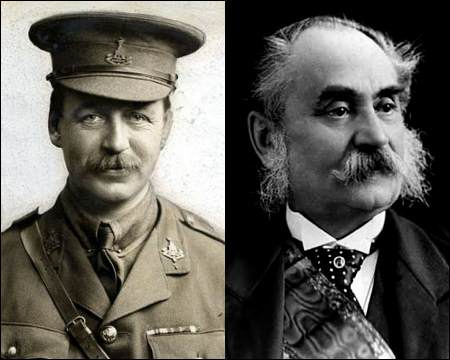
The old artificial post WWI map of the Middle East drawn by the Sykes-Picot Agreement is no longer valid, now is the time for a new map in the Middle East.
Today, the United States through real leadership at the United Nations, has the historic and moral responsibility to protect all the people of the Middle East by remaking this new map of the Middle East that is normalized along the political will of the people desiring a better future to live in peace, freedom and prosperity, which are the necessary conditions for establishing peace in the larger Middle East.
Ardishir Rashidi-Kalhur, the President of Kurdish American Education Society, Los Angeles, U.S.
The opinions are those of the writer and do not necessarily represent the views of iKurd.net or its editors.
Copyright © 2026 iKurd.net. All rights reserved.
Related posts:
 The Resurrection (Ba’ath) Party – Before the Iran-Iraq War
 Iran Regime Change Vs. Map Change
 Who Are the Persians? – Part IV
 Behind the Veil of Turkey’s ‘Zero Problem’ Policy – A Kurdish Perspective
 A Root Cause Review of the Israeli-Hamas Conflict
 Iraq: Revenge and Corruption
 Iran, a Failed Country by Enemies Within
 The Mustashar and the Jash – A View from the Position of ‘Iraqi National Unity’ on the ‘Descendants of Treason’
 The Truth About The Saddam Hussein Affair
 The Sun Also Rises in Western Iran