

Scherco R. Baban | Exclusive to iKurd.net
Most Kurdish political forces in East Kurdistan are busy opposing the current regime in Iran. However, due to internal divisions and a lack of unified and competent leadership, they often overlook the true aims of some exile Iranians.
The misrecognition, distortion, disrespect, and attempts to undermine Kurdish identity and history are not solely the work of the current regime; one could easily say that the former regime did even worse.
The so-called “Exiled Iranian Opposition” is also guilty of the same practices, and worse things are to come. Just remember how they insisted on using the state-imposed, colonial name (Mahsa) of Jina Amini in 2022, despite the fact that “Jina” was what her parents called her. If they tried that hard to distort recent history, just imagine what they have done to the ancient history of the Kurdish nation and others in general.
Demonizing the Kurdish Republic of 1946 in Mahabad and former Kurdish leaders, delegitimizing Kurdish political aspirations for self-determination, and labeling Kurdish as a “dialect” of Farsi are all attempts to erase the distinct linguistic and cultural heritage of the Kurdish people—actions also taken by the Exiled Iranian Opposition.
Paradoxically, the same Iranian opposition that craves Western aid to topple the Islamic Republic does not mind accusing the West of being the major source of division in the Middle East. This is a common tactic used by Middle Eastern regimes to deflect attention from internal repression and conflict.
What kind of democracy do we expect from these exiled Iranians? By emphasizing a false narrative of harmony and unity among the people of the region for hundreds of years, the Exiled Iranian Opposition—just like the aforementioned regimes—ignores the complex history of ethnic, religious, and political tensions that have shaped the region.

Cultural warfare, through misrecognition, distortion, and disrespect, can have damaging effects on the identity and self-determination of marginalized groups such as the Kurdish people. For Kurds, it is essential to challenge and resist such attempts to erase and undermine our cultural heritage and language.
The linguistic and cultural richness of the Kurdish people is often overlooked or downplayed by those seeking to suppress Kurdish identity and aspirations. Education in all non-Persian languages was forbidden in Iran by the regime of Reza Khan and his son, Mohammad Reza Pahlavi.
Even now, the new pretender to the crown of Iran, “Prince” Reza, still “doesn’t understand why we should have mother languages at school.” He is telling us: “Your language is a ‘local’ dialect and cannot be the language of science and math.”

Apparently, Persian can handle science and math very well on its own. Just compare any scientific text between Kurdish and Farsi, and you will see how much richer and more authentic the Kurdish language is than Farsi—a language that depends heavily on loanwords from other languages, especially Arabic.
The Persian supremacists and their past governments tried to purge Persian of Arabic words, but they failed because if they removed Arabic words, there would be nothing left called “Persian.” Instead, they started using many Kurdish words while claiming they were “Old Farsi.”
The Exiled Iranians call every non-Persian ethnic group on their social media pages “Iranian nomads,” labeling their language, culture, and music as “local,” whereas everything Persian is labeled “national.” They have appropriated the entire history and cultural heritage of all ethnic groups and placed them under the title “Iranian” or “Persian,” which constitutes cultural genocide.
For now, we cannot expect much from the immature and incompetent Kurdish leaders of Rojhelat. Their low self-esteem and admiration for everything Persian and the “Zoroastrian heritage” is beyond repair.
Even their sanctioned artists are happy to appear on exile TV channels like Iran International and BBC Persian, reproaching Iran for “not trying to occupy the other parts of Kurdistan in Iraq, Syria, and Turkey.” All this occurs while these same leaders and their artists appear as national heroes to the Kurdish public.
Our only hope for defending and celebrating the unique heritage and language of the Kurdish people—and for the Kurdish identity to be respected and preserved—lies in the hands of the young Kurdish generation. This generation does not suffer from “Stockholm Syndrome” or the admiration mentality toward the occupier’s culture and language.
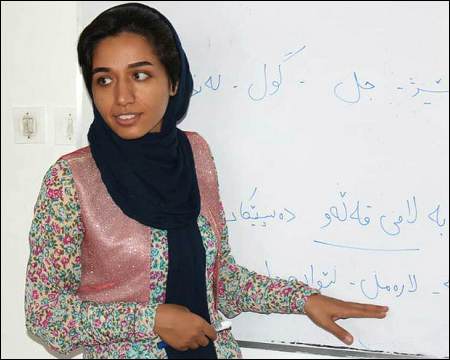
Young people, and especially young Kurdish women such as the Kurdish language teacher Zara Mohammadi (aka Zara Kurdistani), understand very well the concept of cultural war against the Kurdish nation and the ways its culture, identity, and heritage have been targeted.
Cultural warfare can take many forms, including attempts to erase or marginalize Kurdish language, traditions, art, and history. This is a tactic used to undermine Kurdish identity and resistance to dominant power structures.
While many Kurdish leaders are happy to speak the occupation language on Iranian TV, Zara Kurdistani refused to use the occupier’s language and demanded a translator before going to prison for teaching Kurdish. This was a clear form of cultural boycott. Before her, Leyla Zana was also sentenced to many years in prison for her fight to defend the Kurdish language.
Cultural boycotts are a form of non-violent resistance used to protest against cultural oppression and discrimination. By refusing to engage with or support institutions or individuals that perpetuate harmful practices, cultural boycotts draw attention to injustices and create pressure for change. In the context of the Kurdish nation, cultural boycotts are a means of challenging attempts to erase Kurdish culture and heritage.
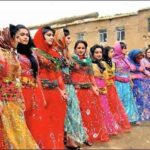
Resistance to cultural warfare can take many forms, including the preservation and promotion of Kurdish language, literature, music, and traditions. By celebrating and sharing Kurdish culture, the Kurdish nation can assert its identity and resilience in the face of oppression. Cultural resistance involves reclaiming and reinterpreting historical narratives to challenge dominant narratives that seek to marginalize Kurdish heritage.
Overall, the cultural war against the Kurdish nation highlights the importance of cultural identity in struggles for liberation and self-determination. By recognizing and valuing Kurdish culture, language, and history, the Kurdish nation can resist attempts to undermine its identity and assert its right to thrive.
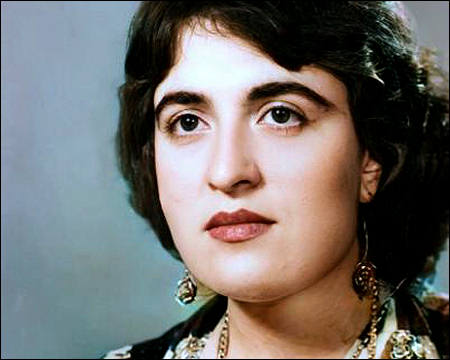
For that, we need brave women and men who can face this cultural war. Women like Zara Kurdistani are at the forefront of this struggle. I had the fortune to have had a mother who raised me free from low self-esteem toward the occupation culture. I also had the fortune to be the nephew of the late patriotic poet Xurșide Baban, who knew the importance of culture in the national liberation movement.
Our women are key in raising and educating a new generation of Kurds who won’t speak the occupation language, and who won’t enjoy the music or the culture of the oppressor. This new generation stands in total contrast to the victim mentality of the “House Kurd.” That is perhaps why we call our native tongue the “Mother Language,” and Kurdish women our intellectual firepower!
Scherco R. Baban, an independent researcher and analyst specializing in Kurdish Question and The Middle Eastern security, economical and cultural dynamics.
The opinions are those of the writer and do not necessarily represent the views of iKurd.net or its editors.
Copyright © 2026 iKurd.net. All rights reserved.
Related posts:
 Letter to UNESCO Director-General in support of Iranian Kurdish teacher Zara Mohammadi
 The Deposed Kings of Iran
 The Cultural War against the Kurdish Nation. Cultural Boycott and Resistance
 Iran Regime Change Vs. Map Change
 The Sun Also Rises in Western Iran
 Who Are the Persians? – Part IV
 Who Are the Persians? – Part VI
 Newroz And The Attempts of Cultural Appropriation
 Who Are the Persian – Part III
 Iran – Toxic Theocracy – Part I