

Commercial Advertising in Arabic in Kurdistan: Risks for the Future
Dashti Barzawari | Exclusive to iKurd.net
Translated by iKurd.net from Kurdish SharPress News.
Recently, with the growth of trade and the opening of the Kurdistan Region to foreign investment and Arab companies, along with the increasing arrival of Arab businesspeople, buyers, and sellers from Iraq and Syria, as well as commercial companies from across the region, a new phenomenon has appeared in the streets, markets, and media of Kurdistan.
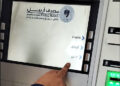
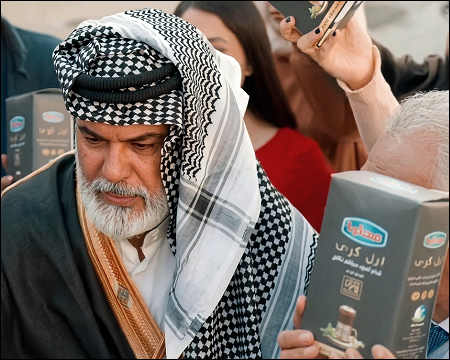
This phenomenon is the widespread use of Arabic as the primary language in commercial advertisements and marketing, including advertisements for land and real estate, apartment buildings, car showrooms, tourist destinations, restaurants, and various other goods and products in the marketplace.
Although, from an economic point of view, some business owners see this as a way to attract customers from different communities, from a social and national perspective, this phenomenon poses a serious threat to the Kurdish language, cultural identity, and the national consciousness of the Kurdish people.
According to the Constitution, both in the Kurdistan Region and Iraq, Kurdish is an official language of the state alongside Arabic in all government offices and institutions.
However, when the central government itself does not fully follow this legal and ethical principle, for reasons that cannot all be discussed here and are better left for another time, it becomes even more important to emphasize that the Kurdish language is not merely a tool for communication and daily interaction. Rather, it is the true fortress for preserving the national identity and history of the Kurdish people.
When, under the authority of the Kurdistan Regional Government, Arabic becomes the dominant and primary language in advertisements, company signs, and brand names, it quietly and indirectly pushes the Kurdish language aside. This can lead Kurdish people, especially the younger generation, to become indifferent toward their own language or even feel embarrassed by it, as they see that Kurdish is not valued or prioritized in business and economic life.
What is especially painful is that when a person walks through almost any street or neighborhood in the cities of Southern Kurdistan, they see that the overwhelming majority of shop signs, restaurant signs, company banners, and screen advertisements are written in Arabic. Whether this happens intentionally or not, it creates the impression that Kurdish is not the first and official language of that region or those cities.
This phenomenon creates several dangers to the national consciousness of the Kurdish people and causes even greater psychological harm to the educated and aware members of Kurdish society. They see that this negligence by both the authorities and Kurdish society gradually and quietly weakens people’s connection to their national identity.
In reality, the constant presence of Arabic writing in public spaces normalizes the Arabization of the cultural environment (Cultural Arabization) and weakens pride in national values. It also undermines the position of the Kurdish language in the marketplace and creates the false image that Kurdish is not capable of being used in business, modernization, or global branding.
The Kurdish authorities’ lack of action regarding the spread of Arabic in this way, under the name of commercial benefit, has a negative impact on the younger generation, especially children and youth.
When they constantly see attractive advertisements, games, and famous brands presented in Arabic and easily accessible in that language, the position of their mother tongue gradually, quietly, and naturally becomes weaker. Eventually, they may abandon it altogether and turn to another language.
To confront this phenomenon, prevent the erosion of the Kurdish language, and protect the national consciousness of Kurdish people, both the authorities and Kurdish society should take serious and immediate steps:
1. Enforce the Official Language Law:
The Kurdistan Regional Government and the relevant authorities should enforce language protection laws and require companies to make Kurdish the primary and first language of all commercial advertisements and business signs.
2. Require Foreign Companies to Respect the Language:
Any foreign or Arab company investing in Kurdistan should respect the official language of the Kurdistan Region. Its advertisements should be in Kurdish or translated into Kurdish, rather than changing Kurdistan’s cultural environment according to its own preferences.
3. Raise Public Awareness:
The media and civil society organizations should educate Kurdish citizens about the importance of supporting brands and businesses that respect and use the Kurdish language.
4. Apply Legal Penalties When Necessary:
The regional government should use constitutional and legal provisions related to language protection to impose strict penalties on those who violate these regulations.
In conclusion, the unnecessary use of Arabic in advertisements throughout Kurdistan is not simply a matter of commerce. Rather, it is a form of soft cultural domination that creates a gap between Kurdish people and their national identity.
Protecting the Kurdish language in business and advertising means protecting the nation’s future. Under the excuse of trade and openness, we should never give up the most important foundation of our language, our existence, and our identity.
This article was originally published in the Kurdish language in SharPress on August 3, 2026.
The opinions are those of the writer and do not necessarily represent the views of iKurd.net or its editors.
Copyright © 2026 iKurd.net. All rights reserved.
Related posts:
 Iraq – The Cynical Swindle
 Iraqi Kurdistan – “Sold Out!” – Part II
 Arabic fades in Iraqi Kurdistan as English takes over
 Business with ISIS – Updated
 Iraqi Kurdistan – “Sold Out!” – Part III
 Kurdish Women Are Our Intellectual Firepower
 The Resurrection (Ba’ath) Party – Before the Iran-Iraq War
 Saddam Hussein was a Friend to the West
 The Mustashar and the Jash – A View from the Position of ‘Iraqi National Unity’ on the ‘Descendants of Treason’
 Why “Arab” should be removed from Middle Eastern state names