

True liberation begins the moment we stop singing their songs and start writing our own
Scherco R. Baban | Exclusive to iKurd.net
The Case for Cultural Boycott: Why Liberation Demands Spiritual Independence.
In the struggle for freedom, taking up arms is often seen as the ultimate act of resistance. But history shows us that iron and gunpowder are never enough. To truly free a nation, one must first liberate the mind. A strategy of cultural and linguistic boycott is not a sign of narrow-mindedness; it is a fundamental pillar of survival.
When we embrace the language, music, and customs of an occupier, we don’t just “learn” them—we risk losing the will to resist.
The Strategy of Disconnection
Why do people wonder why Kurds are often “too kind” to those who occupy their lands? The answer lies in our fluency in their world. We know their songs, their jokes, and their habits so well that the lines begin to blur. If we become indistinguishable from the occupier, the common man eventually asks: “If we are the same, why do we need to be free?”
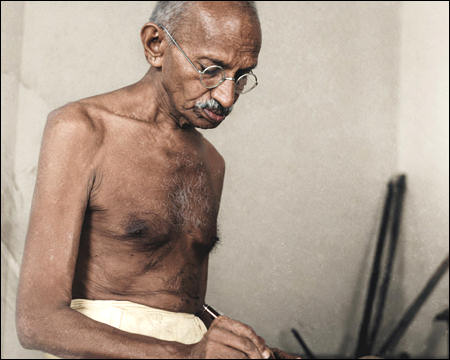
This is why great liberators—from Mahatma Gandhi boycotting English textiles to Ho Chi Minh and Ahmed Ben Bella—prioritized cultural autonomy.
These leaders were often fluent in the colonial tongue, but they chose to degrade its status within their own societies. They understood that if the masses develop an affection for the occupier’s culture, the spirit of resistance withers into a “dangerous indifference.”
Therefore I would not imagine these aforementioned leaders would allow Britain’s Got Talents, or Nouvelle Star in their countries nor would they allow these amounts of French or British settlers in their newly liberated country, as we are currently doing in The Kurdistan Region.
The Illusion of “Brotherhood and Coexistence”
Today, we see assimilation growing stronger than it ever was under previous regimes. Take Hewlêr (Erbil) for example; it has become a “tourism capital” of the Arab world. While some celebrate this, we must ask: How can a Peshmerga soldier effectively face an opponent with whom he shares the exact same playlist?
When you consume the music, movies, and media of the “brotherhood” of occupiers, you slowly render your own language obsolete. If you can communicate perfectly in the occupier’s tongue, the motivation to teach your children their mother tongue vanishes. We are told we are “brothers,” but this “brotherhood” is a veil for the erasure of our identity.
Refined Learning vs. Cultural Surrender
To be clear, this is not a call for isolationism. It is vital for our nation to learn English, German, Spanish or Japanese, or any language of a developed country. Engaging with high-standing global cultures and languages helps us evolve and compete on the world stage.

The boycott is specific: it is against the languages and cultures of the occupying powers that seek to swallow our identity. Besides that, our oppressors, their cultures and languages do not belong to the developed world.
What have we learned from them all those hundreds of years besides seeing the world from their perspectives, exaggerated poetry and falsehoods?
Could anyone prove me wrong? Could anyone give me some examples of a few scientific breakthroughs or inventions that we have gained from our occupiers during the last hundred of years? Don’t mention the Golden Age of The Abbasids, come on!
Another question to any reader who dominates a language from a developed country and one from the oppressing countries, What are the differences of qualities of the books, movies, TV series or YouTube’s programs of the two worlds? What are the main topics? What are the main issues?
A Unified Language for a Unified Nation

The recent years adding Kurdish into Google was a victory, yet it was marred by local patriotism and bickering over dialects. We must move past these internal divisions.
My own dialect, Southern Kurmanji (Sorani, formerly known as the dialect of The Babans) has been heavily invaded by The occupier’s loanwords and uses an Arabic script that in my knowledge does not fit the phonetic reality of Kurdish. If we are to have a future, we must:
-
Respect the Majority: Acknowledge The Bedirxan alphabet as the cornerstone.
-
Bridge the Gap: Learn each other’s dialects to create a future “Standard Kurdish.”
-
Cleanse the Vocabulary: replace loanwords from occupying neighbors with words from our own sister dialects.
-
Adopt a Unified Alphabet: Move toward the Bedirxan- Hawar script towards a unified alphabetical system that enables future unified standard Kurdish.. (Read my article about Standard Kurdish)
The Power of “No”
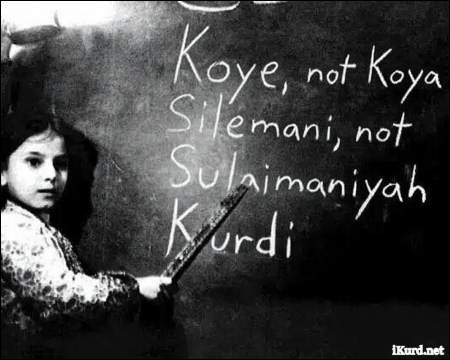
I have lived this reality. My family left Kurdistan 70 years ago, but we did not become Swedes nor Spaniards because my late mother enforced a strict “Only Kurdish Policy” at home. Language is the barrier that keeps the flame of identity alive.
There is a false prestige in knowing the occupier’s language. Many claim it is “important to understand the enemy,” but after a century of this, what has it gained us? When I refuse to speak their language—even though I know it—I receive more respect and even a sense of caution from the other side. When we speak their tongue, we are seen as assimilated subjects; when we stand our ground in our own culture, we are seen as a nation.
A New Path Forward
If we continue to do what we have always done, we will continue to get what we have always gotten. It is time for something new. Let us celebrate Kurdish on the internet, regardless of the dialect. Let us stop the petty localism. Our goal must be clear: One alphabet, one language, and one flag. And most important of all, let´s boycott the oppressors’ culture!
I am fully aware that my opinions are very odd and controversial to the vast majority of my fellow Kurds who mostly suffer from The Stockholm Syndrome (I call it The Nice Kurd or The House Kurd Syndrome) but true liberation begins the moment we stop singing their songs and start writing our own.
Scherco R. Baban, an independent researcher and analyst specializing in Kurdish Question and The Middle Eastern security, economical and cultural dynamics.
The opinions are those of the writer and do not necessarily represent the views of iKurd.net or its editors.
Copyright © 2026 iKurd.net. All rights reserved.
- Arabs, foreigners can own property in Sulaimani, court says - October 23, 2026
- Who’s Really Arabizing Kurdistan? It’s Not Baghdad – Part V - August 10, 2026
- Arabic ads in Iraqi Kurdistan are killing the region’s identity - August 4, 2026
- Who’s Really Arabizing Kurdistan? It’s Not Baghdad – Part IV - August 1, 2026
- Who’s Really Arabizing Kurdistan? It’s Not Baghdad – Part III - July 28, 2026
- Massoud Barzani, Stop Selling Kurdistan to Arabs - July 26, 2026
- Who’s Really Arabizing Kurdistan? It’s Not Baghdad – Part II - July 23, 2026
- Who’s Really Arabizing Kurdistan? It’s Not Baghdad – Part I - July 22, 2026
- Arabic fades in Iraqi Kurdistan as English takes over - May 1, 2026
- Liberation begins when we stop singing their songs, write our own - April 24, 2026
- Hewlêr: Erbil is becoming Al-Arbil and Silêmanî Al-Sulaymaniyeh - April 20, 2026
- One Million Arabs Inside Iraqi Kurdistan, A Strategic Gamble With National Consequences - February 24, 2026
Related posts:
 Iraq: Revenge and Corruption
 Kurdish Women Are Our Intellectual Firepower
 The Resurrection (Ba’ath) Party – Before the Iran-Iraq War
 Saddam Hussein’s Enemies: Paving the Road to the Invasion of Iraq
 The Cultural War against the Kurdish Nation. Cultural Boycott and Resistance
 The Suffocation of Iraq Kurdistan
 The Mustashar and the Jash – A View from the Position of ‘Iraqi National Unity’ on the ‘Descendants of Treason’
 Iraq – The Cynical Swindle
 The Truth About The Saddam Hussein Affair
 Sherko Bekas: Poetry as a Testimony to Freedom, Nature, and Memory