

Ali Ashouri | Exclusive to iKurd.net
Language Beyond Nostalgia
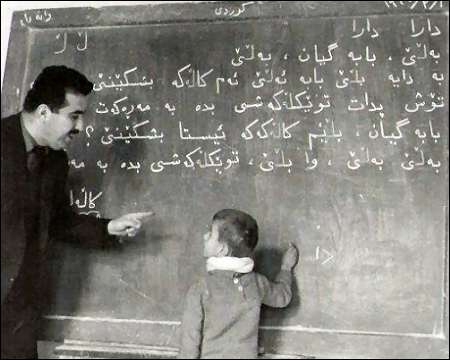
To speak of the mother tongue today is not to invoke a romantic return to origins. It is not merely the language of childhood, intimacy, or memory. In the contemporary world, the mother tongue stands at the intersection of power, technology, sovereignty, and identity. It is not simply a medium of expression; it is a field of struggle.
Modernity transformed language from a primarily local and organic phenomenon into an institutional and political instrument. With the rise of the nation-state, language became standardized, codified, and centralized. What was once a plurality of dialects and living speech forms was reorganized into a national language—disciplined, purified, and regulated. The mother tongue, in this process, was either absorbed into the national imaginary or marginalized as folklore.
The modern state did not merely recognize language; it governed it. Through education systems, print capitalism, bureaucratic documentation, and later mass media, language became a mechanism of symbolic integration and exclusion. A legitimate language was never simply linguistic—it was political.
Language and Symbolic Power
Language operates as a form of symbolic capital. Not all languages circulate equally within fields of power. Some possess institutional legitimacy, global mobility, and economic convertibility. Others remain confined to domestic or regional spaces.
In modern societies, to speak a dominant language fluently is often to possess access to opportunity, authority, and recognition. Conversely, to speak a marginalized mother tongue can be to inhabit a structurally disadvantaged position. This hierarchy is rarely explicit; it operates through institutions, norms, and cultural expectations.
The mother tongue, therefore, is not simply inherited—it is positioned. It exists within networks of valuation and devaluation. The suppression of a language is not only cultural loss; it is a redistribution of symbolic power.
The Digital Condition and Linguistic Transformation

If print modernity centralized language, digital modernity fragments and reconfigures it. The digital sphere does not abolish linguistic hierarchy; it restructures it.
Platforms, algorithms, and data infrastructures privilege certain languages through visibility, translation capacity, monetization, and searchability. Linguistic presence online is uneven. Some languages dominate search results, artificial intelligence models, and global communication channels. Others remain digitally peripheral.
The digital world introduces a new paradox. On the one hand, it offers unprecedented possibilities for linguistic revival. Minority communities can produce content, archive memory, and construct transnational networks in their own languages. On the other hand, digital capitalism consolidates attention around a limited number of globally dominant languages.
Language in the digital age becomes data. It is quantified, indexed, and optimized. What cannot be efficiently processed risks invisibility. Thus, the fate of the mother tongue increasingly depends not only on cultural transmission but also on technological infrastructure.
Mother Tongue as Resistance
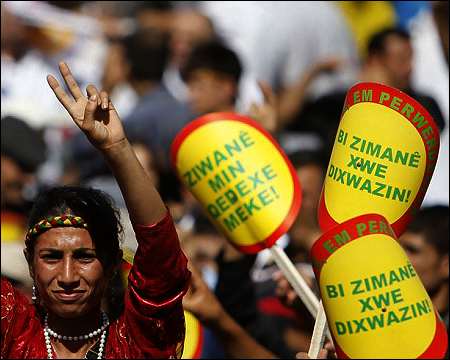
In this context, defending the mother tongue is not a conservative gesture. It is a political act.
To insist on linguistic plurality is to resist homogenization. It is to challenge the assumption that communication efficiency must override cultural depth. The mother tongue carries worldviews, metaphors, epistemologies, and forms of memory that cannot be fully translated without remainder.
Modernity sought to unify; digital capitalism seeks to optimize. Both tend toward reduction. The mother tongue interrupts this logic. It reintroduces opacity, singularity, and local knowledge into systems that favor standardization.
Linguistic diversity is not an obstacle to modern life; it is a condition of epistemic richness. A world reduced to a handful of dominant languages risks cognitive and cultural impoverishment.
Beyond Identity Politics
The defense of the mother tongue should not collapse into essentialism. Language is not an immutable essence tied to blood or soil. It is historical, relational, and constantly evolving.
What is at stake is not purity but presence. The question is not whether languages change—they always have—but whether they are permitted to exist as living mediums of thought, education, and creativity.
In plural societies, the recognition of multiple mother tongues is not fragmentation; it is democratic expansion. It signals a redistribution of visibility and legitimacy.
Conclusion: Language, Future, and Responsibility
The future of the mother tongue will not be decided solely in homes or schools. It will be shaped in code, platforms, policies, and global infrastructures.
To think critically about language today requires moving beyond nostalgia and beyond nationalist romanticism. It requires understanding how power operates through linguistic standardization and digital optimization.
The mother tongue is no longer only a matter of memory. It is a matter of justice.
In defending linguistic plurality, we defend not only cultural heritage but the possibility of multiple ways of inhabiting the world. Ali Ashouri.
Resources:
Anderson, Benedict. Imagined Communities: Reflections on the Origin and Spread of Nationalism. London: Verso, 1983.
Bourdieu, Pierre. Distinction: A Social Critique of the Judgement of Taste. Translated by Richard Nice. Cambridge, MA: Harvard University Press, 1984.
Bourdieu, Pierre. Language and Symbolic Power. Translated by Gino Raymond and Matthew Adamson. Cambridge, MA: Harvard University Press, 1991.
Bourdieu, Pierre. Outline of a Theory of Practice. Translated by Richard Nice. Cambridge: Cambridge University Press, 1977.
Derrida, Jacques. Of Grammatology. Translated by Gayatri Chakravorty Spivak. Baltimore: Johns Hopkins University Press, 1976.
Foucault, Michel. The Archeology of Knowledge. Translated by A. M. Sheridan Smith. New York: Pantheon Books, 1972.
Joseph, John E. Language and Nationalism. Edinburgh: Edinburgh University Press, 2004.
McLuhan, Marshall. The Gutenberg Galaxy: The Making of Typographic Man. Toronto: University of Toronto Press, 1962.
Stalder, Felix. The Digital Condition. Cambridge: Polity Press, 2018.
Steiner, George. After Babel: Aspects of Language and Translation. London: Oxford University Press, 1975.
Ali Ashouri, a contributing writer for iKurd.net based in San Diego, California, U.S.
The views expressed are solely those of the author and do not necessarily reflect the opinions of iKurd.net or its editorial team.
Copyright © 2026 iKurd.net. All rights reserved.
Related posts:
 The Dangers of Banning Cash: A Threat to Financial Freedom
 Letter to UNESCO Director-General in support of Iranian Kurdish teacher Zara Mohammadi
 Who Are the Persians? – Part VI
 The Cultural War against the Kurdish Nation. Cultural Boycott and Resistance
 The Resurrection (Ba’ath) Party – Before the Iran-Iraq War
 The first Kurdish university was founded in Syria 9 years ago
 Iraq: Revenge and Corruption
 From Hiroshima to Halabja – A Message of Peace and Reconciliation
 Behind the Veil of Turkey’s ‘Zero Problem’ Policy – A Kurdish Perspective
 The illusion of modernity: UAE’s crackdown on digital freedoms