

Kurds must seek unity and brotherhood among themselves, not with Arabs and Turks
Serwan Zangana | Exclusive to iKurd.net
The Israeli-Palestinian conflict is one of the most controversial and concerning cases for a majority of nations worldwide. And further framing this conflict more accurately, it is a Jewish and Arab fight for their rights in the land of Israel-Palestine. For decades, the U.S., Europe, and Middle Eastern nations have vocally and actively been involved in finding a solution to end this conflict.
But evidently all the attempts in the past and the present have failed as the situation is impacted by the extremists, such as Hamas, Hezbollah, and indeed the involvement and the threat of Iran’s Islamic regime to Israel’s existence, which is collectively impeding any peace process in the region.
However, with the differing opinions in the world regarding the Israeli-Palestinian conflict, there have been many calls for a two-state solution for both Jewish and Palestinians as both are to be granted sovereignty within these two separate states.
Ironically, the same nations that are calling for such a solution for the Jews and Palestinians are denying and opposing an independent state for the Kurds as the largest minority in the world with a separate nation, which was the result of international politics.
It has always been a challenge for the Kurds to avoid conflicts with the Arabs, Turks, and Persians, and throughout history, crises have been part of the Kurdish daily lives as plots and military campaigns from the neighboring nations against the Kurds have been recurring despite peace initiatives led by the Kurdish groups and leaders in the region.
The attempts by the region’s governments to integrate the Kurds into other ethnicities, such as the Arabs, the Turks, and the Persians, and using Islamic beliefs to serve a chauvinistic agenda are posing a major threat to the Kurdish cultural and political identity.
The preaching of civility and democracy by many democratic nations is seemingly a hoax as the Western nations, including the U.S., are viewing ethnic problems based on their political and economic interests in the region. The European Union (EU) has always opposed the Kurdish State.
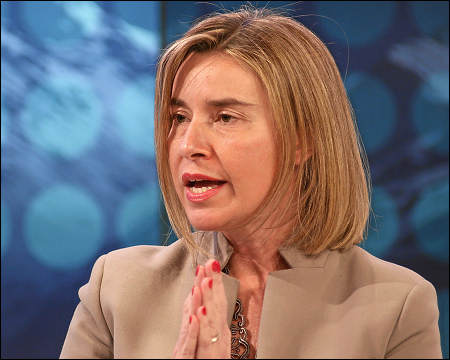
“The European Union does not support any separatist agenda for the Kurds – be it in Turkey, be it in Iraq, be it in Syria,” the former EU foreign policy chief Federica Mogherini said in 2016. Today, such a perspective of EU leaders has not changed.
However, the European nations are declining as their power and influence appear to be less influential as they have not been able to stand against Russian aggression against Ukraine and end the war. Therefore, it is less likely that they will be able to push a strong agenda to defend the Kurds.
While the U.S. has also failed to become a shield for Ukraine and bring Russia’s hostility to an end, it formulated a different approach, which is controlling significant oil regions and strategic areas, such as the Western Hemisphere and the Strait of Hormuz.
And regarding the Western Hemisphere, U.S. Secretary of State Marco Rubio clearly said, “We are not going to allow the Western Hemisphere to be a base of operation for adversaries, competitors, and rivals of the U.S.” Perhaps, it is another strategy to obstruct Russia and China.
Apparently, oil generates U.S. operations in the world and such a natural resource can be a factor for either becoming an ally or adversary of the U.S. Therefore, with the U.S. as an oscillating ally, and looking at the picture from different angles, it can be realized that the Kurdish identity is under a serious threat. And regardless of being constituted by a regional government, southern Kurdistan is under much greater threat and indeed it is vulnerable to collapse.

Furthermore, Turkish President Recep Tayyip Erdogan clearly stated, “I say to the international community that whatever price must be paid, we will never allow the establishment of a new state on our southern frontier in the north of Syria.” Such a statement is indeed agreeable by the political community in the region.
Also, the kleptocratic Kurdish leaders in the Kurdistan Regional Government have been blinded by their illegitimate wealth while they are unable to protect the region from the threat of neighboring countries or radical Islamic groups, including Iranian-backed militias.
Relying on the U.S. for support and defense of their case, the Kurds in southern Kurdistan have no other route to take during the crisis. That means the U.S.’s abandonment of the Kurds will lead to the region’s ultimate failure, and such a scenario is possible as it happened in the past and it will happen again. The U.S. is viewing the relationship based on its interest and can easily shift to a different direction.
It is necessary to adopt a mindset that totally believes in Kurdish nationalism as a pure ideology for the Kurds to be protected from sinking into other ethnicities in the region, and it is also the only way to save the Kurdish cultural and political identity. Kurdish nationalism can be an effective ideology to revive the Kurdish identity in the event of crisis, as well.

The Arab nations have always opposed the Kurdish State as in the past, the Secretary-General of the Arab League, Ahmed Aboul Gheit, spoke about the Kurdish State and said, “Today the Kurds are calling for a State of their own… why not the Yazidis, why not the Pashtuns, why not the Assyrians, why not lots of others?”
Aboul Gheit believes that the Kurdish State is separation and division, which leads to violence; however, such a belief is not corroborated.
By reestablishing their own State as it existed in the past, the Kurds can impede further violence and ethnic conflicts, and hence promote peace in the region. In fact, the Kurdish State will not lead to violence, but the chauvinist ideology of the Arabs, Turks, and Persians is generating violence and hatred against the Kurds.
As the largest minority in the world, the Kurds are estimated to be about 30 million people separated between Iraq, Iran, Turkey, and Syria. Also, the Kurds are completely distinguished from other minorities in the region as they are more receptive to diversity, including non-Muslims. As the majority of Kurds embrace the faith of Islam, however, they generally are not dominated by Salafism and extreme Islamic ideology compared to the Arabs.

As a reminder, after the collapse of former President Saddam Hussein’s regime in 2003, and the beginning of ethnic violence, especially the main conflict between the Sunni and the Shia, and with the rise of Al-Qaeda and the Mahdi Army, a militia led by the prominent Shia cleric Muqtada al-Sadr in Iraq, the minorities, including the Sunnis, the Christians, and overall those who feared for their lives in other areas of Iraq fled to the Kurdistan Region as a safe haven.
The region’s governments are using restrictive belief systems to promote their ideology by subjugating the Kurds and limiting their rights. The manipulative rhetoric of “unity and brotherhood” as recently expressed by Turkish President Erdoğan is a trap that targets the Kurds. However, before “unity and brotherhood” with the Arabs, Turks, and Persians, the Kurds must seek unity and brotherhood with each other.
Serwan Zangana, a contributing writer for iKurd.net, lives in Virginia, U.S. He serves as a correction officer.
The views expressed are solely those of the author and do not necessarily reflect the opinions of iKurd.net or its editorial team.
Copyright © 2026 iKurd.net. All rights reserved.
Related posts:
 The Resurrection (Ba’ath) Party – Before the Iran-Iraq War
 What makes a good NATO ally? The Case of Turkey
 Behind the Veil of Turkey’s ‘Zero Problem’ Policy – A Kurdish Perspective
 Business with ISIS – Updated
 Turkey’s Continuous Trail of Terror and Genocide
 Interview with Kurdish hostage, Huseyin Baybasin
 Kurds’ struggle among Arabs, Turks, and Persians, and Syria’s New Era
 The Kurds Between the Holocaust and the Arab Conscience
 The Mustashar and the Jash – A View from the Position of ‘Iraqi National Unity’ on the ‘Descendants of Treason’
 The Madness of Turks