

Massoud Barzani: The Nightmare That Betrayed Kurdistan
Sara Hussein | Exclusive to iKurd.net
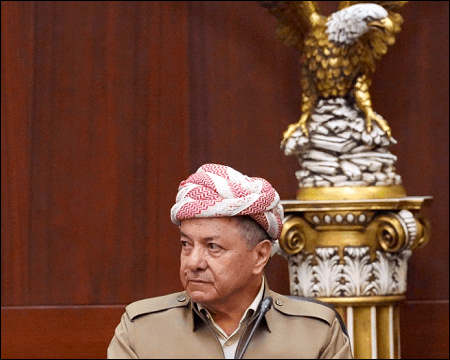
Massoud Barzani, who rose to power in the Kurdistan Region of Iraq in 1992 and later became its president, is often portrayed as a defender of Kurdish autonomy. Yet beneath this carefully curated political image lies a record of systemic corruption, strategic failures, and betrayal that has left the Kurdish people vulnerable, divided, and abandoned.
During his decades in power, Barzani concentrated authority within the Kurdistan Democratic Party (KDP) and his own family, prioritizing loyalty over competence. Government positions, military commands, and control of economic resources were granted not to professionals or patriots, but to party loyalists and family members.
This created a system steeped in nepotism, corruption, and inefficiency, leaving public institutions weak and the Kurdish people without real representation or protection.
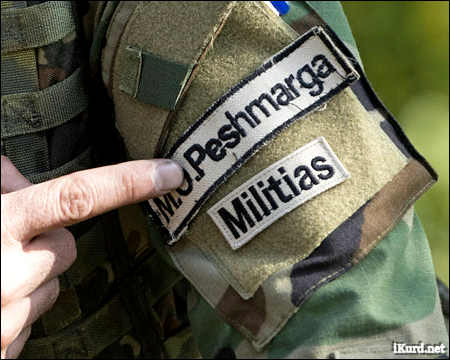
Barzani’s handling of the Peshmerga, the Kurdish military forces, exemplifies this failure. He deliberately kept the Peshmerga divided along party lines, ensuring that KDP-loyal forces remained separate from those of the rival Patriotic Union of Kurdistan (PUK).
This fragmentation weakened Kurdish defense capabilities at critical moments. During the ISIS advance in 2014, the lack of coordination contributed to unnecessary losses, and in 2017, the loss of Kirkuk revealed how party loyalty had been prioritized over national security.
While Barzani claimed to protect the Kurdish people, he failed to establish essential defense systems such as radar networks, anti-missile defenses, or domestic production of drones and other weapons. Military purchases were largely superficial, aimed at projecting power rather than ensuring real protection, and billions of dollars from Kurdish oil revenues intended for defense were allegedly stolen by his sons and other family members.
Yet Barzani and his inner circle presented themselves to Western governments as victims, begging for arms and protection, all while failing to invest in the security of their own people.
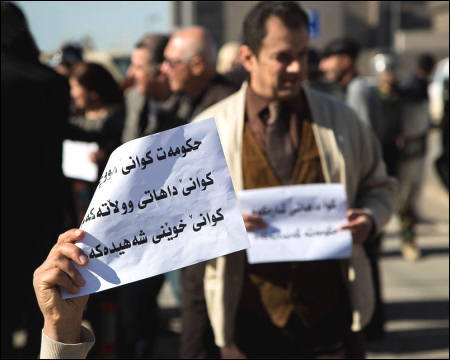
Economic mismanagement under Barzani exacerbated the suffering of ordinary Kurds. Civil servants, teachers, and doctors often went months without salaries, forcing essential workers to survive without income while billions from oil revenues were allegedly diverted into Barzani family accounts.
Public services, including electricity, healthcare, and infrastructure, remained chronically underfunded despite the immense wealth flowing from the region’s oil. Illegal and opaque oil exports further destabilized the economy and eroded trust in governance.
Infrastructure and development were also neglected. Electricity shortages became routine, public services lagged far behind regional standards, and there was no investment in long-term technological or military industries. Research and development of drones, advanced weapons, and other defense technologies were virtually nonexistent, leaving Kurdistan dependent on external powers for protection.

Strategic miscalculations compounded these failures. The 2017 unilateral independence referendum, while popular among Kurds, was a disaster. It provoked Baghdad, Iran, and Turkey, leading to the loss of Kirkuk and other disputed territories and leaving the Kurdistan Region politically isolated and economically weakened.
As the current U.S.-Israel war on Iran unfolds and Iraqi Kurdistan faces attacks from hundreds of Iranian drones, Barzani reportedly does not sleep two nights in the same place, moving his bed nightly out of fear of assassination.
He presents himself as a former rebel and protector of the Kurdish people, yet no member of his immediate family has ever fought or died in combat. Most of his family has escaped to Europe and the United States, safe from conflict, while ordinary Kurds face the consequences of war, poverty, and instability.
This stark contrast highlights a leadership style rooted in self-preservation and family enrichment, rather than genuine protection of the nation.

The result of Barzani’s decades in power is a legacy of lost potential, weakened institutions, fragmented military forces, and mismanaged wealth. Kurdistan remains a resource-rich region, yet it is weaker, divided, and less capable of defending itself than it should have been. Massoud Barzani’s rule demonstrates how autonomy without accountability can lead to stagnation, insecurity, and squandered opportunity.
History will not remember the Barzani family as heroes or patriots. Instead, the Barzanis will go down as a nightmare for the Kurdish people, a dynasty that enriched itself while leaving millions of Kurds exposed to poverty, war, and instability.
The Barzani name will forever be synonymous with betrayal, corruption, and the squandering of Kurdistan’s potential, a stark warning of what happens when leadership serves personal gain rather than the people it claims to protect.
Sara Hussein, a Kurdish writer living abroad, she focuses on politics, culture, and religion. She is a contributing writer for iKurd.net.
The opinions are those of the writer and do not necessarily represent the views of iKurd.net or its editors.
Copyright © 2026 iKurd.net. All rights reserved.
Related posts:
 Iraqi Kurdistan – “Sold Out!” – Part II
 Iraqi Kurdistan: The Emperors’ New Clothes
 Business with ISIS – Updated
 The Resurrection (Ba’ath) Party – Before the Iran-Iraq War
 Iraq – The Cynical Swindle
 The Mustashar and the Jash – A View from the Position of ‘Iraqi National Unity’ on the ‘Descendants of Treason’
 Iraqi Kurdistan – “Sold Out!” – Part III
 The Suffocation of Iraq Kurdistan
 Iraqi Kurdistan has better individuals than Massoud Barzani to lead
 Massoud Barzani between corruption, political crisis, and psychology behind his actions