If Iran’s theocratic regime survives, the “Shia Crescent” could re-emerge as a major force in the Middle East.
Omar Sindi | Exclusive to iKurd.net
The future of Iran’s theocratic Regime remains one of the most important geopolitical questions facing the Middle East.
If the Iranian regime survives the current military/economic, and political upheaval, the Mullahs’ regime is likely to intensify efforts to rebuild and expand what has commonly been described as the “Shia Crescent,” a network of allied governments, political movements, and armed groups extending from the Persian Gulf to the Mediterranean Sea.
Since the 1979 Islamic Revolution led by Ayatollah Khomeini, Iran has pursued a foreign policy, largely defined by opposition to Western powers, particularly the United States, and Israel. Over 40 years, Tehran has developed an extensive network of regional partners that serve both ideological and strategic purposes. These relationships have allowed Iran to project influence beyond its borders and establish itself as one of the most significant political and military actors in the Middle East.

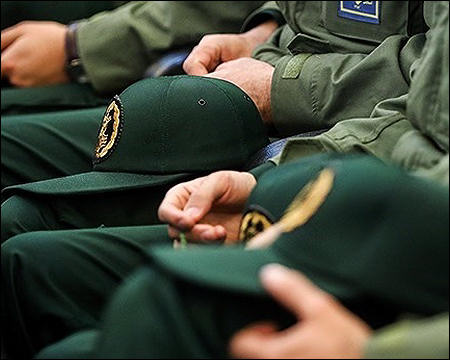
Iran’s regional allies include Hezbollah in Lebanon, the Houthi movement in Yemen, numerous factions within Iraq’s Popular Mobilization Forces, and organizations such as Liwa Fatimiyoun, an Afghan Shia militia, that has reportedly received training, funding, and logistical support from Iran’s Islamic Revolutionary Guard Corps. Collectively, these groups have provided Tehran with strategic depth and influence throughout the region.
Since Ayatollah Khomeini overthrew the Pahlavi dynasty, for the United States and its regional allies, including Israel, Saudi Arabia, and several Gulf Arab states, the prospect of a revitalized Iranian sphere of influence remains a serious concern. Critics argue that Iran’s regional strategy threatens key maritime trade routes, undermines regional stability, and challenges the security interests of countries aligned with Washington.
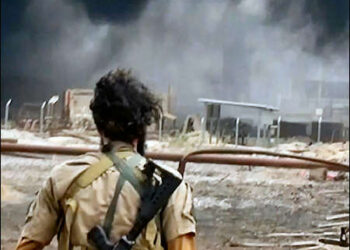
The ongoing conflict between the United States, Israel, and Iran, mainly Iran’s nuclear ambitions, has led to reports that groups of Shia militias from Afghanistan and Iraq entered Iran, monitoring political dissent in Iranian cities and towns against opposition groups should they rise up.
If a “No-Fly Zone” had been provided inside Iran and had worked, it would have given opposition groups a gathering place and maneuverability. For example, in the 1990s, the United States and coalition partners created a no-fly zone in Iraq, mainly in Kurdish areas. That area provided the ability for anti-Saddam Hussein/Ba’athist regime groups to organize themselves.
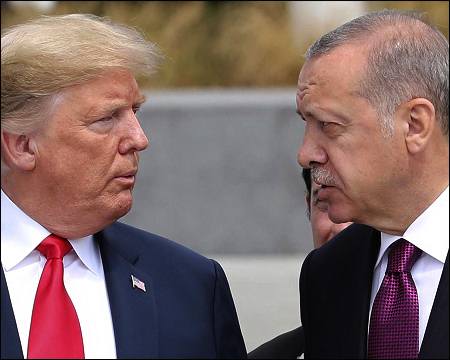
Turkish President Erdogan was able to exert his political influence on U.S. President Donald Trump to suddenly reverse the course of action by not allowing the regime’s opposition groups to enter Iran. This ill-advised decision should be considered a stern warning for many Kurdish political leaders, who are placing their trust in Turkish democracy; if the Turkish state objects because of fear of Kurdish rights outside Turkey and concerns about how Turkey will recognize the rights of the over 30 million Kurds inside Turkey.
Although the Turkish state is a NATO member, it appears that for a long time it has had an effective lobby inside the United States that is more aligned with Turkish state policy than with U.S. interests. “Turkey-linked entities spent roughly $55.5 million on United States lobbying and influence activities.
This massive total represents the highest spending of any foreign nation in recent tracking, with millions directed toward government-linked organizations, the ruling Justice and Development Party (AKP), and various private lobbying firms…” (Foreign Lobby Watch).

Despite the Turkish state pursuing the revival of the Ottoman Empire’s ambitions and seeking regional hegemony, assisting Iran in evading economic sanctions, and purchasing the S-400 Triumph surface-to-air missile system, despite a steadily deteriorating relationship between the U.S. and Turkey (except at the personal level between President Erdogan and President Trump), and despite gross human rights violations, the two former U.S. ambassadors, James Jeffrey and Robert Ford, while not working as registered lobbyists for the Turkish state, have taken positive positions on maintaining good relations between the U.S. and Turkey under the NATO umbrella. This could be considered undeniable. Moreover, the newly appointed ambassador to Turkey, Tom Barrack, as well.
Dr. Mehmet Oz is a member of President Donald Trump’s cabinet and serves as the Administrator for the Centers for Medicare and Medicaid Services (CMS). He is a dual citizen of the U.S. and Turkey and served in the Turkish military.
In 2022, he ran an unsuccessful senatorial campaign in Pennsylvania. Dr. Oz was criticized by the opposition for his relationship with the Turkish state. “Trump’s former secretary of state and CIA director, Mike Pompeo, who endorsed McCormick in the race, told reporters Friday that [Dr.] Oz owes an explanation about the scope and the depth of his relationship with the Turkish government.”
Despite the Turkish state pursuing policies that differ greatly from NATO standards and are contrary to U.S. interests in the Middle East, it still manages to smooth its agenda and maintain its relationship with the United States. This is probably due mainly to the enormous amount of money spent on lobbyists and individuals within the hierarchy of U.S. government positions.
Whirlwind of Tom Barrack, U.S. Ambassador to Turkey and Special Envoy to Syria and Iraq
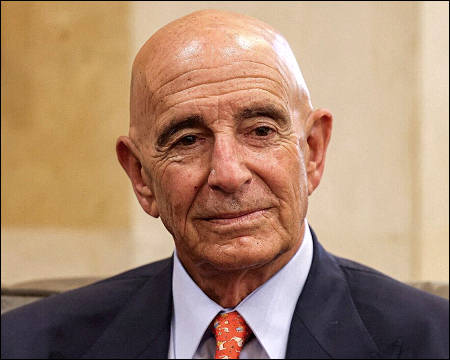
Tom Barrack appears to want to rejuvenate the “Sykes-Picot Agreement” against the Kurds under the cover of a strong centralized system of government. Mr. Barrack’s apparent anti-democratic agenda and support for strong centralized authority in the Middle East indicate that he believes democratic rule does not suit Middle Eastern people. In my personal opinion, this kind of phrase or view should be considered “adding insult to injury” for all the people of the Middle East, including those plutocratic leaders who support Tom Barrack’s agenda.
Why should Middle Eastern people be considered inferior in Barrack’s view and incapable of handling a democratic system of government? Chauvinistic people in the Middle East should not be inspired with Tom Barrack’s grim idea because it will plunge the region into more chaos, instability, and conflict.

Mr. Barrack should bear in mind the “Benevolence of Monarchy: What Has [Not] Worked Best.” The kleptocratic Mohammad Reza Shah Pahlavi and his corrupt dynasty caused the downfall of his absolute rule and were replaced by the theocratic regime of Ayatollah Khomeini.
This has now created political crises in the Middle East, almost worldwide economic disruptions, and a tangled conflict involving the U.S. and Israel. The Mullah regime’s pursuit of an elusive “Shia Crescent” is a threat to all Middle Eastern people through its quest for hegemony, including the blocking of the Strait of Hormuz, which has spiked worldwide energy prices and contributed to economic crises.
It appears that the United States’ flailing foreign policy has friends and foes bewildered, but certainly the Turkish state and Iran are directing it to their advantage.
Syria

It was axiomatic that an authoritarian form of government created the corrupt Assad family dynasty and Ba’ath Party clique that ruled for decades, placing Syrian society on a destructive path and causing a catastrophic civil war lasting more than ten years, in which over a quarter of a million people perished.
Now Syria is under former al-Qaeda Islamist Ahmed al-Sharaa, but time will tell what trajectory his rule will take. Moreover, there is a proverb that says, “A leopard changes its spots, but not its mind.” At the same time, one has to wonder whether an Islamic zealot and former terrorist can become a sagacious democratic leader.
Iraq

Saddam Hussein and the Ba’ath Party were products of an authoritarian system with a strongly centralized structure. They ruled Iraq with an iron fist and did not know how to govern Iraq peacefully, either internally or externally.
They showed little tolerance toward opposition groups, quelling dissent through killings, imprisonment, and repression. They fought the Kurds, including bombing Kurdish towns and villages with chemical weapons. They fought an eight-year war with the Iranian theocratic regime at tremendous cost in blood and treasure, and they invaded Kuwait.
Finally, United States forces, along with coalition partners, removed the tyrant and his Ba’ath Party regime. Afterward, Iraq adopted a written constitution. It is far from perfect, but it has functioned since 2005. Iraq established a parliamentary system of government and has elected six prime ministers. Its federalized system is recognized, including Kurdish autonomy and its separate security forces, the Peshmerga.
Turkey/Türkiye
Turkey is a strongly centralized state. President Erdogan, a warmonger in the eyes of his critics, has been in power for more than 23 years. During this time, there have been allegations of gross human rights violations, and many political opponents have either been jailed, imprisoned, or forced to leave the country.
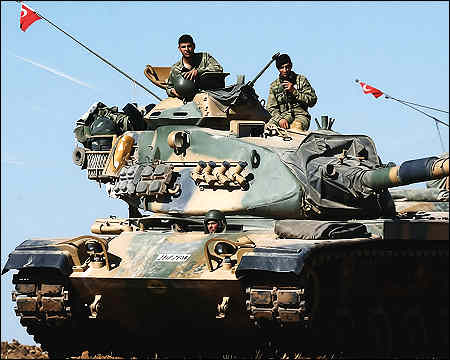
Turkish troops are illegally occupying Kurdish areas in Iraq and are accused of environmental degradation, including logging and cutting trees in some of the most pristine areas for export to Turkey. Turkish troops are also present in Syria, Libya, the Persian Gulf region, and Somalia. During the Nagorno-Karabakh war between Armenia and Azerbaijan, Turkish forces assisted Azerbaijan against Armenia.
This is presented as a consequence of the misguided policy of a strong centralized system, which weakens both the judiciary and political opposition by eliminating effective checks and balances.
The current tangled conflict involving United States forces, Israel, and the theocratic regime in Iran is, according to many political pundits and observers, currently more favorable to the Iranian regime. It is essential for the United States to recalibrate its foreign policy with its allies in order to maintain effective foreign-policy objectives around the globe.
It is understandable that no one wants war. The majority of public opinion in the United States is against war in the Persian Gulf, mainly because of the impact on gas prices and other commodities. At the same time, if the Iranian regime controls the Persian Gulf and gains the upper hand in the Middle East, what will happen to gas prices and other commodities? I will leave that question to political pundits and analysts to explain.
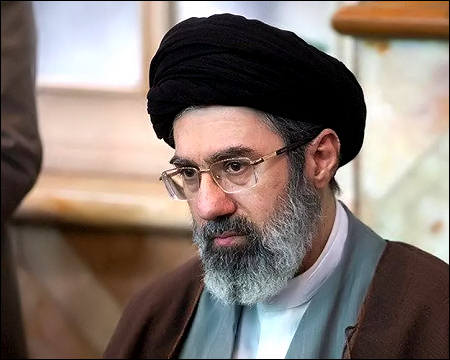
However, if the Mullah regime survives the current war with the U.S. and Israel, its ultimate endgame for the “Shia Crescent” is to establish regional supremacy, ensure its strength, and project power across the Middle East and beyond. Through rejuvenating its proxies stretching from the Persian Gulf to the Mediterranean Sea (despite currently losing Syria to its rival Turkey and the ambitious neo-Ottomanism of President Erdogan), the Mullah regime seeks to prevent foreign interests, drive out American influence, and defeat Israel.

The current negotiations on the nuclear issue between Iran and the U.S. are not resolved; they are delayed. This is probably the first time Iranian diplomats were able to create a gap in the conflict between the two allies, the US President Trump administration and Israeli Prime Minister Netanyahu’s government.
Iran’s ultimate objective is to export its Shia faith through its “Shia Crescent,” much like the Fatimid Empire of the tenth and eleventh centuries, but this time under a Persian empire. Most likely, it will create more chaos, more instability, and more wars. The struggle for influence across the Middle East is far from over. The future of Iran’s theocratic regime will remain one of the defining geopolitical questions of the twenty-first century.
Omar Sindi, a senior writer, analyst and columnist for iKurd.net, Washington, United States.
The opinions are those of the writer and do not necessarily represent the views of iKurd.net or its editors.
Copyright © 2026 iKurd.net. All rights reserved.
Related posts:
 Business with ISIS – Updated
 The Resurrection (Ba’ath) Party – Before the Iran-Iraq War
 What makes a good NATO ally? The Case of Turkey
 Saddam Hussein was a Friend to the West
 Iraq: Revenge and Corruption
 The Assassination of Abdurrahman Ghassemlou: No Friends but the Mullahs?
 Betrayal by the Rogue State of America – The Bull in the China Shop
 Turkey: Nato’s Islamic State Member
 The 12-Day War: A Tactical Failure, Yet a Strategic Win for Israel
 Iraqi Kurdistan – “Sold Out!” – Part II