

The Hammer of Ethics and Broken Sacred Idols
Fuad Sediq | Exclusive to iKurd.net
Translated by iKurd.net from Kurdish Awene
Between the dense smoke of religious discourse and the deep darkness of our present time, which has completely clouded our sky, our humanity and Kurdish identity are facing a major existential and moral crisis.
Religion has transformed from a spiritual manifesto into a dangerous tool of oppression and the stripping away of moral and human values.
When we carefully look at the current reality of Kurdish society, we see how political Islamic discourse and extremist Salafism have spread silently like poison through different areas of life. Here, a person with morality and a living conscience needs Nietzsche’s hammer in order to break all those imaginary idols that have grown in the name of holiness in the hearts of our cities and have pushed society toward emptiness.

Nietzsche taught us that most of those who claim asceticism, purity, and fear of God actually seek only to hide their wild instincts behind the thick curtain of religion. What we see today in Kurdistan under the title of preacher and religious scholar is a living example of that slave morality which pulls humanity backward and strips life of its true and beautiful meaning, leaving only shadows, fear, and accusations of heresy behind.
These preachers, who have occupied the intellectual and social arena, have filled society with intellectual bacteria that directly paralyze the sensitive nerves of reason. They have produced a discourse that disgusts any dignified and free person and makes coexistence impossible.
When a Salafi figure destroys a family and separates a woman from her husband merely to satisfy his own instincts, this is not a personal issue or a temporary deviation. Rather, it is the greatest failure of a closed ideological system that constantly claims moral superiority and the protection of the family.
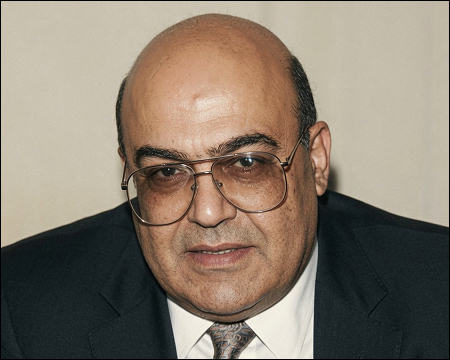
Here we are reminded of Farag Foda’s ideas, and how he paid with his life for speaking the truth and warning that the religious state and religious fundamentalist discourse are merely decorated masks for achieving absolute power and satisfying hidden desires.
Foda believed that when religion becomes mixed with political and social conflict, the first victim sacrificed on the table of interests is morality and honesty. These Salafis today represent the “sacred ignorance” that Nasr Hamid Abu Zayd and Olivier Roy repeatedly described as a major danger; they bend religious texts according to their desires and interests, turning them into whips for punishing their opponents.
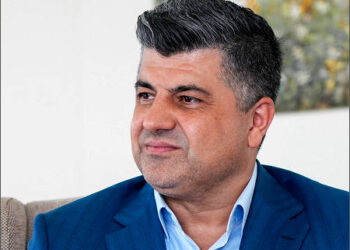
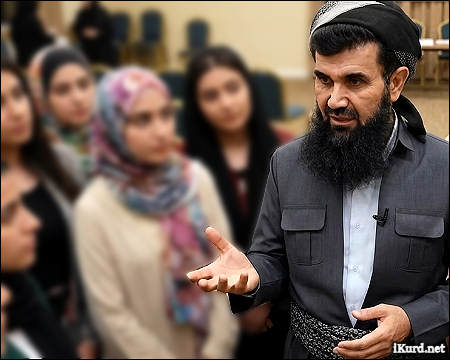
The committee formed to investigate the case involving Latif Salafi and the female students of the College of Sharia carries a great historical and moral responsibility. What is happening on the margins of these events is not merely an administrative investigation; it is a test of national morality and conscience.
The spreading of pressure and fear on social media to force the female victims into silence is a form of psychological terrorism intended to destroy what remains of the spirit of those young women who have already been exploited by Salafists.
David Hume, from a skeptical perspective, taught us that no one possesses absolute truth, yet this group behaves as if the keys to heaven and hell are in their pockets and seeks to turn people into slaves of a meaningless and contradictory discourse.
The responsibility of the Minister of Higher Education begins here, as a representative of reason and knowledge. He must not remain a silent observer. A minister who represents thought and learning should be a shield for those young women who have been humiliated and whose dignity has been violated under the cover of religion.
Silence in the face of such crimes means granting legitimacy and becoming a partner in the tragedy. This position was built on the blood of thousands of martyrs who sacrificed their lives for freedom and dignity, not so that universities could become testing grounds for the wild instincts of a handful of people whose minds are infected with intellectual bacteria.
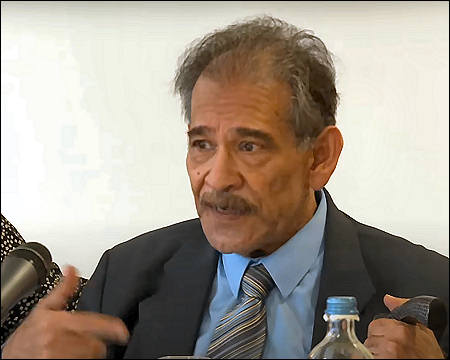
Sayyid al-Qimni says that the history of religious fundamentalism is full of people who shed blood and violated honor simply to prove that they were God’s shadow on earth. Today, our preachers are repeating the same historical scenario. They are numerous in number, yet they have added no real human or intellectual value to society.
The essential question is this: in a society like Kurdistan, where for fourteen centuries simple and sincere village clerics taught human values and peace, why is there a need for so many colleges of Sharia, most of which produce extremism, backwardness, and closed-minded thinking? The clerics of the past worked for goodness and reconciliation, unlike these modern preachers whose eyes are fixed on other people’s wives and who trade in women’s bodies and dignity in the name of religion.
When George Tarabishi speaks of a disabled reason, he means precisely the kind of reason that surrenders to such discourse, a reason that neither questions nor criticizes, but merely obeys, allowing a preacher to decide the private lives and destinies of others according to his own desires.
These preachers drag society backward, toward centuries of darkness and eras when human beings were bought and sold. Our universities, which should be centers of creativity and intellectual discovery, are being turned into breeding grounds for people whose minds are infected with intellectual bacteria.
The government and the Ministry of Higher Education must conduct a deep and uncompromising review of these colleges of Sharia. Beyond promoting extremism and creating divisions among people, what have these colleges actually contributed to Kurdish knowledge? Has the time not come to stop producing extremists and morally corrupt individuals in the name of holiness? Nietzsche said that when you break idols, you hear the sound of their emptiness.
Today, if we strike these preachers with the hammer of philosophical criticism, we find nothing inside but emptiness, instinct, and frightening ignorance. They have nothing to offer except fear, intimidation, and the reproduction of slavery.
The minister’s responsibility here becomes a paternal and human duty toward all those young women who have been exploited under Salafist pressure. They need political and legal authority to stand behind them and prevent any Salafi from placing himself in the position of a god over other people. If the Minister of Higher Education remains silent today, he will be remembered as an accomplice of the offenders.

What the Salafists are doing is not merely a moral deviation; it is the spiritual and physical terrorization of human beings under the shelter of sacredness. A society in which a preacher can violate people’s honor and then justify it with religious texts is not merely a sick society, it stands on the edge of moral death. The solution requires major intellectual surgery: religious institutions that have become threats to social peace must either be closed or fundamentally reformed.
We need free human beings, not slaves who are too afraid of a preacher’s vision of hell to defend their own rights. When Nietzsche declared that God is dead, he meant that the old and oppressive meanings that had imprisoned humanity no longer functioned. Likewise, the extremist interpretations of religion that Salafists seek to impose must be allowed to die so that Kurdish people can live freely.
This modern preaching discourse consists of using technology to spread ignorance, which is the most dangerous form of ignorance. These people know only how to move backward. While the world advances toward exploring the universe and understanding the details of genetics, our preachers are still occupied with discussions about acquiring third and fourth wives and deceiving young women.
This is the national disaster that the Minister of Higher Education must confront. When George Tarabishi discusses the narcissistic wound of Islamic reason in relation to modernity, he refers to the harsh reaction displayed by religious fundamentalists in defense of their fragile position.
In Kurdistan, this reaction appears in the form of producing thousands of preachers and opening countless colleges of Sharia, which, instead of being centers of knowledge, have become factories for producing backward individuals.
Why, in a society where the majority are Muslims, do we still need so much instinct-driven preaching? The answer can be found in Nasr Hamid Abu Zayd’s thought, when he argues that religion in the hands of power-seekers and opportunists becomes a closed ideology used to control people’s minds and bodies.
These preachers do not exist to bring people closer to God; rather, they exist to separate people from truth and freedom and to keep them trapped in a constant feeling of guilt, because guilty people are easier to control. A College of Sharia within a modern university is like a foreign and poisonous element seeking to destroy science and logic.
When a Salafi, in the name of religion, pursues a married woman and then justifies taking her into his private sphere through religious reasoning, this represents the final collapse of the morality that religion claims to defend. Here Nietzsche’s hammer must shatter that imaginary idol of holiness, because any holiness that violates human dignity is merely a cover for corruption. This is exactly what Olivier Roy calls “sacred ignorance”, not illiteracy, but the separation of religion from culture, knowledge, and history.
Farag Foda sacrificed his life in confronting this kind of extremism because he understood that if religious fundamentalists gained control of society, the first thing they would destroy would be women’s dignity. Sayed Al-Qimni argues that extremists throughout history have always searched through the most private details of people’s lives in order to impose their authority.
Today in Kurdistan, this is being carried out systematically within academic institutions. The government must break its silence and review these massive religious institutions that produce nothing but ignorance and immorality. David Hume believed that religion, when placed in the hands of the ignorant, becomes a cause of moral corruption.
Natural morality tells us that no one should violate another person’s honor, yet Salafism claims that everything is permissible under the name of religious law. Universities should be places of creativity, not places where young women are exploited. We live in the twenty-first century, the age of AI, so how can an educational system still discuss the enslavement of women? What is happening today is a struggle between light and darkness; between the reason that seeks human freedom and the reason that seeks to turn people into slaves of dead texts.
If colleges of Sharia, mosques, and preachers do not serve the dignity of Kurdish people, what purpose do they serve other than destruction? The Minister of Higher Education must not submit to pressure from religious parties, because any negligence will place his name alongside the history of the Salafists themselves.
Those young women who have been wronged must know that the law should stand behind them. Silence in the face of Salafist oppression is one of the greatest injustices against humanity. We need an intellectual revolution so that reason can return to its rightful place and religion can return to people’s hearts, rather than becoming a tool for examining and controlling the bodies of young women.
Nietzsche said that he feared a day when holy people would destroy the world; today, that fear is becoming reality. All these meaningless forms of control carried out in universities in the name of religion must be dismantled. We need doctors, engineers, philosophers, researchers, artists, and great writers, not people who make human beings hate life.
Kurdistan deserves a generation that is free and possesses an open mind. This is a major test for all those who claim to support human rights: can they free Kurdish people from the grip of this sacred ignorance? The decision is in our hands, and history remembers only courage.

Until now, the power of truth has always been stronger than every mask. The fog of ignorance spread by the Salafists can be cleared only by the light of reason and by breaking these imaginary idols. The Minister of Higher Education and all decision-makers must understand that protecting the dignity of one individual means protecting the dignity of the entire nation.
Allowing this situation to continue means surrendering to a darkness that seeks to destroy every form of beauty in this land. The time has come to raise our hammers and break these false idols of holiness that have been built upon fear and exploitation, so that Kurdish people may find meaning in their lives under the light of truth and freedom.
This article was originally published in the Kurdish language in Awene Newspaper on June 23, 2026.
The opinions are those of the writer and do not necessarily represent the views of iKurd.net or its editors.
Copyright © 2026 iKurd.net. All rights reserved.
Related posts:
 Ocalan’s Secular Lens on a “Democratic Islam”
 The Kurdish Mind – Critique of Practical Reason – Book review
 The Resurrection (Ba’ath) Party – Before the Iran-Iraq War
 The Absurd Cause For The Faili Kurds Holocausts – Part VIII
 Political Islam in Kurdistan and Its Impact on Human Rights, Freedom
 The Rojava Revolution Has Lessons for Western Feminism
 Interview with Kurdish hostage, Huseyin Baybasin
 Powerful, yet are they Useless?
 Anfal – The Black Stain on Iraqi History Spreads
 Syrian Kurdish Women Fighters: A Beacon of Women’s Empowerment