

The Impacts of Political Islam on Human Rights in Iraqi Kurdistan and Its Role in the Suppression of Freedom
Twana Muhammad Nuri | Exclusive to iKurd.net
Translated by iKurd.net from Kurdish Awene
To understand Islamic movements in Kurdistan, it is necessary to view them as political entities, not just religious ones. Political Islam (such as the Islamic Union, Komal, and other parties) is a conservative political movement that emerged in the region to reduce public freedoms and control society.
These movements clash with the lives of the people and function as political projects aimed at controlling individuals and returning the region to darker times in its political history.
According to scholars who study the Muslim Brotherhood, the main issue is that political Islam uses religion as a violent political tool to control individuals. These parties, like other right-wing groups in the region, have greater influence during times of crisis.
They instill fear in people to prevent workers and citizens from demanding their rights or changing the system. Political Islam acts as a conservative wall, protecting the privileges of those in power by frightening people away from positive and progressive changes.
Historically, these movements have always served as instruments of pressure for regional governments. Their existence was often supported financially and logistically by countries that wanted to prevent progressive and freedom-seeking reforms in Kurdistan.
When a party operates with external funding and political plans, it is clear that its goal is not to serve citizens but to implement plans that force Kurdish people into a mindset against freedom and human rights.
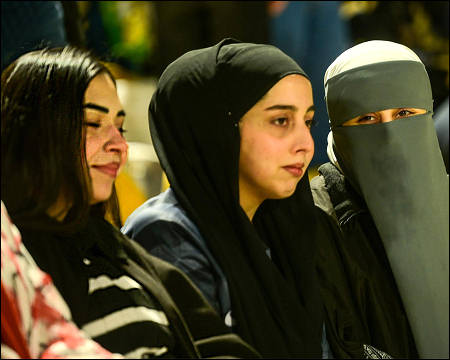
One of the most concerning aspects of political Islam is its fundamental opposition to gender equality. At its core, this movement is based on rejecting the recognition of women as equal human beings. They see equality as a threat and aim, in the name of “holiness,” to legally enforce gender discrimination.
For political Islam, any effort toward equality is considered a challenge to the patriarchal system, which uses religion as a tool to maintain power. Therefore, real progress requires rejecting these anti-equality views.
Practices such as the use of the veil or displays of modesty are nothing more than attempts to erase women’s identity and promote the party’s ideological control over their bodies. This is a form of fascism because it seeks to erase individual differences and force everyone into a single, silent mold. Here, the veil carries not a religious message but a political one: to reject personal freedom and present women as mere propaganda tools rather than individuals with agency.

Political Islam tries to shape Kurdistan according to the 21st century’s global and human values, but in a regressive way. They want to build a “cultural wall” separating people and claim that human rights and equality are unnecessary.
This is a political strategy to maintain patriarchal dominance under the guise of religious “uniqueness,” silencing any voice that seeks freedom. In reality, the Kurdish people’s desire for freedom does not differ from that of anyone else in the world.
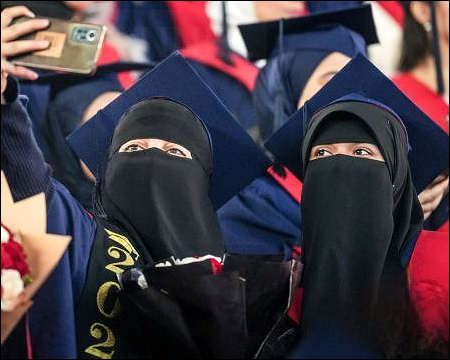
These movements systematically attack education. They aim to transform schools from centers of science and critical thinking into places for “indoctrinating children.” When a child is educated under a political-religious ideology from a young age, they may grow up dogmatic and unable to coexist with people who think differently. This poses a serious threat to the future of society and cultural development.
Political Islam consistently emphasizes death and judgment, viewing life on earth as temporary and insignificant. This worldview prevents them from developing genuine plans for happiness, economic growth, or cultural enrichment. When young people pursue music, art, sports, and enjoyment in life, political Islam considers these acts sinful. This creates a conflict between their death-centered culture and the people’s life-centered culture.
Historically, one of the first steps political Islamic movements take in occupying public spaces is to attack art. Banning music and visual arts is not just a religious issue, it is a systematic effort to remove sources of joy and expression from human life. When music is labeled “sin” and art is deemed “forbidden,” society loses opportunities for emotional and creative development. This suppression creates an environment where only party and religious narratives are heard.
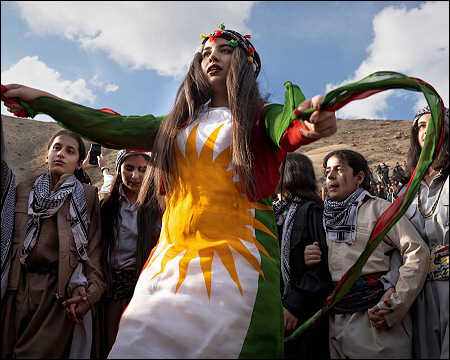
Over time, music and arts have been a central part of the people’s cultural identity. Political Islam, by prohibiting these forms of expression, attempts to rewrite society’s history so that no diverse voices remain. These restrictions lead to a “silent society” where individuals cannot criticize or express themselves through art. In reality, the fear of music and imagery reflects the fear of freedom itself—the freedom that art provides to human beings.
The exodus of youth from the region is not only due to economic crises but also because of the intellectual and social repression that political Islam imposes. According to Kurdistan parliamentary elections in 2024, Islamic parties won only 10 out of 100 seats, which is just 10% of total representation. This shows their limited influence on political decision-making.
Additionally, according to the Ministry of Displacement and Refugees, in 2023 nearly 20,000 people left Iraq and the Kurdistan region for European countries. When young people see their future prospects blocked, they are forced to leave their homeland. Political Islam, by killing hope and creating a “colorless prison,” drives youth to escape instead of grow and prosper.
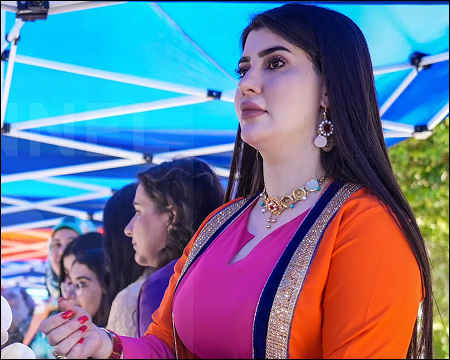
Kurdish society, like all human societies, is moving toward modernity and freedom. Young people seek a dignified, equal, and culturally rich life. Political Islam internally opposes all of these values. It seeks total control over private life, forbidding free thought and expression. This hostility frames them as a “reactionary force” against life and progress, incompatible with the modern era.
One of the greatest myths of political Islam is its propaganda that Islam is “essential” for societal protection. However, the experience of other countries, such as China, shows that social systems can thrive without religious enforcement. Kurdish society does not need religious policing to maintain order; it needs laws and equal rights compatible with modern life and the aspirations of the new generation.
Instead of addressing economic and political problems, political Islam constantly creates divisions. They classify people as “believers vs. non-believers” or “Muslims vs. non-Muslims” to justify their suppression as “divine opposition.” This poses the greatest threat to civic life because political parties should be evaluated based on administrative and scientific programs, not on false notions of holiness that prevent questioning and debate.
Political Islam in Kurdistan is not just a movement, it is an anti-progress movement. The only solution is the full separation of religion from the state and education. Until these movements can use religious practices for political goals, the Kurdish people cannot achieve freedom. The solution is not merely “containing” these movements, but building a secular, modern society where freedom of thought and full equality for all people is guaranteed.
This article was originally published in the Kurdish language in Awene Newspaper on June 1, 2026.
The opinions are those of the writer and do not necessarily represent the views of iKurd.net or its editors.
Copyright © 2026 iKurd.net. All rights reserved.
Related posts:
 The Resurrection (Ba’ath) Party – Before the Iran-Iraq War
 Ocalan’s Secular Lens on a “Democratic Islam”
 Ethics Hammer and the Fall of Sacred Illusions
 The Rojava Revolution Has Lessons for Western Feminism
 Sabotaging Syria
 Business with ISIS – Updated
 The Mustashar and the Jash – A View from the Position of ‘Iraqi National Unity’ on the ‘Descendants of Treason’
 Daesh’s distinct threat to the Kurdistan Regional Government
 Iraq: Revenge and Corruption
 Anfal – The Black Stain on Iraqi History Spreads