

US plans to end military support for peshmerga militias, BBC report.
ERBIL,—The Trump administration is preparing to end military aid to Iraq’s Kurdistan region, a longtime American partner in the fight against the Islamic State group that is now under heavy attack from Iran, four sources familiar with the matter told the BBC.
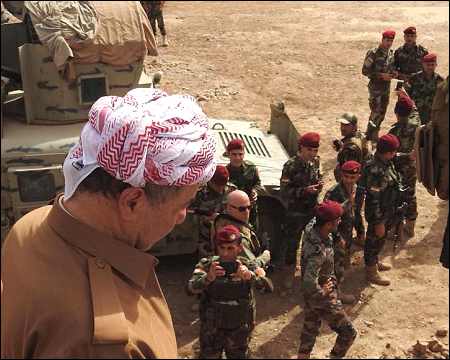
The Pentagon has informed leaders in Iraq’s Kurdish region during recent meetings that it does not plan to renew an expiring agreement covering security assistance to the Peshmerga, the Kurdish security militia force.
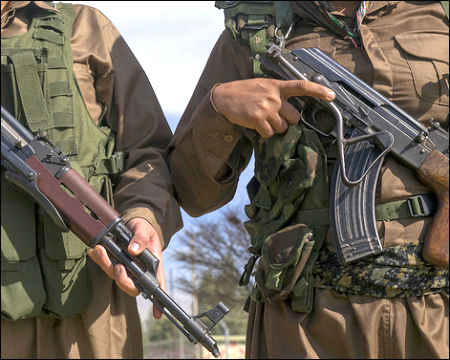
The Peshmerga are not a single unified forces. They operate as separate militias loyal to Iraqi Kurdistan’s ruling parties, the KDP, led by Massoud Barzani, and the PUK, led by the Talabani family.
Two officials who took part in the talks, along with two other people with direct knowledge of the matter, spoke to the BBC on condition of anonymity because the details had not been made public before.
Kurdish officials worry that losing the funding would leave a power vacuum and give Iran more room to act. Iran has launched hundreds of missiles and drones at Iraqi Kurdistan since President Donald Trump began the war with Tehran.

Analysts said cutting the Peshmerga’s security aid would hurt a longstanding U.S. partner in Iraq and signal that Washington cannot be relied on to stand by its allies in the region.
Yerevan Saeed, director of the Global Kurdish Initiative for Peace at American University, said the move would amount to abandoning a group that sacrificed heavily to help the United States meet its goals in Iraq and the broader Middle East.
He added that it would be a major win for Iran, China and Russia if the Kurds were left exposed.
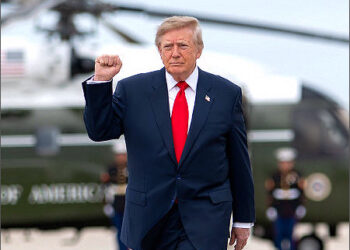
Trump has said during his second term that he wants to scale back American involvement in the Middle East. At the same time, he launched the war against Iran, which passed the six-month mark Friday with no resolution in sight.
The agreement between the Pentagon and the Kurdistan Regional Government is due to expire September 30, the same day the United States and other nations plan to pull their last troops from Iraq.
That withdrawal will officially close out the international campaign against the Islamic State group, a fight in which the Peshmerga worked alongside coalition forces to push the group out of parts of Iraq and Syria.
The only remaining U.S. base in the country, in the Kurdish capital of Erbil, is expected to shut down next month once coalition troops leave.
The Peshmerga, which has roughly 180,000 fighters in Iraqi Kurdistan, received $61 million in fiscal year 2026 for weapons, training and stipends through the Pentagon’s counter-Islamic State program.

The Pentagon had proposed eliminating all of that aid in its fiscal year 2027 budget, arguing the money should be redirected now that the group has been defeated. That spending plan remains stalled amid a wider budget dispute in Congress.
The proposal worried officials in Iraqi Kurdistan, though many held out hope that Washington would extend the existing deal instead.
Those worries have deepened as Iran has ramped up strikes on the region. Iran and Iranian-backed militias carried out 158 missile or drone attacks in Iraqi Kurdistan by late May, according to data compiled by the Foundation for Defense of Democracies, a Washington think tank.
Even with the rise in attacks, defense officials told Iraqi and Kurdish leaders in recent talks that the United States does not intend to extend the agreement, multiple sources said. The Pentagon first signed the deal in 2016 and renewed it in 2022.
One source familiar with Pentagon thinking said a final decision on future security cooperation with Kurdistan is still under review, and that officials are exploring ways to keep some level of security support in Iraq and Iraqi Kurdistan after troops leave.
The Kurdistan Regional Government declined to comment. The White House directed questions to the Pentagon, which pointed to a July statement summarizing a meeting between Defense Secretary Pete Hegseth and Iraqi Prime Minister Ali al-Zaidi.
The statement said the United States, Iraq and coalition partners had succeeded in defeating the Islamic State group and that Iraqi forces, including the Peshmerga and other Kurdish security units, would now lead the fight against terrorism in Iraq.
A State Department spokesperson said the agency is focused on carrying out the troop withdrawal and on helping al-Zaidi disarm Iran-aligned militias while protecting Iraqi sovereignty.
The potential end of Peshmerga aid comes less than a year after the U.S. opened its largest consulate anywhere in the world, in Erbil.
At the December ribbon-cutting for the $800 million complex, senior State Department official Michael Rigas called it proof of the value of ties between the United States and Iraqi Kurdistan.
The talks on Kurdish security were part of broader discussions between Washington, Baghdad and the KRG over the coming troop pullout, set under a 2024 agreement.
U.S. combat troops left Iraq in 2011 but returned after the resulting power vacuum helped fuel the rise of the Islamic State group in 2014.

The KDP and PUK each run independent security operations. Under Iraq’s constitution, the Kurdistan Regional Government can maintain internal security forces, but the two parties separately control their own Peshmerga units, police forces and Asayish internal security services, along with separate intelligence agencies.
James Jeffrey, who led the global coalition against the Islamic State group during Trump’s first term, said continuing to support the Peshmerga would help the U.S. avoid repeating past mistakes, calling it money well spent given what happened when the group swept into northern Iraq.
The administration has not disclosed how many U.S. troops remain in Iraq from the original counter-Islamic State mission. Experts estimate the number is under 1,000, down from 170,000 at the height of the Iraq War.
Recent meetings on Iraqi security involved the White House and the Defense and State Departments, with Tom Barrack, U.S. ambassador to Turkey and special envoy to Iraq and Syria, serving as the lead voice on Iraq policy, according to four sources.
The administration has said it remains open to a bilateral security agreement with Iraq, and officials discussed a possible defense pact in recent talks, though its structure and Iraqi Kurdistan’s role remain unclear.
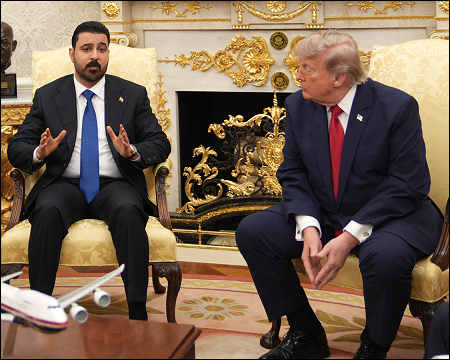
Al-Zaidi, elected in May, promoted the troop withdrawal during a visit to Washington last month, meeting with Trump, Hegseth and members of Congress. His office said October 1 would mark a new chapter for Iraq, free of foreign military presence.
Analysts said the withdrawal would reduce U.S. troops’ exposure to Iranian attacks in the region, including strikes on the Erbil base.
But Jason Campbell, a former defense official now with the Middle East Institute, said it would leave the Peshmerga and the areas they protect more vulnerable, calling the Kurds potentially the most exposed targets of Iran if the U.S. proceeds with the funding cutoff.

Iraqi Kurdistan is widely viewed as the most corruption-plagued region in Iraq. Watchdog groups, Kurdish lawmakers, and leaked records point to billions of dollars unaccounted for in oil revenue.
The Barzani family, which governs Iraqi Kurdistan and is often labeled the region’s “Kurdish oligarchs,” has repeatedly faced accusations from critics and observers of favoring relatives and building enormous personal wealth through the oil sector rather than investing in public welfare.
Analysts say Massoud Barzani continues to hold the greatest influence in the region, operating largely behind the scenes. His son, Masrour Barzani, serves as prime minister of the Kurdistan region, while his nephew, Nechirvan Barzani, holds the presidency.
(With files from BBC | Agencies)
Copyright © 2026 iKurd.net. All rights reserved.
Related posts:
 The Mustashar and the Jash – A View from the Position of ‘Iraqi National Unity’ on the ‘Descendants of Treason’
 Iraqi Kurdistan: The Emperors’ New Clothes
 The Suffocation of Iraq Kurdistan
 Iraqi Kurdistan – “Sold Out!” – Part II
 Business with ISIS – Updated
 The Resurrection (Ba’ath) Party – Before the Iran-Iraq War
 Iraq in the Shadow of Khomeinism – Part I: Baghdad And Erbil Under Threat
 Saddam Hussein was a Friend to the West
 The Misleaders: Corrupt, Filthy Rich, and Proud of it
 Iraq – The Cynical Swindle