

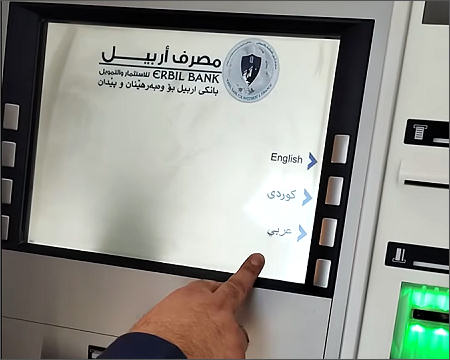
ERBIL,—Iraqi Kurdistan has officially ended its cash-based salary system for public workers, caretaker Prime Minister Masrour Barzani announced Tuesday, as one million employees begin receiving pay through bank cards instead.
The change comes through the “MyAccount” program, also known by its Kurdish and Arabic names, “Hejmarî min” and “Hisabi” Barzani said in a statement on Tuesday, one million people on the Kurdistan Regional Government’s payroll will start receiving wages electronically through banks licensed by the Central Bank of Iraq.
He called MyAccount the base program behind the government’s push for wider financial inclusion. He said the system gives residents access to credit and modern banking tools while making it simpler for the government to send out electronic payments.
The KRG launched MyAccount in 2023 to place public salaries directly into personal bank accounts instead of handing out cash.
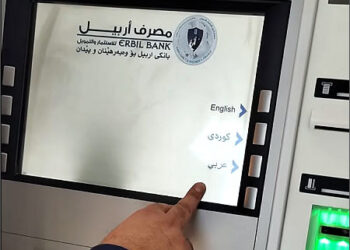
The program gives workers access to ATMs, bank cards, credit lines and other banking services. It also lets the government handle more payments electronically.
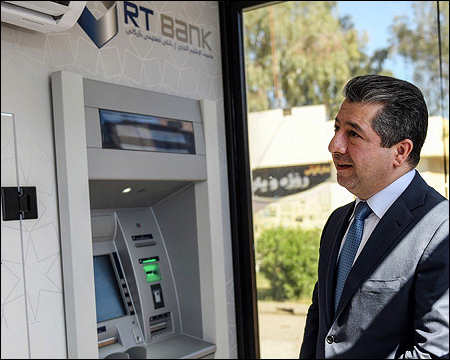
Not everyone supports the plan. In 2025, Noor Fareeq, a member of the opposition National Stance Movement, accused the KRG of worsening the region’s economy on purpose.
She criticized MyAccount directly, calling it a “Barzani tribal project” meant to control worker salaries and expand political power over public employees.
Barzani’s announcement follows an earlier order from the Kurdistan finance ministry, which had told public workers to sign up with one of eight banks taking part in MyAccount by August 31.
Officials warned that anyone who missed the deadline could have their salary paused.
The move toward electronic banking matters because Baghdad has long pushed for it as part of financial talks with Erbil.
The Central Bank of Iraq has backed a similar system called Tawtin, aimed at cutting the cost of handing out cash, keeping money inside the banking system, and giving workers access to loans and digital payments.
Under a 2025 deal between the Kurdistan government and Baghdad, both sides formed a joint committee to finish moving Kurdistan salaries into the banking system within three months.
Baghdad had pressed for salaries to fall under its Tawtin system, while Erbil continued backing MyAccount, saying it was built with the Central Bank of Iraq and offers more services for less money.
By August, the KRG said more than 900,000 public workers had already received bank cards through MyAccount. Banks taking part in the program had also installed close to 700 ATMs across the region.
Barzani said the shift means the “days of citizens standing in long queues outside government buildings waiting for cash handouts are over.”
He said MyAccount has given workers more control over their money and access to a growing number of ATMs across the region.
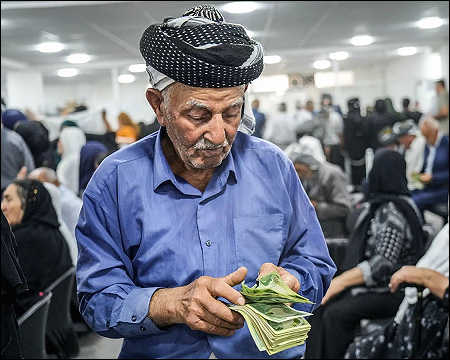
For years, workers in the Kurdish region have dealt with pay delays of three months or longer, with some months never paid at all.
Teachers and other public servants have held repeated protests over unpaid wages.
Watchdog groups and critics describe Kurdistan as one of the more corrupt regions in Iraq, pointing to billions of dollars in oil revenue that cannot be accounted for.
Kurdish lawmakers, oversight groups and leaked records say large amounts of money from oil sales have disappeared. Critics also allege that officials in the region have smuggled out millions of barrels of crude oil.
The Barzani family, which controls much of the region’s politics, has faced repeated nepotism claims. Critics and observers say the family has built significant personal wealth from oil sales instead of using that money for public services.
(With files from Rudaw | Agencies)
Copyright © 2026 iKurd.net. All rights reserved.
KDP’s tribal ‘My Account’ program aims to control Kurdistan pay system: opposition
Related posts:
 Iraqi Kurdistan – “Sold Out!” – Part II
 Iraqi Kurdistan: The Emperors’ New Clothes
 Iraq – The Cynical Swindle
 Business with ISIS – Updated
 Saddam Hussein was a Friend to the West
 The Misleaders: Corrupt, Filthy Rich, and Proud of it
 The Dangers of Banning Cash: A Threat to Financial Freedom
 The Capture of The State of Iraq
 Saddam Hussein’s Enemies: Paving the Road to the Invasion of Iraq
 The Mustashar and the Jash – A View from the Position of ‘Iraqi National Unity’ on the ‘Descendants of Treason’