


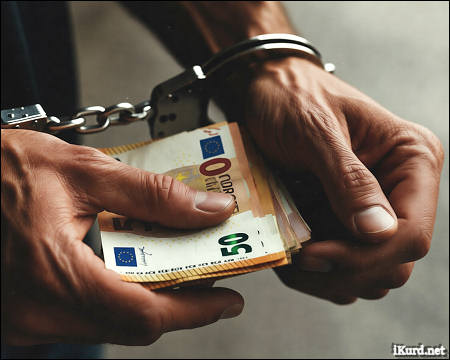
The Rise of Government Fiat Digital Currencies: A Threat to Financial Freedom
Sara Hussein | Exclusive to iKurd.net
In an era of rapid technological advancement, digital payment systems and cashless transactions have become an undeniable part of everyday life. Governments, businesses, and financial institutions around the world are steadily pushing for a shift from physical cash to government fiat digital currencies (GFDCs). While advocates argue that this transformation offers increased efficiency, convenience, and security, there is a darker side to the rise of a cashless society. Behind the promise of innovation and convenience lies a growing threat to personal freedom and financial sovereignty.
The Silent War on Cash
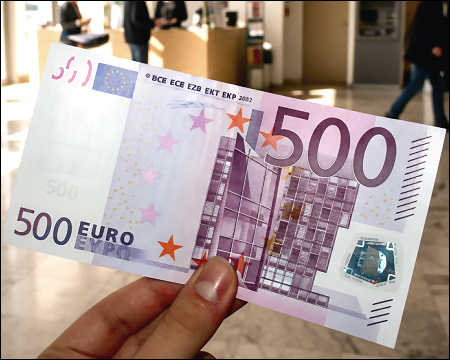
The transition toward government fiat digital currencies did not begin overnight. It started quietly, with the gradual withdrawal of high-value banknotes from circulation. In Europe, for instance, when the euro first came into existence, there were €500 and €200 notes in common use.
Over time, however, these large denominations were slowly phased out under the pretext of combating money laundering and terrorism financing. Today, only €100 and €50 notes remain in regular circulation, and even those could eventually face the same fate. The €200 notes are also rarely seen in everyday transactions, making them increasingly uncommon.
This process represents the opening moves in what can only be described as a war on cash, which is a deliberate campaign to make physical money scarce, inconvenient, and eventually obsolete. Each reduction in available denominations further restricts the public’s ability to store and transfer wealth privately, nudging society ever closer to complete dependence on government-controlled digital systems.
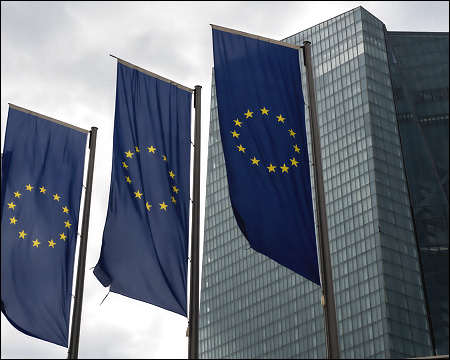
The European Central Bank (ECB) has made its intentions clear. It is actively developing the digital euro, a fiat digital currency backed by the central bank that would serve as the official digital money for the eurozone.
The ECB has identified 2029 as a realistic timeline for launching the digital euro. In October 2025, the bank announced it could begin a pilot program by 2027, provided it receives timely approval from lawmakers, which it considers vital for what it calls “financial autonomy” for the eurozone.
Yet, behind this narrative of progress lies something far more concerning. Once citizens’ money exists only in state-controlled digital form, autonomy effectively disappears. The power to monitor, restrict, or even erase access to personal funds moves entirely into the hands of authorities. When that happens, financial freedom, along with individual liberty, becomes a privilege granted at the discretion of the state.
The Problem: Financial Control and Surveillance

At the heart of the push for a cashless society is the desire for control, not just over economic activity but also over the people themselves. Unlike cash, which provides anonymity and privacy, fiat digital currency transactions leave an indelible trail.
Every purchase, withdrawal, and transfer can be tracked, monitored, and analyzed by governments and their financial institutions. While this may sound like a necessary step toward ensuring tax compliance, anti-money laundering measures, and crime prevention, it also opens the door for mass surveillance and unprecedented control over individuals’ financial lives.
In a world where cash is no longer an option, everything we buy, sell, and transfer becomes subject to scrutiny, creating the potential for state overreach. Governments could, with alarming ease, freeze accounts, seize assets, or restrict access to funds for any number of reasons, including political dissent.
For example, consider recent protests around the world. In moments of civil unrest, governments may invoke emergency powers to block access to digital accounts or seize funds under the pretext of national security. With no physical cash to fall back on, activists or protesters could find themselves financially crippled, unable to buy food, rent, or even pay for basic utilities.
The Risk of Arbitrary Seizure and Confiscation

The most significant danger of a cashless society is the potential for arbitrary confiscation of people’s wealth. With government fiat digital currencies, authorities can access an individual’s entire financial history. This opens the door for people to be targeted based on their political beliefs, affiliations, or actions.
Take, for example, the case of someone expressing dissent against government policies, whether through protests, social media campaigns, or legal activism. If their political views are deemed a threat, they could face the possibility of having their fiat digital currency accounts frozen or confiscated without due process. Innocent people, caught in the crossfire of political or ideological conflicts, could find their accounts seized in an instant, rendering them unable to access their hard-earned savings.

The chilling effect is not limited to protesters or dissidents; anyone who steps out of line in the eyes of the government could lose access to their money at the whim of authorities.
A millionaire who speaks out against corruption or challenges an unjust system could find themselves suddenly penniless. One can imagine the nightmare scenario where a political figure or businessperson is publicly targeted, their entire wealth stripped away within minutes, leaving them homeless and destitute.
Loss of Autonomy and Privacy
When cash is banned, the last vestige of financial autonomy is gone. With government fiat digital currencies, every financial action is visible, stored, and can be monitored or even manipulated. The right to privacy is one of the most basic human freedoms, yet a shift toward a state-controlled digital monetary system is inherently incompatible with this principle.
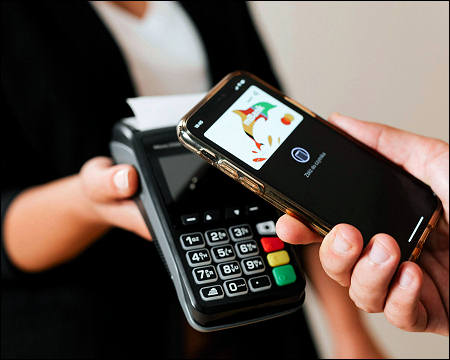
While supporters argue that fiat digital currencies provide transparency and security, what they often fail to consider is the inherent loss of personal freedom. In a world where governments can monitor spending habits, regulate financial transactions, and even prevent certain types of purchases, individuals are no longer free to make choices outside the control of the state.
The ability to buy or sell is no longer in the hands of the people but under the thumb of central authorities, who can decide who is worthy of access to financial resources and who is not.
In a cashless society, financial exclusion becomes a reality. The elderly, the poor, and people living in rural or underserved areas may have limited access to technology, leaving them excluded from the system altogether. If all transactions must be conducted digitally, those who cannot afford smartphones, bank accounts, or internet access will be left behind, effectively disenfranchising millions.
The Path to Financial Slavery
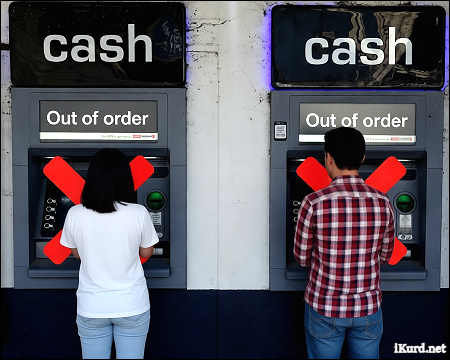
Ultimately, the push for a cashless society threatens to strip individuals of their financial sovereignty. The concept of personal wealth could become a fleeting illusion.
In a system where fiat digital money can be frozen, confiscated, or rendered worthless at the stroke of a keyboard, people no longer own their money; they merely control it until someone more powerful decides otherwise. This creates a terrifying new paradigm, where wealth and assets are increasingly vulnerable to state seizure or institutional control.
If governments can dictate who can access their money and for what purposes, the risk of financial enslavement becomes tangible. People could be subjected to penalties or punishment simply for expressing dissent, engaging in civil disobedience, or questioning the status quo. The freedom to spend, save, or invest without fear of reprisal becomes a distant memory.
The People Fight Back: The Birth of Bitcoin, Digital Cash for the People
But the people are not as naïve as governments may think. History shows that when authority overreaches, innovation and resistance follow. In response to the growing instability of government fiat currencies, printed endlessly and losing value year after year, and to the increasing control over citizens’ financial lives, a group of individuals took matters into their own hands.
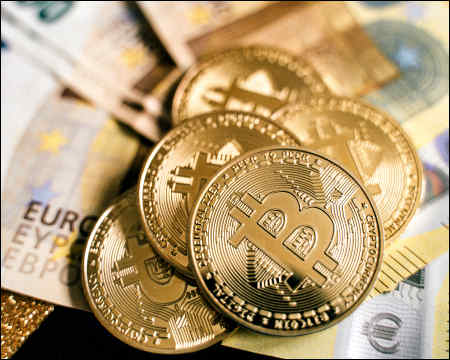
In 2009, an anonymous person or team known as Satoshi Nakamoto created a revolutionary digital currency called Bitcoin (BTC), often referred to as Digital Cash. Bitcoin was built on a simple but powerful idea: money should belong to the people, not to governments or corporations.
The code for Bitcoin is open source, meaning anyone can review it, verify its integrity, and see exactly how it works. All Bitcoin transactions are recorded on a public ledger called the blockchain, which is stored and maintained by thousands of individuals running full nodes on their computers across the world, in homes, offices, and data centers.
Unlike fiat digital currencies, Bitcoin is decentralized and is not controlled by any government or company. It operates through proof-of-work, a process that requires computational effort and electricity to secure the network. There will only ever be 21 million Bitcoins in existence, a hard limit that makes it resistant to inflation and political manipulation.
Bitcoin has been embraced globally as a true store of value and a symbol of financial independence. It represents digital cash that is private, borderless, and free from censorship. Governments can attempt to restrict or ban it, but they cannot stop it. The network belongs to the people and exists wherever there is internet access.
In many ways, Bitcoin embodies the modern fight for financial freedom, a system built by the people, for the people, standing in direct opposition to the centralized control of government fiat digital currencies.
Conclusion: Protecting Cash and Freedom for Future Generations
As government fiat digital currencies and cashless systems become more ingrained in daily life, it is crucial to remember that cash remains a fundamental tool of freedom. Cash is a symbol of independence, the ability to make transactions without surveillance, the right to choose how and when to spend one’s hard-earned money, and the protection from unjust financial seizure.

The abolition of cash would be the final step in a dangerous process of consolidating power, allowing governments and corporations to control not only what we do but how we live. The right to use cash should not be taken for granted, and citizens must fight to preserve their right to privacy and autonomy in the face of an increasingly cashless world.
As we move forward into an era of digital payments, we must remember that the cost of convenience should not be the sacrifice of freedom. Cash and decentralized alternatives like Bitcoin, the true digital cash, represent the last lines of defense against total financial control. To lose them is to lose a piece of our freedom and the ability to live without the constant threat of financial oppression.
The Fight for Bitcoin: Keeping Financial Power in the People’s Hands

As Bitcoin continues to gain global recognition, states, governments, and financial institutions are increasingly buying and accumulating BTC as a strategic reserve. They see it as a true store of value, a hedge against inflation, and a tool for future financial power.
This is a critical moment for individuals. The more Bitcoin is controlled by central authorities or institutions, the less it remains a tool of independence for the people. Citizens must actively buy and hold BTC, ensuring it stays in the hands of the public rather than concentrated in the vaults of governments or corporations.
By taking ownership, people preserve their financial sovereignty and protect a system that is decentralized, private, and resistant to censorship.
The battle for Bitcoin is not just about wealth; it is a fight to keep true financial freedom alive.
Sara Hussein, a Kurdish writer living abroad, she focuses on politics, culture, and religion. She is a contributing writer for iKurd.net.
The opinions are those of the writer and do not necessarily represent the views of iKurd.net or its editors.
Copyright © 2025 iKurd.net. All rights reserved
Related posts:
 Iraqi Kurdistan’s daily crypto trading over $1 million despite ban: trader
 Trading cryptocurrencies unlawful under Islamic law, Sulaimani Fatwa Committee says
 Bitcoin price surpasses $100,000, reaching all-time high
 Kurdish Islamic scholar Qaradaghi says cryptocurrencies are forbidden – haram
 Trump signs executive order to establish strategic Bitcoin reserve
 Russia uses Bitcoin in foreign trade to bypass Western sanctions, says finance minister
 Under the Pillow Economy: Iraq’s Crisis of Trust in Banks
 Trump plans to launch U.S. strategic Bitcoin reserve
 Is the BRICS Currency Trustworthy or Just Sophistry?
 Business with ISIS – Updated