

Kurdistan Honey Production Tops 1,000 Tons, More Than Doubling Last Year’s Output
SULAIMANI,— Honey production in Iraq’s Kurdistan Region has passed 1,000 tons this year, more than double the 400 tons recorded in 2025, said Arif Sherwani, head of the Kurdistan Beekeepers Network, the Channel8 reported.
Sherwani said this year brought exceptionally favorable conditions for honey production in Kurdistan.
After gathering data from beekeepers across the region’s governorates and independent administrations, he said, it became clear that output had surpassed 1,000 tons.
The typical honey harvest runs from August through the end of September, though some beekeepers have not yet finished collecting this year’s yield.
Prices for Kurdistan honey range from 25,000 to 50,000 Iraqi dinars per kilogram, depending on grade and production method.
Sherwani told Channel8 that favorable weather conditions helped drive the strong harvest. The production figures were compiled from beekeepers across the region’s governorates and independent administrations.
The Kurdistan Region’s Ministry of Agriculture bans honey imports during the peak harvest season to protect local producers.
Sherwani said the ban has not been fully enforced, and imported honey entering the region is often of lower quality. He added that some locally produced honey is shipped to other Iraqi provinces.
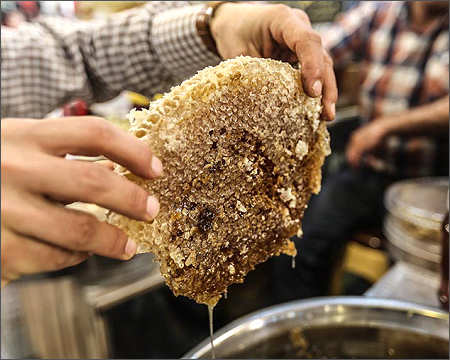
Honey prices depend on grade and how beekeepers produce it. Grade 1 honey sells for 50,000 dinars per kilogram and comes from honeycomb built entirely by bees without human intervention.
Grade 2 honey sells for 40,000 dinars per kilogram; beekeepers use frames involving human labor but do not provide supplemental sugar feed.
Grade 3 honey sells for 25,000 to 30,000 dinars per kilogram; bees receive supplemental feed and forage for food within a radius of up to five kilometers.
About 15,000 beekeepers work across the Kurdistan Region, according to figures from the network. The sector includes 8,000 modern hive boxes holding more than 800,000 bee colonies, along with roughly 3,500 traditional beehives still used for honey production.
Beekeeping supports agricultural production and pollination, which benefits crops and wild plants. Honey yields can shift with weather, flowering periods, available forage, and hive management.
The production figures reflect data compiled by the Kurdistan Beekeepers Network. A breakdown by governorate and independent administration was not included in the information provided.
In September 2026, the Kurdistan Regional Government reported separately that the region’s beekeeping sector had grown substantially this year, with total honey output reaching between 550 and 600 tons, a rise of roughly one-fifth to one-quarter over last year.
The government said the sector remains a key part of the agricultural economy, with about 13,000 beekeepers managing around 500,000 beehives.
Harvest timing differs by area, the government noted, with plains regions typically harvesting toward the end of summer and colder mountainous areas beginning in early September.
(With files from Chennel8.com | KRG)
Copyright © 2026 iKurd.net. All rights reserved.
Related posts:
 A Dialogue with Kurdish Artist Shams Sherwani
 Iraq – The Cynical Swindle
 Iraqi Kurdistan – “Sold Out!” – Part II
 Removing Zeros from Iraqi Dinar: Benefits and Risks
 Judge refuses to free Kurdish journalist Sherwani, extends prison term by 6 more months
 Anfal – The Black Stain on Iraqi History Spreads
 Iraqi Kurdistan extends journalist Sherwani’s prison term by four years
 Business with ISIS – Updated
 Iraqi Kurdistan – “Sold Out!” – Part III
 Saddam Hussein’s Enemies: Paving the Road to the Invasion of Iraq