

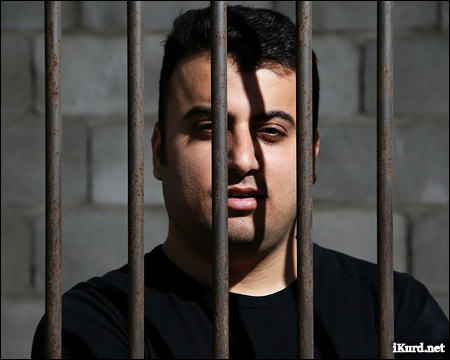
ERBIL,— Authorities in Iraq’s Kurdistan region have extended the prison term of prominent Kurdish journalist Sherwan Amin Sherwani, handing him another sentence just before he was due for release, according to his lawyer and rights groups.
Sherwani, an investigative reporter from Duhok, was arrested in 2020 during protests against the Kurdistan Regional Government (KRG).
He has since become a symbol of the region’s crackdown on dissent under the powerful Barzani family and their ruling Kurdistan Democratic Party (KDP).
His lawyer, Mohamed Abdallah, told reporters that Sherwani was expected to walk free in September after serving six years behind bars. Instead, an Erbil court on Tuesday ordered him to serve an additional four years and five months for allegedly “threatening a prison guard.” Abdallah dismissed the charges as fabricated, saying the defense will appeal.
The latest verdict sparked chaos outside the courtroom in Erbil. Witnesses said security officers, some in plain clothes, beat Sherwani’s relatives and supporters with rifle butts after they chanted “freedom for Sherwan.” Several people, including activists and lawmakers, sustained minor injuries.
Opposition lawmaker Badal Barwari said the scuffle began when security tried to eject Sherwani’s supporters for filming on their phones. Police then removed most of the crowd. Activist Kamaran Osman, with the U.S.-based Community Peacemaker Teams (CPT), said the violence erupted as soon as chants began.
“This shows how the ruling authorities use force against peaceful voices,” Osman said.
Sherwani, former editor of “Bashur magazine”, has long been known for reporting on corruption in the Kurdish region. His arrest in 2020 came during widespread protests in Duhok and Erbil over salary delays and worsening economic hardship. Security forces loyal to the KDP detained dozens of activists and journalists in what critics called a coordinated effort to crush opposition.
In 2021, an Erbil court sentenced Sherwani and four others to six years in prison for “endangering national security.” Two years later, in 2023, he was hit with another four-year term on charges of forging a signature. Now, just months before release, another conviction has been added.
Activists say the repeated prosecutions reflect a deliberate strategy by the Barzanis to silence dissent. “Every time Sherwani nears the end of a sentence, they invent a new case,” said Ali Hama Salih, leader of the opposition Halwest party. “If the government claims he threatened an officer, then show the video. Every prison is covered with cameras.”
The CPT, which has monitored trials of the so-called “Badinan prisoners“, said its representatives attended Tuesday’s hearing. The group reported that prosecutors failed to provide any credible proof.
“The complainant claimed two witnesses were present when Sherwan made threats. Sherwan denied the allegation and asked for video evidence. Officials responded that cameras were not recording that day. No footage was shown,” CPT said in a statement.
Instead, prosecutors introduced social media posts allegedly defaming the guard. But rights groups noted the videos were posted in 2022 and 2023, while Sherwani was already in prison and barred from accessing the internet.
The Metro Center for Journalists’ Rights and Advocacy, based in Sulaimani, condemned the verdict. “From the start, these trials have lacked fairness and have been shaped by political interference. The aim is to silence critics. We call on the appeals court to overturn this ruling,” it said.
The Badinan cases have drawn condemnation from Western diplomats, human rights groups, and press freedom watchdogs. Organizations including Amnesty International and Reporters Without Borders have described the proceedings as flawed and politically motivated.
For many Kurds, the treatment of Sherwani highlights the tightening grip of the Barzani family, which has ruled Erbil and Duhok for decades. While the KRG promotes itself abroad as a stable, democratic partner, critics say corruption, arbitrary arrests, and nepotism dominate the region.
“Journalism in Kurdistan has become a dangerous profession,” said one activist outside the court. “Anyone who exposes corruption faces prison. Under the Barzanis, there is no justice—only power.”
(With files from AFP | Agencies)
Copyright © 2025 iKurd.net. All rights reserved
Related posts:
 Judge refuses to free Kurdish journalist Sherwani, extends prison term by 6 more months
 A Dialogue with Kurdish Artist Shams Sherwani
 Facial Recognition Technology, Monitoring and Infiltration of the opposition in Iraq
 Syria: Revisiting The Caesar Torture Victim Photographs
 The Resurrection (Ba’ath) Party – Before the Iran-Iraq War
 The Mustashar and the Jash – A View from the Position of ‘Iraqi National Unity’ on the ‘Descendants of Treason’
 Business with ISIS – Updated
 Turkey: The Psychological War Against the Kurds Through the PKK – Part I
 Sabotaging Syria
 PUK security forces block interview with jailed Shaswar Abdulwahid