

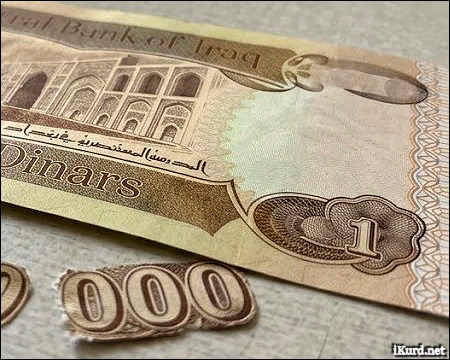
Removing Three Zeros from the Iraqi Dinar: Between Economic Benefits and Legal Risks
Luqman Mustafa Salih | Exclusive to iKurd.net
Translated from Kurdish Awene
Introduction
The issue of removing zeros from the Iraqi dinar is one of the important economic and financial topics that, whenever it comes up for discussion, raises a major question: Would removing three zeros from the Iraqi currency strengthen the dinar and improve the economic situation, or is it simply a technical change that, by itself, does not change the currency’s real value?
From an economic perspective, removing zeros does not mean that the dinar’s real value will automatically increase. For example, if 1,000 dinars become 1 new dinar, provided that all prices, salaries, debts, and assets are changed at the same rate, the real value of a person’s wealth does not change.
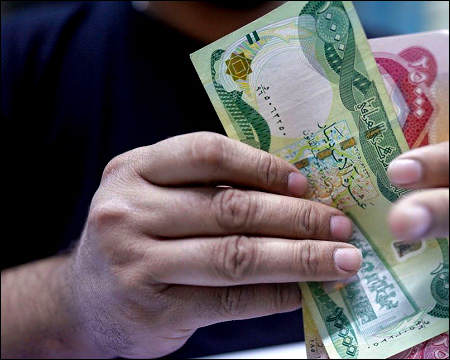
The Central Bank of Iraq, in a document specifically related to the “Three-Zero Removal” project in 2012, described this project as part of restructuring the currency system and addressing the large number of currency units and the large figures associated with cash transactions.
First: Benefits of Removing Three Zeros
1. It makes cash transactions easier to handle. Large dinar figures in daily life can make it more difficult to calculate and record transactions. Reducing the number of zeros can make prices and account figures easier to write and read.
2. It reduces the cost and size of cash transactions. In currency restructuring projects, reducing the number of zeros can have a practical effect on the printing, transportation, storage, and counting of cash.
3. It can help organize the accounting and banking system. Smaller numbers can make some processes easier in banking and accounting systems, especially in digital systems.
4. If this project is implemented together with banking reform, control of money supply growth, efforts to reduce corruption, stronger production, and stable fiscal policy, it can become part of the process of modernizing the country’s financial and banking system.
Second: Disadvantages and Risks
Along with these benefits, removing zeros also carries risks, especially if it is implemented at the wrong time and without adequate preparation.

1. There is a risk that the public could lose confidence in the currency. If citizens believe that removing zeros means their assets have lost value, they may change their behavior and move toward the dollar, gold, or foreign currencies.
2. There is a risk of errors in converting prices and accounts. When converting from the old currency to the new one, the conversion rate must be clearly and legally established so that no party can harm citizens through improper rounding or price changes.
For example, if 1,000 old dinars = 1 new dinar, then a salary of 1,500,000 dinars would become 1,500 new dinars. However, the same principle must apply to prices, rent, debts, savings, and all financial obligations.
Third: The Legal Aspect
From a legal perspective, the main question is: Who has the authority to issue the Iraqi currency and change its form and denominations?
According to the amended Central Bank of Iraq Law No. 56 of 2004, the Central Bank of Iraq has the authority to issue and manage the Iraqi currency, and Articles 32 and 33 define the framework of this authority.
Therefore, removing zeros should not be viewed merely as “changing the numbers.” Rather, it is a legal and financial process that requires clear regulation of the rights of money holders and financial obligations.
Fourth: A Legal Example
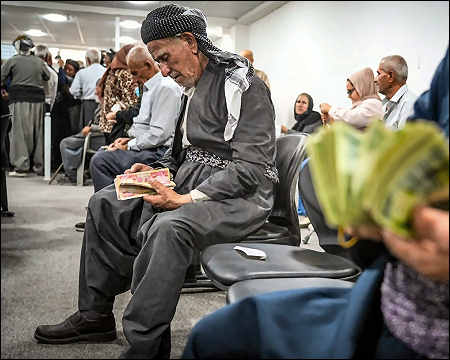
Let us assume that a new law is passed and it is decided that:
1,000 old dinars = 1 new dinar.
A person has 50,000,000 dinars in a bank account.
According to the conversion rate:
50,000,000 old dinars ÷ 1,000 = 50,000 new dinars.
Here, the law must clearly establish that changing the numbers must not reduce the financial rights of the money holder.
The same principle must also apply to debts.
For example, if a person owes 200,000,000 dinars, after removing three zeros, the debt should become:
200,000,000 ÷ 1,000 = 200,000 new dinars.
If the law is improperly implemented and one of the parties is able to increase or decrease the amount of the debt because of the change in the numbers, this could become a source of disputes and lawsuits.
Fifth: Contracts and Citizens’ Rights
An important legal question is: What happens to existing contracts?
For example, if a contract was signed for 300 million dinars and the removal of zeros is implemented afterward, the law or regulations must clearly state that:
300 million old dinars = 300 thousand new dinars.

However, this is only a numerical conversion, not a change in the actual value of the obligation.
The same principle must apply to salaries, pensions, debts, bank savings, rent, taxes, companies, and all other financial transactions.
Sixth: Removing Zeros and Strengthening the Dinar
One common misunderstanding is that removing three zeros from the dinar will automatically make the dinar stronger.
This is not necessarily true.
If $1 = 1,310 dinars, and only three zeros are removed, then at the same rate:
$1 = 1.31 new dinars.
At the same time, the dinar’s purchasing power does not automatically increase.
In recent years, the Central Bank of Iraq has continued to emphasize currency stability and maintaining general price stability, and in 2025 it stated that there was no need to change the official exchange rate of the dinar.
Conclusion
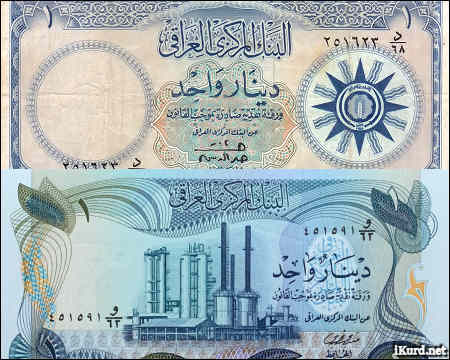
Removing three zeros from the Iraqi dinar, if implemented according to a sound economic and legal plan and with full preparation, can provide benefits in organizing the currency system, making transactions easier, and reducing the size of the currency figures.
However, if it is not accompanied by economic, banking, and financial reforms, removing zeros alone cannot solve the dinar’s problems.
From a legal perspective, the most important principle is that changing the form of the currency must not alter the financial rights of citizens. Therefore, the law must clearly establish the conversion rate, the transition period, the rights of money holders, and the treatment of contracts, debts, bank savings, and procedures for resolving disputes.
In the end, removing zeros is a tool for organizing the currency, not a magic solution to strengthen the economy. Strengthening the dinar requires increased production, higher domestic income, reduced dependence on oil, banking reform, stronger control of corruption, and stable fiscal and monetary policies.
Sources
Central Bank of Iraq Law No. 56 of 2004, as amended. (Central Bank)
Central Bank of Iraq, “Restructuring the Iraqi Currency — Three-Zero Removal Project,” 2012. (Central Bank)
Central Bank of Iraq, documents and explanations related to the issuance and management of currency. (Central Bank)
Central Bank of Iraq, explanation of exchange-rate policy and the stability of the dinar exchange rate, 2025. (Central Bank)
This article was originally published in the Kurdish language in Awene Newspaper on August 25, 2026, translated by iKurd.net.
The views expressed are solely those of the author and do not necessarily reflect the opinions of iKurd.net or its editorial team.
Copyright © 2026 iKurd.net. All rights reserved
Related posts:
 Iraq comes full circle: The rehabilitation of Abd al-Karim Qasim
 Saddam Hussein’s Enemies: Paving the Road to the Invasion of Iraq
 Saddam Hussein was a Friend to the West
 Iraqi digital currency push grows amid salary delays and cash crisis
 Iraq – The Cynical Swindle
 The Resurrection (Ba’ath) Party – Before the Iran-Iraq War
 Iraq: Revenge and Corruption
 The Dangers of Banning Cash: A Threat to Financial Freedom
 Iraqi Kurdistan – “Sold Out!” – Part II
 Ali al-Zaidi from Da’wa to peak of Iraq’s rentier system