


Serwan Zangana | Exclusive to iKurd.net
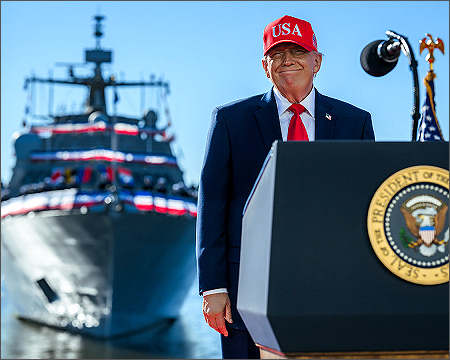
President Donald Trump has become a hurricane in American politics and global diplomacy, as his unpredictable character and offensive behavior toward America’s allies have caused great concern among world leaders, creating a wide gap between the U.S. and its friends.
Trump’s second presidential term brought the world to a shocking point, beginning with his trade policy, which pressured U.S. business allies and changed the norms of business relationships around the world. However, Trump has wisely outlined his strategy to benefit from his presidency by combining business and politics.
The American public must realize that, at the end of the political road, all politicians share the same destination: prioritizing their interests above all else. People in the Middle East generally recognize these similarities, as they live under the pressure of regional and global politics. The Democrats and Republicans are manipulating average Americans and subjecting them to political agendas that empower a select group of American elites.
Obviously, after securing victory in the 2024 presidential election and ascending to his second presidential term, Trump has destroyed many towers of hope that were built by American voters. In fact, living conditions have not improved, as many Americans continue to struggle. But as the midterm elections approach, the political landscape becomes a revolving door, and seemingly, the Democrats will regain control of the government.
The common American expression during elections, “vote for the lesser of two evils,” is only a sign of desperation and weakness, as it has never been the right approach to changing American politics. However, political agendas are not designed to satisfy the public; politics is a business that serves political ideologies and the nation’s interests, with the intention of maintaining the country’s political power.
Trump’s Scandalous Character and Beyond
Modern Western and American politics define human rights based on political agendas designed to control the world’s resources. The U.S. operation in the Middle East, led by Trump, is part of a foreign policy strategy to maintain the vitality of the U.S. role in the region. As every president has a duty to implement U.S. foreign policy around the world, Trump assumed this responsibility by leading the U.S. conflict with Iran.
Trump’s demeanor in dealing with both his rivals and allies introduced a different image of an American politician to the world. The public and mainstream media in the West and the U.S. have not adapted to such an aggressive political demeanor. But it is necessary to understand that Trump plays a significant role and is needed in today’s U.S. conflict with Iran.
The U.S. is maintaining a global balance; shifting such a balance would impact the stability of the world. Maintaining political power comes at the cost of losing morality and integrity, which can be observed among American politicians from both the conservative and liberal sides.
For example, the U.S. has continuously abandoned the Kurds, leaving them in a disastrous situation, and this can be defined as an ethical violation. But American politicians have a different definition of ethics and morality.
While Trump is blamed for the conflict between the U.S. and Iran, this conflict is indeed part of U.S. policy, which was added to Trump’s agenda for implementation. The Republicans are obligated to support Trump regarding the U.S.-Iran conflict to establish a balance and stabilize the region according to American standards.
However, Iran’s Islamic regime cannot be ignored, as it has been fueling militia groups and destabilizing regional security. Most notably, Iran has spearheaded aggression toward Israel, which represents a red line. Support for Israel has become entrenched in U.S. foreign policy, and thus, changing this policy would cause a political tsunami in the Middle East.
After all, beyond Trump’s scandalous character, it was a time for the U.S. to confront Iran.
Pro-Palestinian and Socialist Movements in America
The proliferation of pro-Palestinian, anti-Israel, and socialist movements has become central to political debates in America. The wave of progressivism has spread overwhelmingly across the Democratic Party, and its members have entered public office. But establishment Democrats have been maneuvering within the political game to regain the majority in the House of Representatives and the Senate.
Opposition to the U.S.-Iran conflict, calls to end support for Israel, and demands by radicals, including Muslims, socialists, and progressive groups, to change the American system pose a threat to the U.S. and its republic.
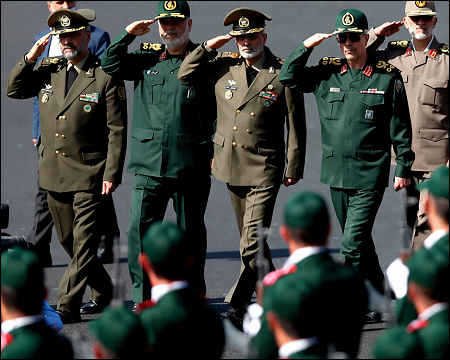
However, it is important to realize that the goal of Iran’s Islamic regime is to acquire nuclear weapons. On various occasions, the leaders of the Islamic Revolutionary Guard Corps (IRGC) and members of the government have consistently called for Iran to build a nuclear weapon. This fact is often ignored by progressive groups, including Muslims and socialists.
“The most frequently repeated demand among Iranians these days is: Why should America and Israel have atomic bombs while we don’t?” the Iranian news agency affiliated with the IRGC, Fars, said.
Establishment Democrats are also recognizing the threat posed by Iran’s potential acquisition of nuclear weapons, but they are choosing to maneuver politically and publicly deny such a threat.
But now the question is: What if the IRGC acquired a nuclear bomb?
Too Many Suggestions and One Option
Since the beginning of the conflict between the U.S. and Iran, world leaders have constantly made efforts to stop the hostilities. Every effort has failed, as the Iranian regime continues its aggression in the region. Although Trump was also criticized for his daily contradictory statements regarding the conflict and his optimism about negotiating with Iran, such statements could be tactics of war.
Eric Min, an assistant professor of political science and global studies at UCLA, explains in his book Words of War how nations use negotiations during war.
“Negotiations have to be understood as not only a tool that helps to settle wars, but also as an instrument that’s sometimes used to manage fighting and potentially win wars as well,” Min said.
Seemingly, Trump is using such a negotiation tactic to win the war, as the U.S. does not settle without achieving its goals in a war.
However, there are many suggestions, including peace plans and calls to stop the conflict, but there is only one option for peace: ending Iran’s Islamic regime. As former National Security Advisor John Bolton said in an interview with K24, the media outlet affiliated with the Kurdistan Democratic Party (KDP), “The only way to get peace and stability in the region is to change the regime in Iran,”
The Kurds’ Impact on Iran’s Regime

Obviously, the Kurdish opposition in Iran does not carry enough weight to influence or even weaken the regime. However, by continuing their struggle against the regime, the Kurds in Iran can maintain the vitality of the Kurdish movement in that part of Kurdistan and keep a tiny light of hope burning brightly.
At this point, the international community does not offer concrete support to the Kurds in Iran. Obviously, the Kurds in Iran have not yet been recognized as part of the global interests.
Perhaps regime change in Iran could lead to a slippery slope, as occurred in Syria under Ahmad al-Sharaa’s rule. Even after the collapse of Bashar al-Assad’s regime, the Kurds continue to struggle with deep-seated wounds under al-Sharaa.
But after all, dismantling Iran’s Islamic regime is better than allowing it to continue to exist.
Serwan Zangana, a contributing writer for iKurd.net, lives in Virginia, U.S. He serves as a correction officer.
The views expressed are solely those of the author and do not necessarily reflect the opinions of iKurd.net or its editorial team.
Copyright © 2026 iKurd.net. All rights reserved.
Related posts:
 The Resurrection (Ba’ath) Party – Before the Iran-Iraq War
 The 12-Day War: A Tactical Failure, Yet a Strategic Win for Israel
 Business with ISIS – Updated
 Saddam Hussein was a Friend to the West
 Iraq: Revenge and Corruption
 The Truth About The Saddam Hussein Affair
 What makes a good NATO ally? The Case of Turkey
 Iraqi Kurdistan – “Sold Out!” – Part II
 Iran Regime Change Vs. Map Change
 Iran, a Failed Country by Enemies Within