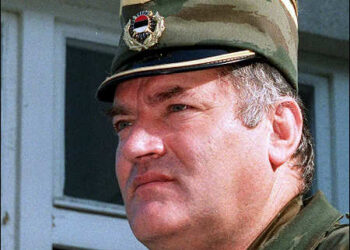


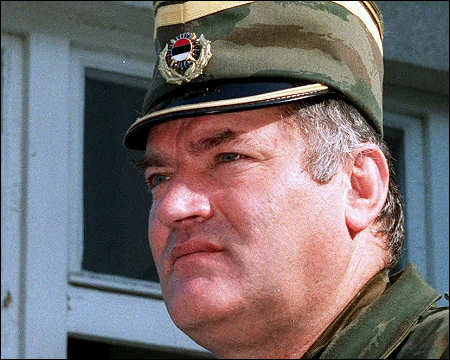
THE HAGUE,— Ratko Mladic, the former Bosnian Serb military commander convicted of genocide for the 1995 killing of at least 8,000 Muslim men and boys in a United Nations designated safe zone in Bosnia, died Thursday while in U.N. custody.
The Srebrenica massacre marked the deadliest single act of a war that stretched more than three years. During that conflict, Mladic’s Serb nationalist forces shelled the besieged city of Sarajevo daily using artillery, tanks, mortars and heavy machine guns, killing 10,000 people.
Victims of the Srebrenica killings were buried in mass graves over four days in July 1995. Some bodies were later dug up and moved to remote mountain sites in an effort to conceal the killings.
The United Nations International Criminal Tribunal for the former Yugoslavia determined the goal was ethnic cleansing, the forced removal of Bosnian Muslims, Croats and other non Serbs to open land for a Greater Serbia.
Judges found Mladic worked alongside late Serbian President Slobodan Milosevic and Bosnian Serb political leader Radovan Karadzic in a joint criminal plan to carry out that goal.
At a 2014 hearing, Mladic, known to critics as the Butcher of Bosnia, told the tribunal, “I do not recognise this court.” After receiving a life sentence in 2017, he shouted that the proceedings were lies.
Mladic’s lawyer, Dragan Ivetic, confirmed the death Thursday but did not state a cause. Ivetic said Mladic had spent his final months in the hospital wing of the U.N. detention facility near The Hague.
His son said official papers listed his birth date as March 12, 1942, though he was actually born March 8, 1943.
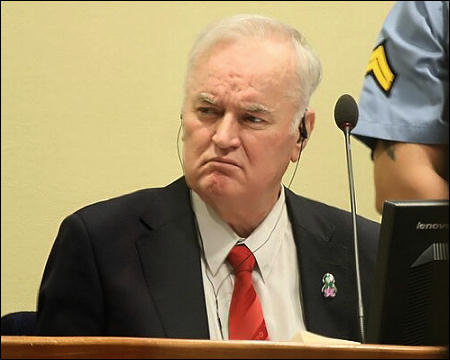
Karadzic, convicted of genocide in 2016, and Mladic were among the most wanted men in Europe after Western nations ended the Bosnian war.
Mladic, however, lived openly though quietly in Belgrade until Milosevic was removed from power in a 2000 uprising.
Milosevic died in custody on March 11, 2006, months before a verdict was due in his own genocide trial covering Croatia, Bosnia and Kosovo.
The force Mladic built to fight in Bosnia became known for brutality. Prisoners were reportedly denied water and forced to eat salt in extreme heat, starved and abused in camps, forced off a bridge and shot, or gunned down at night in large groups after being led out with chemical gas.
Munira Subasic, whose husband and son were killed after Bosnian Serb forces took Srebrenica, said Mladic represented every atrocity of the war, adding that Germany had Hitler and Serbia has Mladic.
Mladic arranged for cameras to record his forces entering Srebrenica, where he addressed his troops and Dutch peacekeepers who had trusted his promise that residents would not be harmed.
He told the camera the town was being given to the Serb people as a gift, framing it as payback tied to Ottoman era history.
A day later, his soldiers were filmed giving candy to children while thousands of men and boys were being prepared for execution.
When NATO threatened limited airstrikes in 1995, his troops responded by taking U.N. peacekeepers hostage and chaining some to potential targets.
In November 1996, facing heavy Western pressure, Mladic stepped down as army chief under orders from Bosnian Serb President Biljana Plavsic, who later served prison time for war crimes.
Born to a partisan fighter killed in 1945, Mladic served in the old Yugoslav People’s Army before Yugoslavia began breaking apart in 1991.
When Bosnian Serbs rebelled against Bosnia’s move to secede in 1992, he was named commander of the newly formed Bosnian Serb army, which quickly took control of about 70 percent of the country while 22,000 U.N. peacekeepers stood by under neutral orders.
Serbia’s post Milosevic leaders avoided arresting Mladic for years despite Western pressure, given his standing among nationalists.
He was finally detained in 2011 without resistance, showing signs of a stroke. He suffered a heart attack in 2013 and repeatedly told courts he was gravely ill.
Requests to attend family graves and later appeals for release were denied. In August 2026, a U.N. physician warned his death could come within weeks, but his final release request was again rejected.
(With files from Reuters)
Copyright © 2026 iKurd.net. All rights reserved.
Related posts:
 The Resurrection (Ba’ath) Party – Before the Iran-Iraq War
 Saddam Hussein was a Friend to the West
 The Double Cross of Iraq And The Discordant Death of WMD Inspector, Dr David Kelly – The 17th Anniversary
 Business with ISIS – Updated
 The Mustashar and the Jash – A View from the Position of ‘Iraqi National Unity’ on the ‘Descendants of Treason’
 Anfal – The Black Stain on Iraqi History Spreads
 Sabotaging Syria
 Iraqi Kurdistan – “Sold Out!” – Part II
 The Truth About The Saddam Hussein Affair
 Iraq: Revenge and Corruption