

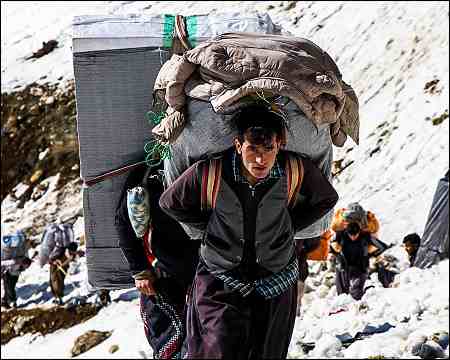
SNE, Iranian Kurdistan,— At least 59 Kurdish kolbars, cross-border porters, were killed or injured in 2025 while working in the border regions of Kermashan, Sne (Sanandaj), and Urmiye (Orumiyeh) provinces in Iranian Kurdistan, the Hengaw Organization reported.
The Norway-based group, which monitors human rights violations in Iranian Kurdistan (Rojhelat), said in its annual report that the figure represents a sharp decline from 2024, when at least 339 kolbars and informal border traders were killed, marking an 82.5 percent drop.
The report states that 25 kolbars killed, accounting for nearly 43 percent of all cases, while 34 others sustained injuries.
Gunfire from Iranian border forces was responsible for 49 incidents, or 83 percent of all deaths and injuries. F
our fatalities were linked to natural hazards, three to landmine explosions, and three others to traffic accidents, heart attacks, and physical assaults.
Two of the injured were minors, both 17 years old, who were carrying goods in the border areas of Nosud and Baneh.
Baneh County reported the highest number of casualties with 23 cases, while Sne in Kurdistan Province accounted for 43 incidents, representing nearly three-quarters of all recorded injuries and deaths in the region.
Kolbars often carry untaxed or prohibited goods, including alcohol, across the mountainous border separating Iranian Kurdistan and Iraqi Kurdistan (Bashur).
Many take on this work because of limited employment opportunities, poverty, and systemic discrimination. The report notes that they face harsh weather and dangerous terrain year-round, putting their lives at risk to support their families.
Since 1979, the Islamic regime in Iran has imposed laws and rules that discriminate against Kurds in Iranian Kurdistan. These restrictions affect their social, political, and economic lives.
Kurds in Iran face limitations on their religious, cultural, and economic rights. For example, parents are sometimes prevented from giving their children certain Kurdish names.
Religious minorities that are partly or fully Kurdish are also targeted by policies meant to isolate them.
Kurds have less access to jobs, adequate housing, and political participation. This discrimination has led to widespread poverty and further marginalized Kurdish communities.
Current estimates suggest that more than 12 million Kurds live in Iranian Kurdistan.
Copyright © 2026 iKurd.net. All rights reserved.
Related posts:
 The Assassination of Abdurrahman Ghassemlou: No Friends but the Mullahs?
 59 Iranian Kurdish cross-border porters died in 2024: annual report
 Business with ISIS – Updated
 The Suffocation of Iraq Kurdistan
 The Mustashar and the Jash – A View from the Position of ‘Iraqi National Unity’ on the ‘Descendants of Treason’
 The Resurrection (Ba’ath) Party – Before the Iran-Iraq War
 Why Does the Theocratic Regime in Iran Kill Those Who Are Trying to Make Ends Meet the Kurdish Kolbar?
 Iran – Toxic Theocracy – Part I
 Anfal – The Black Stain on Iraqi History Spreads
 Iraqi Kurdistan – “Sold Out!” – Part II