Manish Rai | iKurd.net
The question of regime change in Iran has recently resurfaced after the killing of Iran’s top military commanders following the Israeli airstrikes. However, Israel’s short-term goal was to damage Iran’s nuclear facilities to severely diminish its weapons program.
But the Israeli Prime Minister mentioned during his speeches that the war with Iran “could certainly” lead to regime change in the Islamic Republic. It is not the first time that foreign powers have imagined Iran as a crumbling house, one that only needs a gentle push, or a series of airstrikes, before it falls into new hands.
This was the fantasy in 1953, when the CIA and the British intelligence overthrew Mohammad Mossadegh, Iran’s prime minister, who had nationalized the country’s oil, and pushed Iran into Mohammad Reza Pahlavi’s autocratic rule. And this was also the dream in the 1980s, when Saddam Hussein invaded Iran with military and economic support from the United States, the United Kingdom, France, and Israel, who believed the newly revolutionary Iran would collapse in months.
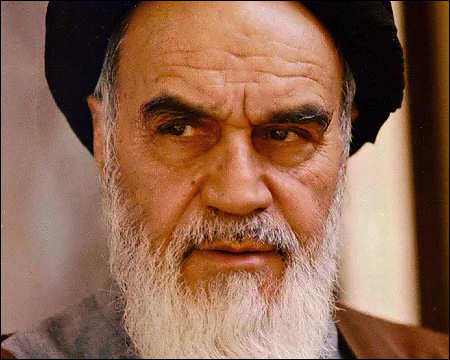
Founded in 1979 after the Iranian Revolution, the Islamic Republic of Iran has democratic, theocratic, and authoritarian elements in its governance system, which makes it a hybrid. The founding figure of the Islamic Republic, Ayatollah Ruhollah Khomeini, envisioned a state run by Islamic clerics and jurists who ensured all policies adhered to Islamic law.
As Iran was a constitutional monarchy before the revolution, theocratic elements were effectively grafted on top of the existing republican ones, such as the parliament, executive, and judiciary. Iran has a unicameral legislature (one house of parliament), called the Majles, and a president. There are regular elections for both.
But, while there are democratic elements within this system, in practice, it is a “closed loop” that keeps the clerical elite in power and prevents challenges to the supreme leader. There is a clear hierarchy, with the supreme leader at the top.
This complex system of governance makes the Iranian regime a unique one in the Middle East. Iran is not Syria, Libya, or Iraq, where, in the recent past, regime change has been achieved. United States policy makers often underestimate the strength of the Iranian state, which is structured for survival. The following features and dynamics make the Iranian regime hard to replace.

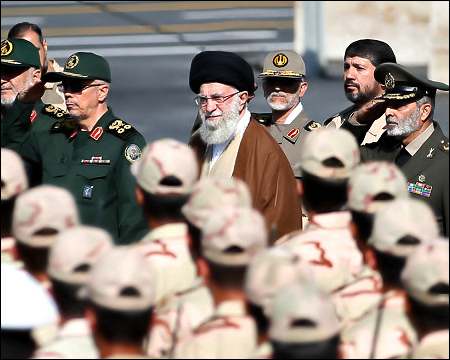
Multi-Dimensional Military Forces – The Iranian military has a dual architecture designed to resist coups and invasions: Artesh, the regular armed forces of around 420,000 men across ground, naval, air, and air-defense troops, and the Islamic Revolutionary Guard Corps (IRGC), an elite, ideologically driven military with roughly 190,000 personnel across ground, naval, and air branches.
Beyond them is the Basij, a vast paramilitary network with hundreds of thousands of members embedded in every corner of Iranian society—in the streets, in neighbourhoods, in schools, and mosques. They aren’t just loyalists of the Ayatollah but woven into a deeper idea of the state and committed to the core ideology of the Islamic Republic.
Despite Israel’s extensive and quite successful campaign of assassinations targeting senior IRGC commanders, the core of this group has not been hollowed out but hardened. A younger generation of more ideologically rigid commanders has emerged. This new generation of Iranian military commanders has also been battle-hardened in close-quarter conflict in Syria and understands how wars of state collapse can unfold.

Bombing and Air campaigns could significantly destroy military and civilian infrastructure in Iran, but to replace the Iranian regime, President Trump must be prepared to fight not just a standing army but a system with decades of experience in asymmetric warfare.
Regime Not Dependent on Individual Leader- Iran is not governed by a single man or clique that can be decapitated. The Iranian state is a competitive authoritarian system with institutions that have evolved over a century. Even amid a crisis, the system generates new leaders, factions, and power centers.
Even the deaths of some influential figures would not bring the system down; it would renew it. Iran is not merely a conventional state; it is built upon a revolutionary, theocratic ideology. The current structure is more than a government; it is part of an ideological movement rooted in the principles of revolution and resistance.
It is naive to think that any external military attack or intervention could destroy this structure. Historically, when Iran faces external threats, its citizens unite under nationalist sentiment, thereby strengthening the ruling regime.
Lack of Anti-Regime Mass Movement- More than 46 years after the Iranian Revolution, there is still talk among Iranians, both those living in the country and among the diaspora, that the end of the regime is nearing. Unless and until large factions of the regime’s military, police, and intelligence forces begin defecting, it will be hard for the people of Iran to overthrow the regime.
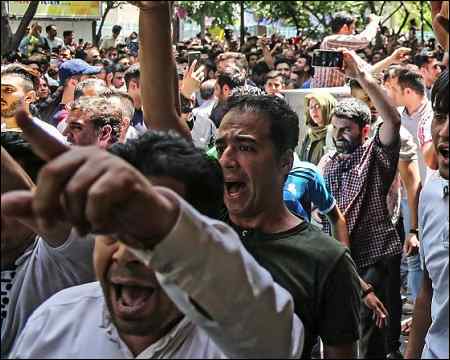
And unfortunately, in every protest movement in Iran since the 1979 revolution, that hasn’t happened. The protesters haven’t convinced significant individuals within the regime to step away and join them. Yes, there is discontent among the Iranian people, especially regarding women’s rights, economic crises, and political freedoms.
However, this dissatisfaction has not yet transformed into a well-organized movement. A significant number of Iranian citizens are voicing their dissatisfaction with the Iranian regime over issues of human rights abuses, the absolute authority of the Supreme Leader, the declining economy of the country, and the lack of freedoms of speech, assembly, and thought.
From the 2009 Green Movement to the 2017-2019 economic protests and the 2022 “Women, Life, Freedom” uprising, Iranians have demonstrated extraordinary courage in confronting state violence. But these uprisings have not translated into regime collapse.

No Presence of Opposition on Ground- Iranian opposition groups may be getting western media attention, but the hard reality is that they have no ground presence inside Iran. The monarchists and the former Mojahedin (Presently NCRI) are positively despised by much of the Iranian diaspora, but unfortunately have no grassroots support. On top of this, there is no unity among Iranian opposition groups. Even there is no consensus on the basic norms of democratic governance. The opposition remains paralysed and ill-prepared to step in if the regime collapses and poses no major threat to the current regime.
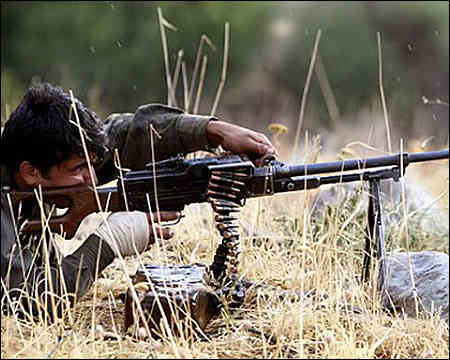
Relative Ethnic Harmony- Iran is a multi-ethnic society apart from Persian, other ethnic groups like Kurds, Balochis, and Azeris also exist in significant numbers. But contrary to its neighbours like Iraq or Afghanistan, Iran enjoys relative ethnic harmony.
It is worth noting that Iran’s current Supreme Leader, Ayatollah Ali Khamenei, is of Azerbaijani descent. Azerbaijanis, the largest ethnic group in Iran after Persians, are a Turkic-speaking people. Khamenei’s Azerbaijani heritage has never been a source of controversy, highlighting the relative harmony between Iran’s Persian majority and its Azerbaijani population. This illustrates that there are no major ethnic fault lines that can be used to bring down the regime.
Iran is the Middle East’s second-largest country by population and a major influence on the Muslim world. Iranian domestic political equations also must be considered before reaching any conclusion about the Iranian threat. In the current political dynamics of Iran still the liberal and moderate elements exist, which want engagement with the rest of the world. If we want a moderate and responsible Iran, we must strengthen and empower these moderate elements in Iran.
Any isolation and military action on Iran will only strengthen the hardliners in Tehran. It’s a hard reality that Iran–freed of an international coalition arrayed against it and led by Tehran hard-liners empowered by the American sanctions would have no reason not to race to a nuclear bomb and subsequently become a rogue country like- North Korea and then it will be hard for international community and Israel to deal with them. The only way to make Iran a responsible state actor is by getting it integrated into the world order and its economy open for everyone so that Iranians always know the cost of their misadventures.
Manish Rai, a senior long-time contributing writer for iKurd.net, see below.
The opinions are those of the writer and do not necessarily represent the views of iKurd.net or its editors.
Copyright © 2025 iKurd.net. All rights reserved
Related posts:
 The Resurrection (Ba’ath) Party – Before the Iran-Iraq War
 The Assassination of Abdurrahman Ghassemlou: No Friends but the Mullahs?
 The Suffocation of Iraq Kurdistan
 Iran Regime Change Vs. Map Change
 Iran – Toxic Theocracy – Part I
 Iran, a Failed Country by Enemies Within
 The 12-Day War: A Tactical Failure, Yet a Strategic Win for Israel
 Business with ISIS – Updated
 The Sun Also Rises in Western Iran
 Iraq: Revenge and Corruption