



ERBIL,—The Kurdistan Region of Iraq is experiencing significant growth in its olive production industry, with 1.5 million olive trees and a total yield of 1,800 tons of olives recorded in 2023, according to Helkewt Abdulrahman, General Director of Horticulture, Forestry, and Pastures.
Abdulrahman told K24 TV that the Kurdistan Regional Government KRG’s dedication to bolstering agriculture, citing the establishment of seven olive oil production facilities. These factories support 1,350 farmers and contribute to the region’s economic diversification.
Professor Shler Shekhani, a forestry and gardening expert, explained that the Kurdistan Region’s unique soil composition and favorable climate make it ideal for olive farming. She noted that Kurdish olive trees are typically short, enabling dense planting and faster fruit production.
The region is home to high-quality olive varieties, such as Sourani, Souri, and Arbequina, prized for their exceptional oil content and quality. However, despite the increasing demand for Kurdish olive oil, current production levels remain insufficient to meet local consumption needs.
According to Shekhani, the Kurdistan Region contains over 1,500 olive orchards, distributed as follows:
Erbil Governorate: 350 orchards
Sulaimani Governorate: 300 orchards
Additional orchards are spread across Duhok, Akre, Sheikhan, Halabja, Rania, and Germyian.
Shekhani stressed the need for greater investment in olive farming to boost output, noting that olive trees in the region typically begin bearing fruit after five years.
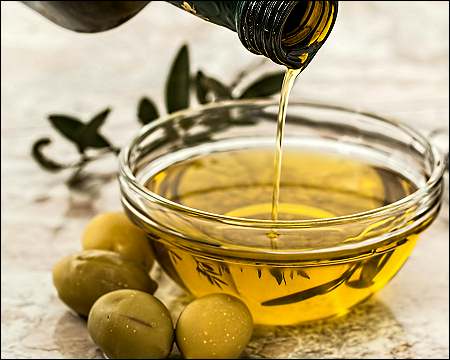
The development of specialized olive oil factories is driving progress in the agricultural sector. The KRG has prioritized agriculture to promote sustainable development. As of 2022, daily olive oil production in Iraqi Kurdistan reached 110 tons, with local farmers supplying approximately 800 tons of olives to factories each day.
The region’s first olive oil refinery officially opened in Erbil in February 2017, though production began in late 2016. The facility processes up to 115 tons of olives daily from various areas, reflecting the sector’s rapid growth.
The launch of the Erbil refinery was part of a partnership between the Kurdistan Region and Italy, aimed at enhancing olive production in the area. This collaboration highlights the region’s commitment to developing its agricultural capabilities and competing on a global scale.
According to Iraqi government records from 2008, the region had 169,400 olive trees, though many were not used for consumption purposes. Today, Kurdish olives and olive oil are recognized for their exceptional quality, signaling a bright future for the industry.
(With files from K24)
Copyright © 2025 iKurd.net. All rights reserved
Related posts:
 Iraqi Kurdistan – “Sold Out!” – Part II
 Iraq – The Cynical Swindle
 Business with ISIS – Updated
 Spiritual Revival of the Forgotten Traditions of NuRoj
 Iraqi Kurdistan – “Sold Out!” – Part III
 No Thanks to Afforestation ‘Turkey plants thousands of seedlings in Erbil’, Iraqi Kurdistan!
 The Misleaders: Corrupt, Filthy Rich, and Proud of it
 Saddam Hussein’s Enemies: Paving the Road to the Invasion of Iraq
 Martyrs for Millionaires: The Black-Market Politics behind the Theft of Syria’s Oil
 The Suffocation of Iraq Kurdistan