


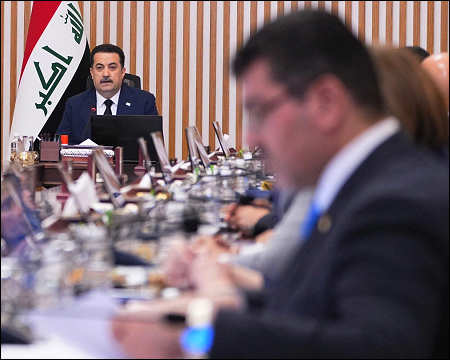
Baghdad and Erbil reach deal to resume Kurdistan oil exports, Iraqi government says
BAGHDAD,— Iraq’s federal government has approved a plan to restart crude oil exports from the Kurdistan Region via the pipeline to Turkey’s Ceyhan port, despite recent drone attacks cutting regional production by nearly half.
Under a new arrangement passed by Baghdad’s cabinet, the de facto Kurdistan Regional Government (KRG) is to deliver at least 230,000 barrels per day (bpd) to the federal oil marketing body, SOMO, for international shipment.
The KRG has not officially confirmed when deliveries will commence but welcomed the deal in a statement.
The agreement follows months of negotiations between Erbil and Baghdad that began in February, aiming to resolve a prolonged dispute over oil revenue sharing and administrative authority.
Iraq’s Prime Minister Mohammed Shia’ al-Sudani acknowledged efforts by PUK leader Bafel Talabani and relevant ministers in securing the deal. According to government officials, the understanding includes provisions for salary payments to Kurdish public employees.
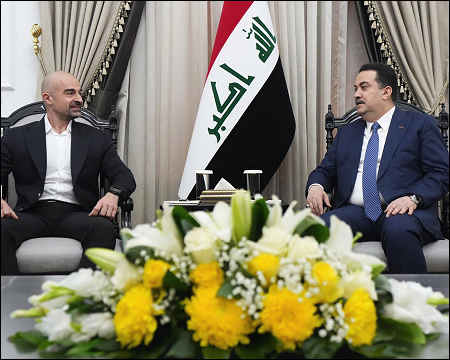
The federal Finance Ministry will release May salaries once SOMO verifies the oil transfer to the Turkish port.
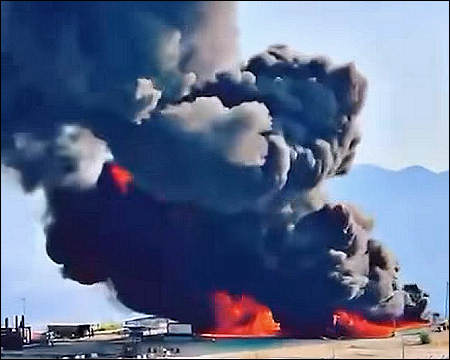
In recent days, Kurdistan’s oil infrastructure has come under multiple drone strikes, which local authorities have attributed to militias linked to Iran.
On Thursday, a drone targeted the Tawke oilfield, operated by Norway-based DNO, according to the region’s counter-terrorism service.
DNO also manages the nearby Peshkabour field in Zakho, close to the Turkish border. It is the second strike this week on DNO-operated assets. While no casualties were reported, production has been cut by an estimated 140,000–150,000 bpd, two energy officials said.
Four consecutive days of attacks have gone unclaimed, though Iraqi security sources said they believe the drones were launched from areas under the control of Iraq’s Iran-aligned Shi’ite militias.
These groups are known to operate under the Islamic Resistance in Iraq, a coalition of roughly 10 armed factions with a combined force of about 50,000 fighters.
Oil firms with upstream operations in Kurdistan, including DNO, Genel Energy, Gulf Keystone, and Shamaran Petroleum, have not responded to inquiries.
These companies have previously insisted on maintaining existing production-sharing contracts and resolving outstanding payments, reportedly totaling close to $1 billion.
The KRG, which was producing approximately 435,000 bpd prior to the March 2023 pipeline shutdown, stated it hopes that salary disbursements will be handled separately from political or technical disputes.
In a separate incident this week, the Ain Sifni oilfield in Duhok, operated by U.S. firm Hunt Oil, was also hit by a drone. No injuries were reported, but the company temporarily suspended operations for safety and damage assessment.
The United States continues to urge both Baghdad and Erbil to reach and maintain a workable export arrangement, viewing it as critical for regional stability and energy supply.
(With files from Reuters | INA | AFP)
Copyright © 2025 iKurd.net. All rights reserved
Related posts:
 Iraqi Kurdistan – “Sold Out!” – Part II
 Iraq – The Cynical Swindle
 LOSING IRAQ — to Iran
 The Resurrection (Ba’ath) Party – Before the Iran-Iraq War
 Saddam Hussein’s Enemies: Paving the Road to the Invasion of Iraq
 Iraq: Revenge and Corruption
 Business with ISIS – Updated
 The Suffocation of Iraq Kurdistan
 Saddam Hussein was a Friend to the West
 Iraqi Kurdistan – “Sold Out!” – Part III