

What Happened? Why Did It Happen? Where Is This Heading?
Mohammed Raouf | Exclusive to iKurd.net
Translated by iKurd.net from Kurdish Westganews
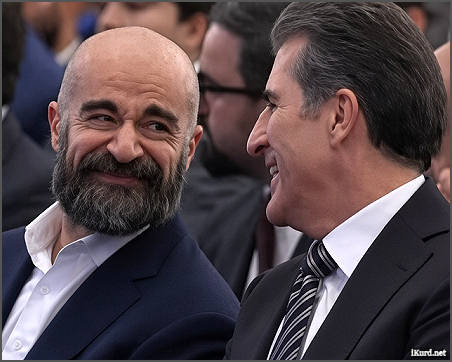
On October 12, during the MERI Forum in Erbil, Bafel Talabani sent a strong message to the Kurdistan Democratic Party (KDP). One line in particular angered Massoud Barzani:
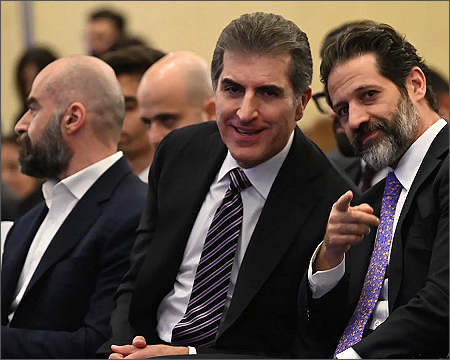
“Who are you to refuse to recognize our alliance with the New Generation Movement?”
This statement prompted Barzani to take unilateral action. How did it happen?
Representatives of the Patriotic Union of Kurdistan (PUK) and the KDP had been holding ongoing discussions. The KDP team consisted of Peshawa Sadiq and Shaaban Shaaban, while the PUK team consisted of Derbaz Kosrat Rasul and Samir Hawrami.
The discussions eventually led to an agreement to hold a four-party meeting. The KDP would be represented by Nechirvan Barzani and Masrour Barzani, while the PUK would be represented by Bafel Talabani and Qubad Talabani.
Both sides approved the meeting, which was scheduled for Thursday, October 15, at Qubad Talabani’s house in the American Village in Erbil. The four leaders were also expected to have lunch together.
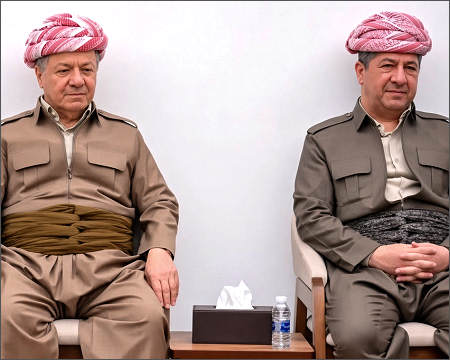
This was the meeting Salahaddin Babakr, spokesperson for the Kurdistan Islamic Union, had in mind when he said: “You will hear good news in the coming days.”
The MERI Forum was held on October 12. Bafel Talabani, Nechirvan Barzani, and Qubad Talabani spoke during the meeting. Their remarks angered and concerned Massoud Barzani.
In a statement issued by the Massoud Barzani headquarters, Barzani expressed his anger over the overall meeting. However, what particularly angered him was Bafel Talabani’s statement:

“Who are you to refuse to recognize our alliance with the New Generation Movement?”
As a result, Barzani decided to demonstrate his authority.
The MERI Forum ended, and Bafel Talabani traveled to Baghdad, where he arranged several meetings. Due to Bafel Talabani’s busy schedule, a request was made to postpone the four-party meeting until Saturday. Everyone agreed.
The meeting and lunch were then rescheduled for Saturday at 12 noon.
On Friday, October 16, a phone call was made to Bafel Talabani’s protocol office. The message was that when he arrived in Erbil on Saturday, he should not bring the large convoy of vehicles that usually accompanied him into the airport.
At first, the request appeared to be a routine technical or security-related matter. However, a series of phone calls followed, drawing everyone into the issue. PUK officials were contacted, as were KDP officials.
Eventually, Bafel Talabani concluded that this was no ordinary decision. He believed the decision had come from someone above both Masrour Barzani and Nechirvan Barzani: father, uncle, Massoud Barzani.
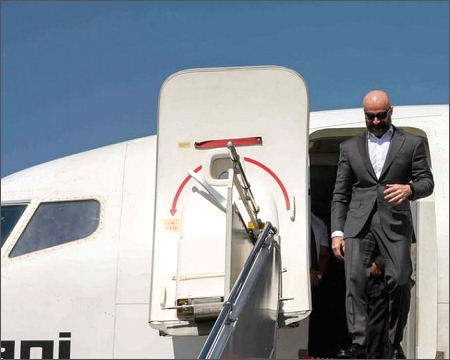
Bafel Talabani interpreted the decision as an attempt to prevent the four-party meeting from taking place. As a result, the meeting was called off entirely.
– KDP officials say the issue was related to the large number of vehicles that did not need to enter the airport.
– PUK officials, however, say this was only an excuse. They point out that Bafel Talabani had arrived with the same number of vehicles on many previous occasions without any problems. Therefore, they believe the decision came directly from Massoud Barzani.
As a result, the four-party meeting at Qubad Talabani’s house, which was scheduled for 12 noon on October 17 and was widely expected to produce an agreement, never took place.
It would have been the first time that Masrour Barzani and Nechirvan Barzani visited Qubad Talabani’s house together and shared a meal with him.
Massoud Barzani decided: “We will do it. They need to know who we are.”
Barzani therefore decided to reactivate the Kurdistan Parliament by any means necessary. How did he do it?
– Every possible effort was made to contact lawmakers who might be willing to attend.
– The efforts began, and eventually, three New Generation Movement lawmakers were persuaded to attend.
– Three PUK lawmakers were also persuaded through various means.
– Two lawmakers from the Halwest Movement were also persuaded.
– KDP officials say these lawmakers attended voluntarily and of their own free will. They argue that reactivating Parliament is a matter of national importance and is necessary to protect the Kurdistan Region’s status and institutional existence.
According to them, all lawmakers outside the KDP who attended were independent and participated to protect the Kurdistan Region.
– PUK officials tell a different story. They say that all those outside the KDP who attended the session did so because of security pressure and money. They claim that some lawmakers were paid between $1 million and $5 million, while others were given projects worth $7 million.
They ask: If these lawmakers were genuinely willing to attend, why did they not do so one month earlier?
Within just 24 hours, ten lawmakers joined the KDP’s side. All of them voted, all of them said they were independent, and all of them claimed they were acting to protect the Kurdistan Region. Their statements sounded as if they had all been given the same instructions.
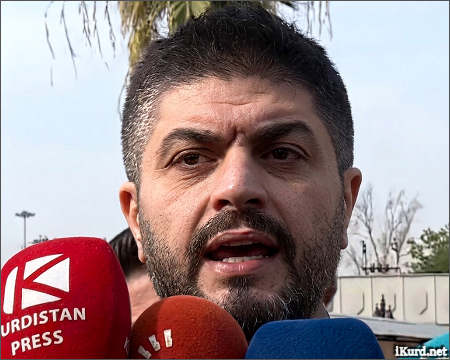
– The KDP approached the lawmakers in different ways:
– Regarding Hardi Salah, the KDP spoke directly with him.
– Regarding Nishtiman Nawpardani, the KDP spoke with his brother.
– Regarding Mohammed Faisal, the KDP spoke directly with him.
– Regarding Mullah Shivan, the KDP also spoke directly with him.
– Regarding the two Halwest lawmakers, it is said that approval was obtained from Herish Abdulrahman because those two lawmakers were under his influence.
– The KDP also spoke directly with the other two New Generation Movement lawmakers.
– Since the decision came from Massoud Barzani himself, nobody was able to stop it.
It is said that on the night before the parliamentary session, several discussions and phone calls took place between PUK and KDP officials, particularly involving some members of the political bureaus and Nechirvan Barzani. However, they were unable to prevent the decision from being implemented.
– Therefore, on the day of the meeting, the KDP was confident that it could bring 51 lawmakers to attend.
On the night before the meeting, two New Generation Movement (Cûłanewey Newey Nwê) lawmakers, one from Koya and the other from Rania, were taken to Erbil to prevent the PUK from reaching them and to ensure their attendance.
The Halwest lawmaker from Sulaimani had been taken to Erbil two days before the meeting.
On the day of the meeting, the two lawmakers from the Halwest Movement were brought into the meeting hall through a different entrance.
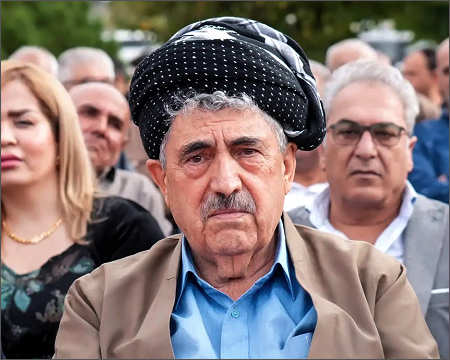
– Regarding the Socialist Party’s lawmaker, it is said that Massoud Barzani spoke directly with Mohammed Haji Mahmoud and asked him to attend. Mohammed Haji Mahmoud promised that he would.
This move by Mohammed Haji Mahmoud greatly angered Bafel Talabani. PUK officials say that during the problems involving Mohammed Haji Mahmoud and his brother, the PUK had supported and assisted Mohammed Haji Mahmoud.
– This move greatly angered the PUK and Bafel Talabani personally because it brought an end to all discussions and agreements that had been close to reaching an understanding, particularly the planned four-party meeting.
– For the first time, the KDP reached into the PUK’s own political territory and took three lawmakers from that party.
This effectively ended the PUK’s claim to having 39 seats.
The PUK is angry and believes this is a dangerous development that destroys the meaning of parliamentary work. It argues that lawmakers can now be bought or pressured through money, threats, and videos.
In other words, the election process has lost its meaning.
– KDP officials, on the other hand, believe that the PUK is deliberately obstructing the KDP and has no intention of reaching an agreement. They also believe that the PUK, acting under external influence, wants to undermine the Kurdistan Region’s political structure.
They say: “We are not going to wait for the Federal Supreme Court to dissolve the government.”
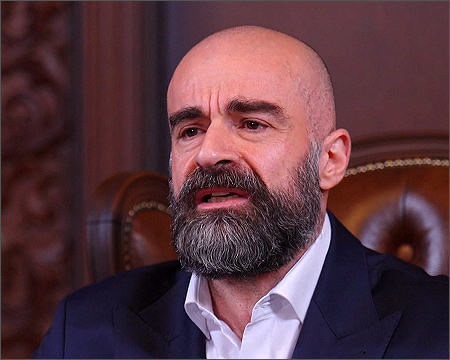
– Therefore, the PUK has brought an end to cooperation, coordination, joint political work, the power-sharing government, and the concept of a unified Kurdistan Region.
According to Bafel Talabani’s statement, the PUK will now manage its own region and areas, while the KDP can manage its own.
– At the PUK leadership meeting, contrary to what has been reported, the lawmakers and party leaders were even tougher than Bafel Talabani.
They all agreed that every possible measure should be taken in response to the KDP’s decision to reactivate Parliament.
Therefore, they gave Bafel Talabani full authority to decide whether to withdraw from the political process, establish two separate administrations, or take any other necessary steps.
The KDP’s Plans to Move Forward
– The KDP is currently working to replace PUK ministers and fill the government positions held by the PUK. It plans to appoint replacements or acting ministers and deputies to fill the vacant positions.
It intends to follow the same approach it took in 2015, when ministers affiliated with the Change Movement (Gorran) were removed from the government.
– The KDP wants to open the door for candidates to run for president of the Kurdistan Region.
But would Nechirvan Barzani agree to become president of a Kurdistan Region consisting of only Duhok and Erbil?
According to the information available so far, Nechirvan Barzani is unwilling to accept the presidency under these circumstances.

Therefore, if this situation develops, there is a possibility that Hoshyar Zebari or Reber Ahmed could become President of the Kurdistan Region.
– The KDP will nominate Masrour Barzani for prime minister.
It will form a cabinet without the PUK, possibly leaving some positions vacant, as it did in the past, in case an agreement with the PUK is reached in the future.
Government ministries will be distributed among the KDP, the Socialist Party, Turkmen representatives, Christian representatives, the People’s Front, and other groups.
– If mediation and dialogue fail, the KDP will pursue its own agenda, and the PUK will do the same.
What Is the PUK Planning?
– As its first step, the PUK has ended all security, political, and diplomatic cooperation with the KDP.
– It has completely withdrawn from the government, including ministerial and deputy ministerial positions, director general posts, board memberships, and all other official positions.
– In Baghdad, the PUK is working to secure a separate budget allocation for the Sulaimani administration and has begun taking concrete steps toward this goal.
– The PUK has held discussions with Iraqi political parties to secure certain legal decisions, prevent interference in its activities, and obtain cooperation and support.
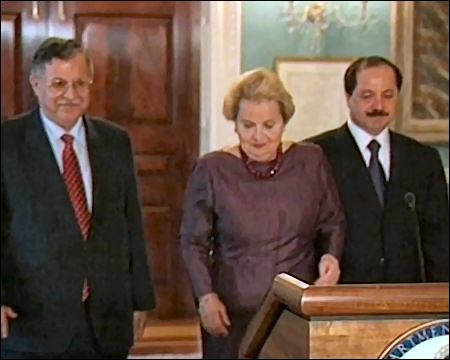
– Sulaimani’s administration will follow a model similar to the one established after 1996.
A government will be established in Sulaimani, and a regional president will be appointed, similar to what happened in 1996 under Mam Jalal (Jalal Talabani). Each side will manage its own affairs independently.
– However, several other options are also being considered if the current tensions subside:
– Two separate regions within Iraq’s federal system: This option would require extensive legal and constitutional procedures within Iraq’s federal system.
– One Kurdistan Region as it currently exists, with its Parliament and regional structure preserved, but with two separate governments in Sulaimani and Erbil.
– The second option is considered more likely: one Kurdistan Region with two separate governments.
This is because the first option, involving two separate regions, would require extensive legal and constitutional procedures.
This article was originally published in the Kurdish language in Westganews on November 6, 2026.
The views expressed are solely those of the author and do not necessarily reflect the opinions of iKurd.net or its editorial team.
Copyright © 2026 iKurd.net. All rights reserved
Related posts:
 Iraqi Kurdistan: The Emperors’ New Clothes
 Why Nechirvan Barzani deliberately insults Iranian Kurdistan forces?
 Why Massoud Barzani failed to become a charismatic Kurdish leader?
 The Suffocation of Iraq Kurdistan
 The Mustashar and the Jash – A View from the Position of ‘Iraqi National Unity’ on the ‘Descendants of Treason’
 Was Jalal Talabani a Charismatic Leader of the Kurdish People? – Part II
 Will KDP and PUK Members Dare to Condemn Their Leaders’ Corruption?
 Iraqi Kurdistan – “Sold Out!” – Part II
 The Assassination of Abdurrahman Ghassemlou: No Friends but the Mullahs?
 U.S. departments must drop the “Kurds will be Kurds” mindset