

Sheri Laizer | Exclusive to iKurd.net
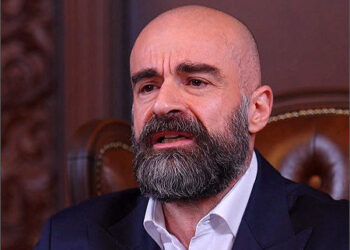
The recent decease of Lieutenant General Tahir Jalil al-Habush (1950 – April 2, 2026) in Erbil highlights how political nuances – not sectarian retrenchment – can overcome past typecasting as friend or as foe.
“God forbid, if I had been an agent, for US intelligence, why after the invasion, did what happened to my family, relatives, friends and acquaintances occur – in terms of killing, imprisonment, torture and confiscation of their property?” (Tahir al-Habush).
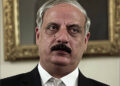
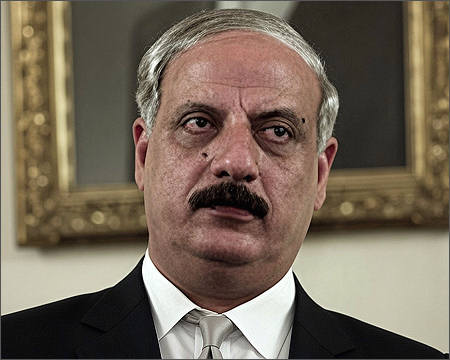
Photo: Statesman and Internal Security Chief, Tahir Jalil al-Habush gave a press conference on the Saudi airliner hijacking, 2000, Baghdad.
Family sources claim that the Iran-backed Shi’a militias have so far disappeared or killed some 150 members of the al-Habush clan. Their disappearances were reported by Arab human rights organisation, Al Karama to the UN Committee on Enforced Disappearances. 1 The Iraqi government failed to reply as to their fate.
Who was Tahir al-Habush?
The death from illness in Erbil this year of former Lieutenant General Tahir Jalil al-Habush represents an opportunity to overcome divisive political labelling and typecasting. Rather than focusing on past conflicts, the seeds of accommodation could help move towards healing after decades of ethnic hatred between Iraq’s Kurds and Arabs.
Tahir Jalil al-Habush was born in 1950 in Tikrit. He obtained a law degree from Baghdad University and completed training at the Police College aged 20 in 1970 in a period of Iraq’s history which today appears like a golden era. He served as an investigating officer in Baghdad’s Criminal Investigation Department and was posted to the Ministry of Foreign Affairs.
He took part in a number of international Arab conferences accompanying the Undersecretary of State. His talents and pride in his country saw him ascend steadily and become the governor of Dhi Qar and Wasit governorates as well as the acting provincial security director. He solved many serious crimes, and in 1973 was part of a team that investigated the robberies and murders carried out by a former Baghdad cop turned serial killer. Hatim al-Shammari, known as “Abu Tabar” (the Smasher was caught on al-Habush’s watch and executed on October 8, 1974.
The deceased was a well-educated man, a seasoned politician who rose through the ranks to hold various high offices in the previous Iraqi administration. He dealt sensitively and effectively with the hijacking of a Saudi aircraft in October 2000, commandeered by two Saudi security personnel. The men were dissidents critical of Saudi human rights abuses. Tahir al-Habush agreed to the plane landing in Baghdad International Airport. The many passengers and crew aboard disembarked unharmed. (See further details below in this short chronology).
Between February 6, 1995, to July 6, 1997, al-Habush acted proficiently as Director General of Police and went on to fill the position of Director of Public Security, thereafter Director of the Iraqi Intelligence Service – a position he held between 2001-2003 and the US-led war on Iraq when the government was brought down in the course of the invasion.

In August 1996, when the KDP invited the Iraqi army into Kurdistan against the PUK, Tahir al-Habush had been privy to the deal. The army went in on August 31st of that year.
Tahir al-Habush had also played a leading role in the 1990s, catching an armed criminal gang responsible for the ambush and robbery of a Jordanian diplomat travelling with his family on the Trebil road between Jordan and Baghdad. The Trebil Border Crossing is the main land gate between Jordan and Anbar Governorate where criminal and militant groups have frequently operated.
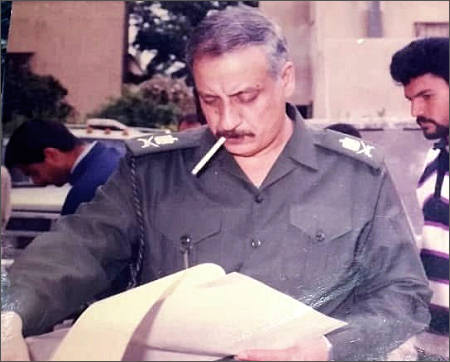
The Jordanian side is at Karameh. Al Habush tracked and captured the gang within 24 hours of the ambush. The international highway was secured and the stolen items recovered. The route was particularly important during the long running sanctions period imposed by the UN with Iraq’s ports blocked. The Trebil crossing was the only legal functioning transit conduit for humanitarian supplies, trade via Jordan, transport and the highly corrupt Oil -for-Food-Programme.
Given the deprivation the sanctions resulted in, crime increased on the highway that runs for 500 km between Karameh and Baghdad. The government viewed any attacks on this route as potentially undermining national security and the policing was focused and effective. Armed bandits were shown no mercy.
The October 2000 Hijacking of Saudi Flight 115– Resolved Safely
As head of the Internal Security Service, Tahir led the mission to free the passengers from a hijacked Saudi plane, flight 115 that had departed from Jeddah and was en route to London. It was permitted to land at Baghdad International Airport. The LA Times reported:
“(Iraqi) State television and airport officials said the 7 1/2-hour crisis ended at 11:20 p.m. local time after high-ranking government officials negotiated with the two hijackers, who then surrendered peacefully.The 103 passengers and crew members were reported safe. Officials said they were spending the night at a Baghdad hotel and were expected to leave Iraq today.
“The two hijackers, who said they were Saudis, were later allowed to speak briefly with reporters. They praised Iraqi authorities and criticized their own government. “We carried out the operation because we believe in the principles of justice and equality,” one said. The other said the Saudi people were against the presence of U.S. troops in their territory…” 2
When one of the hijackers was taken into custody and changing his clothes, he committed suicide by shooting himself in the head. Al-Habush gave a detailed account of all that happened and illustrated it with photographs for the media. The footage (now viewable on a YouTube video) captures the details of the operation throughout. 3
A variant account claims that the two, armed men had been Saudi security officers employed at King Abdul Aziz International Airport. They had first demanded to be flown to Damascus. The Syrian government refused to let the plane land, but Baghdad then agreed:
“All 91 passengers and 16 crew members were released unharmed. The hijackers issued a statement demanding political reforms in Saudi Arabia, but Saudi authorities discounted any political or religious motivation for the pair. The plane and its crew and passengers returned safely to Riyadh, Saudi Arabia, on October 15, while the hijackers remained in Iraqi custody.” 4
Differences in accounts appear but Tahir al-Habush was given due credit for his diplomatic role and smooth handling of the crisis. The LA Times report had added:
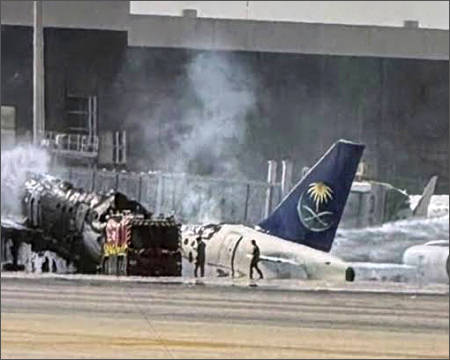
“Speaking before the release, an Iraqi Interior Ministry official, Taher Haboush, said the hijackers had said they seized the plane because they were upset over an investigation into the Saudi human rights situation that was too favorable to the government. “The hijackers also said they ordered the plane to fly to Baghdad because Iraq rejects “U.S. hegemony,” Haboush said…
“Saudi Arabia and Iraq have had no diplomatic relations since Iraqi troops invaded Kuwait in 1990.”
The old stand offs between Iraq and Saudi Arabia remain a backdrop to the current chaos in the region. Saudi is currently feeling the pain of Shi’a (Houthi) Yemeni recalibration. 5
The Ouster of the “Rebirth” (Ba’ath) Administration, 2003
By 1999, Tahir al-Habush had been promoted to head of intelligence, the Mukhabarat. When rumours increased late in 2002 of an imminent US attack on Iraq and international demonstrations erupted in protest against yet another war, Tahir al-Habush assured his British counterparts in MI6 that Iraq no longer retained any weapons of mass destruction.
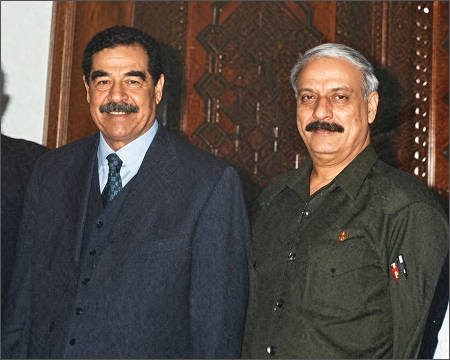
He also dealt with then CIA head of counter-terrorism, Vincent Cannistraro in December 2002 to try to head off the war. Cannistraro said he had been approached by General al-Habush “who said Saddam Hussein knew there was a campaign to link him to September 11 and prove he had weapons of mass destruction. “The Iraqis were prepared to satisfy those concerns. He reported the conversation to senior officials in the state department but was told to stand aside and they would handle it,” he said.
However, conversely, he later heard the Iraqi offer had been “killed” by the Bush administration.
The Guardian report continued that: “The general repeated the invitation to allow Americans to search for weapons and added an offer to hand over a suspected terrorist, Abdul Rahman Yasin, who had been convicted in the US for the 1993 attack on the World Trade Centre. The regime would hold elections within two years, and the intelligence chief even offered to fly to London to discuss the issue in person.
Despite a flurry of overtures via various back channels and direct assurances, President George W. Bush and UK Prime Minister, Tony Blair chose instead to peddle allegations that Iraq possessed WMD as a pretext for invasion. (Public knowledge has it that no WMD were subsequently found).
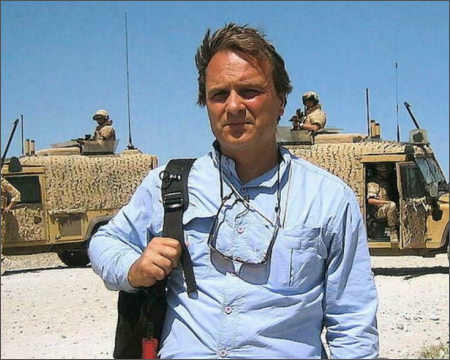
Iraqi intelligence had been “offering privately to allow several thousand US troops into the country to take part in the search for banned weapons and proposed staging internationally monitored elections within two years.”6 Al Habush proposed they be monitored by the US and France, but that Saddam would not stand down first.
General Habush also discussed meeting another retired CIA agent, Robert Baer, (who had gone to work for CBS news) at a house in Ramadi belonging to the al-Dulaym tribe in April 2003 but it was bombed on April 9, two days before the meeting. Six precision-guided bombs struck the location killing 17 members of the Dulaym tribe.7
Assassination would come to characterise US military actions in Iraq. (The targets later switched to Iraq’s Iranian masters despite having handed them control). Al Habush escaped. Baer later spoke of having once been intent on assassinating Saddam and planning a coup in Iraqi Kurdistan where he was stationed in 1995 as a CIA field officer.
The Clinton administration and Langley HQs rejected the plan and Baer was investigated. He resigned in 1997 and went on to make a career in show business. Although the main man behind the failed 1995 uprising he later warned against the invasion of Iraq. His 2002 book about life in the CIA, ‘See No Evil’ posed the obvious question: “If the US is to bomb Saddam and his army until there is no army, what comes after that? No one is discussing the ethnic composition of Iraq or what Iran is likely to do.’ 8 Thus Baer went from being a key part of the duplicity to becoming a regular talk-show guest and Iraq went down in flames.
Resistance to the Occupation
Soon after the US-led invasion Tahir al-Habush was reportedly among the leaders of the ousted forces that challenged the Occupation. The former administration faced the excesses of Deba’athification that directly promoted sectarian carnage. Sunnis found themselves amongst the foremost targets of the US, the UK in the south and the Shi’a militias including Hadi al-Amiri’s Badr Brigade, al-Maliki’s al-Da’wa and cleric Moqtada al-Sadr’s Mehdi Army.
Al Habush had been included in the US military’s trivia pack of the Most Wanted and named there as the Jack of Diamonds with a $1 million bounty placed on his head. He was not found by his hunters.
Falsely accused of being a US agent by his enemies, al-Habush promptly published a statement where he said, inter alia:
“God forbid, if I had been an agent, for US intelligence, why after the invasion, did what happened to my family, relatives, friends and acquaintances occur – in terms of killing, imprisonment, torture and confiscation of their property? And that was in order to pressure them to guide them to my location… What the occupier practised is a shame to humanity… Why was my name placed on the US list of the 55 most wanted and the occupying government’s list of 43?” 9
Refuge in Erbil, Kurdistan
As a former Iraqi official who had had close dealings with the KDP, Tahir al-Habush was accorded sanctuary in Erbil and life protection. Given the intensive American presence in the Kurdistan region, and particularly in Erbil, it has surprised many commentators as to how he managed to live there quietly for 23 years.
Early reports on the whereabouts of former government and military officials had at one time falsely assumed that al-Habush was sheltering in Syria. In 2010 he was linked to the authorship of a book publication: Mudīr Mukhābarāt Ṣaddām yafḍaḥu akādhīb Būl Brīmir, ḥaqā’iq al-umūr fī kashf al-mastūr by Ḥabbūsh, Ṭāhir Jalīl
Kurdish journalist, Diyar Harki, the editor of Kurdfile, commenting on al-Habuhs’ death observed astutely of the ‘layered’ relationship between the Kurdish administration and former Ba’ath officials, observing:
“None of this fits neatly into moral binaries. The post-2003 Iraqi order has been shaped less by clear breaks with the past than by its quiet reintegration. Former regime figures were not entirely excluded; many were repurposed, absorbed, or tolerated within new political arrangements—especially where they could offer strategic value…The case of Habboush, (Habush) even in death, reflects this reality. His trajectory—from intelligence chief to fugitive, insurgent-linked figure, and ultimately a man whose funeral is reportedly held in one of Iraq’s most politically sensitive cities—illustrates how power in Iraq is rarely erased. It is redistributed.” 10
After the destruction, civic terror and extreme violence bought about by the imposition of regime change – primarily by the United States, Tahir Jalil al-Habush was among a select few former officials and leading lights accorded shelter in the KRG capital. His three-day funeral was held openly in the Jalal al-Khayat mosque. 11
Al Habush’s death was announced by former Intelligence official, Salim al-Jumaili along with the location for the funeral.
The Amargi website (relying on undisclosed ‘sources’) has claimed that a number of former security officials continue to live in protected neighbourhoods in Erbil. They are considered useful to their hosts for three main reasons: tribal leverage, Arab diplomacy, and as a counterweight to the pro-Iran Shi’a militias (and, my note, their blocs in government).
It was correctly analysed that these former officials enjoy significant influence and authority with the largest of the Sunni Arab tribes; their leaders can help bolster the KDP’s influence, its interests and its role in the Arab world as well as the positioning of the party and Barzani clan and the Kurdistan region in the diplomatic and economic spheres.
The relationship also provides important leverage against the Shi’a blocs that perpetuate Iranian interests in Baghdad.12 The rival PUK does what Iran demands and stays close to the Coordination Framework, further dividing the Kurdistan region politically. Most of the militia attacks focus on Erbil.
Enforced Disappearances
When Hashd al-Sha’abi rolled into traditional Sunni areas they had one aim in mind – sectarian cleansing and demographic change. Hundreds of Sunni men and boys were taken and killed. In September 2018 as the fight against ISIS reached a new climax and internal boundaries in the disputed territories reverted to the central government, Human Rights Watch prepared a detailed bulletin called, ‘Life Without a Father is Meaningless: Arbitrary Arrests and Enforced Disappearances in Iraq, 2014 – 2017.’
The HRW report defined what ‘enforced disappearance’ means and its application to Iraq: “…Enforced disappearance is defined under international law as the arrest or detention of a person by state officials or by agents of the State or by persons or groups of persons acting with the authorization, support or acquiescence of the State, followed by a refusal to acknowledge the arrest or to reveal the person’s fate or whereabouts. The prohibition also entails a duty to investigate cases of alleged enforced disappearance and prosecute those responsible.”
“In the cases documented by Human Rights Watch in this report, family members could obtain no information about the fate or whereabouts of the detainees and detainees were not allowed any contact with the outside world. Human Rights Watch also tried to obtain information on the whereabouts and well-being of those who had been arrested but received no response by the time of publication. The detentions can therefore be qualified as enforced disappearances…”
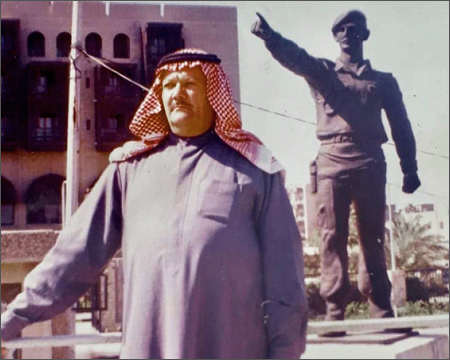
The HRW report also specified that “Those released indicated that they had been detained by the Popular Mobilization Forces (PMF) or the National Security Service (NSS) in unofficial places of detention.”13
On June 8, 2014, a division of the Badr Organisation seized several Sunni men from their homes on June 8, 2014. They included former government aides like Dawood al-Habush al-Issawi, his brother and his eldest son.
These men kept Iran at bay and gave their lives in the heat of battle. Now, their statues have been destroyed by Iran’s loyal proxies that run Iraq and their kinsmen disappeared.
Al Karama stated how: “At midnight on June 8, 2014, a patrol comprised of police officers and members of the Imam al-Sadiq Regiment of the Badr Organization (a Shia militia in Iraq), all armed and in military uniform except for two, stormed the home of Dawood Salman Hassan Haboush Hassan al-Issawi. Two masked men, whom the al-Issawi family identified as informants, accompanied the patrol. While al-Issawi was arrested in front of his family, some of them were severely beaten by the abductors…
Following the disappearance of several named men by Badr militiamen, Al Karama composed a short file that was then referred to the UN Committee on Enforced Disappearances. The whereabouts of the men taken has remained secret. Below is part of the response to the Al Karama referral from the UN Committee on Enforced Disappearances, in translation:
Iraq: The UN Committee on Enforced Disappearances calls on the government to clarify cases of enforced disappearances (submitted by Alkarama). 14
February 7, 2023
“The United Nations Committee on Enforced Disappearances called on the Iraqi government to clarify the fate of Hassan Mohammed Hassan Al-Issa (note: A Palestinian refugee), Yahya Al-Jubouri, and Dawood Salman Hassan Haboush Hassan Al-Issawi, all of whom disappeared after being arbitrarily arrested during 2014 and 2015. (Note: Dawood al-Issawi was taken from his home in Samarra’s Salahaddin province).”
Of note, Samarra stands on the east bank of the Tigris River and was the ancient capital of the Abbasid caliphate founded in the 9th century. It lies 125 km north of Baghdad and 61 km from Tikrit and the village of al-Owja, the birthplace of former Iraqi president, Saddam Hussein. It came under the control of the Shi’a militias in 2014, and the checkpoints remain in their hands.
Shi’a militia disarmament would represent a useful departure, but this currently appears unlikely. The Shi’a bloc leaders are self-deluding.
On September 30, 2026, the US finally pulled out of Iraq after 23 years of interference but continues to undermine the region and the wider world through military aggression and random economic tariffs.
The negative labels the US Occupation imposed through their witch hunt against the former Ba’ath administration led to Iranian supremacy and reversed the outcome of the Iran-Iraq war. Revenge killings continue. Ba’ath means ‘rebirth.’ It was not a negative label but an Arab ideal for progress.
1 https://www.alkarama.org/ar/articles/alraq-ljnt-alamm-almthdt-almnyt-bhalat-alakhtfa-alqsry-tdw-alhkwmt-ltwdyh-halat-akhtfa
2 https://www.latimes.com/archives/la-xpm-2000-oct-15-mn-36920-story.html
3 https://www.youtube.com/watch?v=nnsrqT9SMSE
4 https://aviation-safety.net/wikibase/323410
5 https://www.aljazeera.com/news/2026/10/12/houthi-missile-attack-targets-saudi-capital-riyadh-for-third-day-in-a-row
6 Ibid.
7 https://www.abc.net.au/news/2003-04-22/saddams-spy-chief-tried-to-arrange-meeting-with-us/1841166
8 https://www.theguardian.com/world/2002/mar/03/iraq.terrorism
9 https://www.youtube.com/watch?v=YmnHNarBQaA
10 Ibid: https://kurdfile.com/from-tikrit-to-erbil-the-death-of-tahir-jalil-habboush-and-the-politics-behind-it/
11 Ibid.
12 https://theamargi.com/posts/how-erbil-became-a-safe-haven-for-former-iraqi-baathists
13 https://www.hrw.org/report/2018/09/27/life-without-father-meaningless/arbitrary-arrests-and-enforced-disappearances
14 https://www.alkarama.org/ar/articles/alraq-ljnt-alamm-almthdt-almnyt-bhalat-alakhtfa-alqsry-tdw-alhkwmt-ltwdyh-halat-akhtfa
Sheri Laizer, a Middle East and North African expert specialist and well known commentator on the Kurdish issue. She is a senior contributing writer for iKurd.net. More about Sheri Laizer see below.
The opinions are those of the writer and do not necessarily represent the views of iKurd.net or its editors.
Copyright © 2026 Sheri Laizer, iKurd.net. All rights reserved.
Related posts:
 Iraq: A State of Surveillance – Databases, Tracking And Corruption
 The Resurrection (Ba’ath) Party – Before the Iran-Iraq War
 Iraq: Revenge and Corruption
 Saddam Hussein was a Friend to the West
 Saddam Hussein’s Enemies: Paving the Road to the Invasion of Iraq
 Business with ISIS – Updated
 The Double Cross of Iraq And The Discordant Death of WMD Inspector, Dr David Kelly – The 17th Anniversary
 Iraqi Kurdistan – “Sold Out!” – Part II
 The Suffocation of Iraq Kurdistan
 The Mustashar and the Jash – A View from the Position of ‘Iraqi National Unity’ on the ‘Descendants of Treason’