

Mohammed al-Bashir Named Caretaker Syrian Prime Minister for Transitional Government
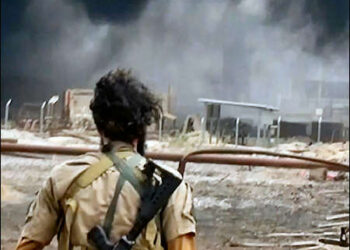
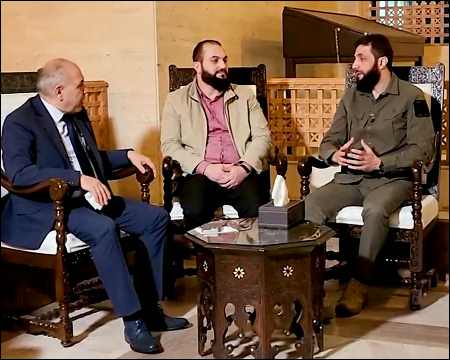
DAMSCUS,— Syria’s Islamist rebel leader, Abu Mohammed al-Golani, who now goes by his real name, Ahmed al-Sharaa, began talks on Monday to transfer power following the ousting of President Bashar al-Assad.
The discussions come after Islamist-led rebel forces seized control of the capital, marking the end of over five decades of rule by the Assad family.
Assad fled Syria on Sunday as opposition forces stormed Damascus, effectively ending his reign. Assad’s rule was marked by a brutal crackdown on dissent, particularly after a pro-democracy movement began in 2011.
His efforts to suppress opposition sparked a devastating conflict that left more than 500,000 dead and forced millions to flee their homes. Many sought refuge abroad, leaving Syria in ruins.
According to a statement shared on the rebels’ Telegram channels, Sharaa met with outgoing Prime Minister Mohammed al-Jalali to ensure a smooth transition of power and address urgent needs. The statement emphasized the importance of maintaining essential services for the Syrian people during this historic shift.
The Assad regime’s legacy includes a network of prisons and detention centers notorious for silencing dissent.
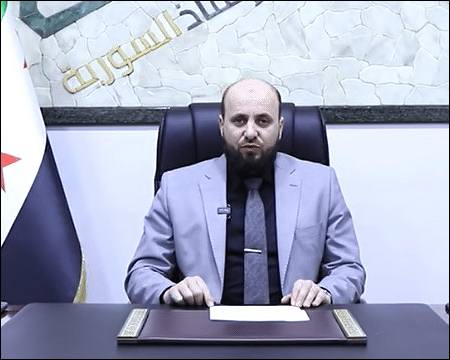
Mohammed al-Bashir has been appointed as the caretaker prime minister of Syria’s transitional government, a role he will hold until March 1, 2025, he announced in a televised statement on Tuesday.
Before the recent 12-day lightning offensive that resulted in the fall of Damascus, al-Bashir led the rebel-controlled Salvation Government.
Thousands of Syrians gathered Monday at Saydnaya prison, a facility synonymous with the regime’s harshest abuses, searching for missing relatives, AFP reported. Rescue teams from the Syrian White Helmets were also present, examining the facility for hidden chambers or underground cells.
Freed prisoners, many bearing physical and emotional scars from years of torture and deprivation, were seen wandering the streets of Damascus. The scenes underscored the horrors of Assad’s rule and the immense challenges ahead for the new leadership.
Sharaa has pledged accountability for senior regime officials accused of human rights abuses. “We will not hesitate to hold criminals, murderers, and those responsible for torturing the Syrian people to account,” he stated on Tuesday.
The collapse of Assad’s government followed a swift offensive led by Sharaa’s Islamist group, Hayat Tahrir al-Sham (HTS), formerly known as al Nusra Front. Once affiliated with Al-Qaeda, HTS has recently sought to moderate its image despite being classified as a terrorist organization by Western nations.
Germany and France expressed willingness to work with Syria’s new government, provided it upholds human rights and protects ethnic and religious minorities. British Prime Minister Keir Starmer, speaking during a visit to Saudi Arabia, urged HTS to renounce violence before Britain could consider engaging with the group.
Meanwhile, U.S. Secretary of State Antony Blinken reaffirmed Washington’s commitment to stability in Syria. “We have a vital interest in preventing Syria’s fragmentation, curbing mass migrations, and stopping the spread of terrorism,” he said. The United States currently maintains a military presence in Syria as part of its coalition against Islamic State militants.
As Syria enters a new chapter, the international community watches closely, balancing hope for progress with concerns over the nation’s volatile future.
(With files from AFP)
Copyright © 2024 iKurd.net. All rights reserved
Related posts:
 Stealing Syria
 The Resurrection (Ba’ath) Party – Before the Iran-Iraq War
 Syria: A ‘Caliphate’ by Any Other Name — Would Smell the Same
 Syria: The Hijacking of the Arab Spring: From ISIS to Hayat Tahrir al-Sham
 Syria: Revisiting The Caesar Torture Victim Photographs
 The Islamic State of Syria? (Al Dawla al-Islamiya fi al-Sham)
 Sabotaging Syria
 Hostages to Jihad – Austin Tice, The Long Missing American in Syria – Part One
 Syria: The Triumph of Terrorism
 Syria: The Truth Lies Buried beneath an Edifice of Lies