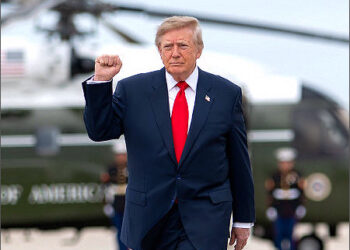



WASHINGTON,— U.S. President Donald Trump on Wednesday announced a sweeping set of tariffs targeting key trading partners, imposing a 34% tax on imports from China and 20% on goods from the European Union.
The move is part of a broader effort to overhaul U.S. trade policy and reduce trade deficits, though experts warn it could trigger retaliatory measures from affected countries.
Trump unveiled the tariffs in a speech from the White House, describing them as a necessary step to address what he called unfair trade practices.
Under the new rules, a 10% tax will apply to all imports, with additional levies on nations that have significant trade surpluses with the U.S.
“For too long, America has been on the losing side of global trade,” Trump said. “We’re changing that, effective immediately.”
Key Tariffs Imposed:
-
China: 34% tariff on imports, increasing to 54% when including additional duties related to fentanyl production concerns.
-
Vietnam: 46% tariff.
-
Japan: 24% tariff.
-
South Korea: 25% tariff.
-
India: 26% tariff.
-
Taiwan: 32% tariff.
-
Thailand: 36% tariff.
-
European Union (EU): 20% tariff.
The tariffs are expected to raise hundreds of billions of dollars in government revenue, though they also risk driving up prices for American consumers. Industries reliant on imported goods—including automotive, electronics, and retail—may see higher costs, which could translate to more expensive products for shoppers.
Economic analysts have raised alarms about the potential fallout from Trump’s trade policy. Fitch Ratings projects that the average tariff rate in the U.S. will surge to around 22%, a level not seen in nearly a century. Experts also warn that prolonged tariffs could lead to economic slowdowns, both in the U.S. and in partner nations.
“There’s a real possibility that these tariffs could push several economies into recession,” said Olu Sonola, head of U.S. economic research at Fitch Ratings.
The stock market reacted negatively to the announcement, with futures taking a sharp downturn. Some Republican lawmakers, particularly those from states dependent on agriculture and international trade, have expressed skepticism about the effectiveness of the tariffs.
House Speaker Mike Johnson, R-La., acknowledged the potential risks but maintained optimism. “We’ll have to monitor the situation, but the goal here is to strengthen the American economy,” he said.
The tariffs have already drawn strong reactions from affected nations. The European Union has indicated it will impose counter-tariffs on U.S. goods, including products such as bourbon and motorcycles. Canada has also hinted at further trade restrictions in response to U.S. policies.
China issued a statement criticizing the move, saying, “History has proven that trade wars have no winners.”
Trump’s latest tariffs follow a series of prior trade measures, including taxes on steel, aluminum, and auto imports. He has also targeted China over its role in fentanyl production, linking additional tariffs to efforts to curb drug trafficking.
Meanwhile, businesses are scrambling to adjust to the new trade environment. Jay Foreman, CEO of toy company Basic Fun, said price increases are inevitable as production costs rise. The company, which manufactures products such as Tonka trucks and Care Bears in China, is already planning to increase prices by as much as 50% on some items.
“There’s just no way around it,” Foreman said. “Consumers will see higher prices.”
With the tariffs set to take effect soon, international trade dynamics are shifting rapidly. Whether Trump’s aggressive trade strategy will yield long-term benefits remains uncertain, but for now, the global economy faces a period of turbulence.
(With files from AP | Reuters | Agencies)
Copyright © 2025 iKurd.net. All rights reserved
Related posts:
 US top court voids Trump’s global tariffs
 Trump imposes tariffs on Mexico, Canada, and China
 Trump’s Tariffs Aren’t a Panacea for the Ailing U.S. Economy
 Trump pauses tariffs for 90 days, raises China tariff rate to 125%
 China raises retaliatory tariffs on U.S. goods to 84% amid trade war
 Trump and China’s Xi meet face-to-face to ease trade tensions
 The Resurrection (Ba’ath) Party – Before the Iran-Iraq War
 Business with ISIS – Updated
 Iraqi Kurdistan – “Sold Out!” – Part II
 American Democracy is on Trial!