


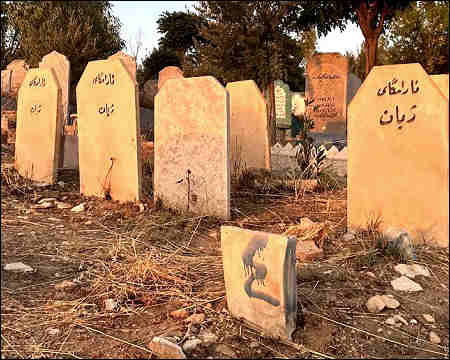
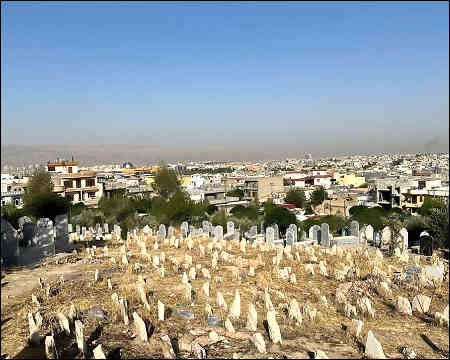
SULAIMANI, Iraqi Kurdistan,— In Sulaimani city, a section of the city’s Saywan cemetery has become the final resting place for women who were murdered, often under the guise of so-called “honor killings.”
The graves remain anonymous, neglected by local authorities, and unmarked by names or memorials, leaving the women’s identities erased and their deaths largely invisible.
Despite promises from government officials, including Qubad Talabani, Deputy Prime Minister of the Kurdistan Regional Government, little has been done to address the issue.
These cemeteries, experts say, reflect broader societal neglect and systemic discrimination against women in Iraqi Kurdistan.
“Many of the women buried here do not have names. Authorities must work with civil society to document these women and properly maintain the cemetery,” said Zheno Rashid, a women’s rights activist working with RojNews.
“Currently, they are buried by municipal workers or volunteers, often without any religious or social rituals. Graves are assigned numbers for identification purposes, but this process strips away the dignity of these women.”
Women as Property in a Patriarchal System
In Iraqi Kurdistan, a patriarchal system shapes societal views of women as bearers of family honor. Under this cultural framework, family members – including fathers, brothers, or other relatives – may kill women to preserve or reclaim perceived honor.
After such killings, families often refuse to bury the victims, leaving authorities to inter the bodies in unmarked graves.
Rashid said the anonymous cemetery exists as a “marker” to remind the community of the crimes committed against women. She added that activists have tried to plant trees in the cemetery to symbolize life and remembrance, but the effort has largely failed due to the conditions imposed by the authorities.
Government Inaction and Statements
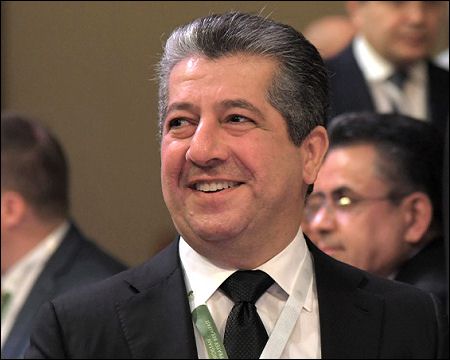
The Kurdish Regional Government has faced criticism for failing to collect accurate statistics on violence against women. Masrour Barzani, the Prime Minister of the KRG, has previously minimized the issue, stating, “There are women’s killings everywhere in the world,” a remark that activists argue implicitly tolerates ongoing violence and prevents comprehensive monitoring.
Three years ago, Newroz Fazel Bakhawan, a former caretaker of the cemetery, visited Sulaimani Municipality to request improvements.
He said he encountered bureaucratic obstacles, leaving the cemetery largely unmaintained. “A dark hand of patriarchal rationality has burned and destroyed inscriptions. The municipality should take responsibility and care for this area,” he said.
Zardasht Tawfiq, a spokesperson for the Sulaimani municipal press department, denied the cemetery’s existence, stating, “We do not have such a cemetery.
Existing cemeteries are used for charity burials and for those without families.” However, visits by RojNews confirm that the cemetery remains neglected, barren, and without greenery.
Promises Made, Promises Unfulfilled
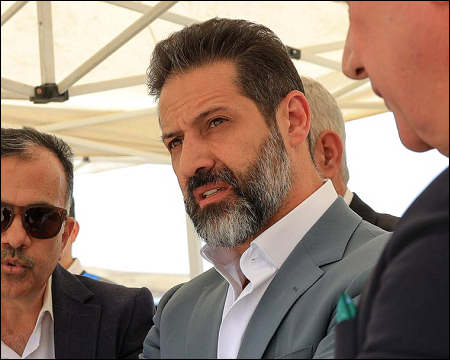
On November 25, 2020, during the week dedicated to condemning violence against women, Deputy Prime Minister Qubad Talabani visited the anonymous cemetery.
He promised to repair unnamed graves and urged local authorities to prevent women from being buried anonymously in the future. However, activists report that these promises were never implemented.
Rezwan Sheikh Dler Parazer, a former Iraqi parliamentarian, attempted to support the initiative through the Gender Office, seeking to identify some of the women buried anonymously. His plans, however, were only partially executed, leaving inscriptions deteriorating and the cemetery continuing to fall into disrepair.
“Authorities and related institutions must act seriously, investigate properly, and implement court decisions,” Parazer said. “When a woman is killed under the guise of honor, the dishonor lies in the killing itself and in showing off that act.”
Challenges for Law Enforcement and Courts
Despite official statements and occasional interventions, law enforcement and the judiciary in Sulaimani have struggled to address honor killings effectively.
Ashwaq Najib, a female activist working on cases of murdered women, told RojNews that investigations are often less rigorous when women are victims, especially if the perpetrator is a family member.
“Laws currently favor perpetrators and fail to protect women,” she said. “Authorities and organizations need to provide serious protection. Visiting the cemetery, its neglect and isolation create a sense of insecurity.”
Najib, who has faced harassment and threats while advocating for women, called on the Kurdistan Union of Activists for protection. Despite these challenges, she continues her work but warns that insufficient support and systemic obstacles have prevented meaningful change.
Continuing Neglect and Symbolic Erasure
Today, the anonymous cemetery in Sulaimani remains a stark symbol of societal neglect. Women who were victims of violent killings are buried in unmarked graves, their lives and identities erased.
Attempts to plant trees as symbols of renewal have been blocked, reflecting a broader reluctance to acknowledge or commemorate these deaths.
Human rights experts say the cemetery represents more than a burial site. It highlights ongoing failures by the government, courts, and civil institutions to address gender-based violence in the region. Without intervention, activists warn that the cycle of violence and neglect will continue.
Advocacy organizations reported that 13,017 cases of domestic violence were recorded across the Kurdish region in 2024. Many of these incidents stem from what authorities describe as “social disputes,” which in some instances escalate into deadly violence.
Despite repeated pledges by the Kurdistan Regional Government to tackle gender-based violence, activists say enforcement of existing laws remains inconsistent. Support services for survivors are limited, and prevailing cultural norms continue to hinder effective intervention.
Women’s rights groups are pressing for stronger legal protections, harsher penalties for perpetrators, and expanded resources for victims. They caution that without decisive action, the number of domestic abuse incidents and honor-related killings is unlikely to decrease in the region.
(With files and report from Rojnews.news)
Copyright © 2025 iKurd.net. All rights reserved
Related posts:
 Anfal – The Black Stain on Iraqi History Spreads
 Syria: Revisiting The Caesar Torture Victim Photographs
 Honor killings are not part of Kurdish heritage, but imported culture: sociologist
 The Resurrection (Ba’ath) Party – Before the Iran-Iraq War
 Iraq – The Cynical Swindle
 Iraq: Revenge and Corruption
 Facial Recognition Technology, Monitoring and Infiltration of the opposition in Iraq
 Groups, media with alleged PKK links banned in Sulaimani, Iraqi Kurdistan
 Iraq: A State of Surveillance – Databases, Tracking And Corruption
 48 women killed due to violence in Iraqi Kurdistan in 2024, statistics show