

Sheri Laizer | Exclusive to iKurd.net
Facial Recognition Technology (FRT) is now being widely used in Iraq for many kinds of government activity. The Iraqi authorities – that include the Duopoly governing the KRG, primarily the KDP and PUK – have obtained sophisticated FRT technology from Italy and France,1 China, Iran and Turkey along with spyware. 2 Their internal security capacity now overlaps effectively with the new biometric technology used in producing the digital national identity cards (INID).
FRT is also particularly useful to state actors and their militias for surveillance and in identifying members of the opposition because every citizen’s personal photograph is provided for their ID card along with their biometric data and it then links to forensic databases, intelligence and criminal files. The information is being applied in the electoral system and links to compulsory voter registration cards under the Iraqi High Electoral Commission (IHEC) and the functions of the new Injaz Data Centre:
“The biometric system incorporates fingerprint and facial recognition data, marking a shift toward multimodal authentication. IHEC has announced that facial recognition devices will be deployed at polling stations as a fallback mechanism for voters whose fingerprint scans fail. The current registration round includes the capture of facial templates, expanding Iraq’s biometric capabilities beyond earlier fingerprint-only systems.
National Integration and Data Security
Iraq’s biometric modernization campaign is also linked to the Injaz data center initiative, which aims to integrate voter records with national ID and forensic databases. French defense and security firm Thales is overseeing the development of the Injaz hub, which will anchor Iraq’s biometric ecosystem. This centralized architecture supports cross-system validation and long-term digital governance reforms.

The biometric update campaign also comes amid reports of illicit markets for voter credentials, with stolen or forged biometric cards reportedly selling for the equivalent of 100 US dollars. These security concerns have reinforced the Commission’s push for facial recognition as a secondary authentication method and underscore the need for a secure, centralized identity framework…3
‘Injaz’ (Arabic, “Achieving the goal”)
Injaz is connecting the information contained on national ID cards linked to the Personal Status Register and the old paper family books and numbers around 44 million individual data sets. These databases then connect further with forensic databases used in criminal and political investigations and prosecutions.
Injaz capacity includes facial identifiers, fingerprint matching, and DNA biometrics as well as electronic documentation concerning criminal records and the registrations of weapons. Interior Ministry spokesman, head of the Relations and Media Department, (Media Security Cell 5) Brigadier General, Muqdad Miri said: “The project will have a wide impact on security. We have 44 million national cards and data that will be linked to forensic work, which will make it easier to identify fingerprints anywhere… This project is the first of its kind in the history of the Interior Ministry and will transform our work. We will confront suspects with indisputable, error-free evidence.” 6
German firm, Veridos, provided technological assistance in the setting up of the digital ID system since 2013 “which includes more than 320 operational offices for citizen registration, 95 percent digitization of family books for secure and long-term archiving, and the creation of a biometric database where data is securely stored.” 7
Muqdad Miri also holds the office of Iraq’s Supreme Security and Services Committee for Pilgrimage Visits. He was appointed to the position on July 9, 2025. 8 He was the spokesman for the Higher Security Committee of the Arab Summit held recently in Baghdad. When approached on specific incidents concerning freedom of expression and the treatment of media organisations and journalists by the Committee to Protect Journalists he has failed to respond. 9
As one Iraqi opposition activist at risk at home and abroad professed to me:
“Yes, about Brigadier General Muqdad Miri, officially, he is a career officer and doesn’t hold formal membership in any political party, as Iraqi law forbids active military personnel from joining parties.
However, in reality, his position as the Ministry of Interior’s spokesperson puts him directly under the influence of the dominant Shia factions—specifically the Badr Organisation, which holds significant sway over the MOI, and the Al-Da’wa Party, which leads the current government.
It is important to note that in the current Iraqi security landscape, someone in such a sensitive and high-profile position would not last long without the full blessing and approval of these powerful groups. If he weren’t aligned with their interests, he would have been removed from his post or even “liquidated” (targeted) long ago.” 25
In Iraq’s most recent parliamentary elections held on November 11, 2025, IHEC also installed FRT at polling stations claiming problems had arisen in the past over fingerprint matching. KDP-owned Rudaw media reported just before the elections:
“ERBIL, Kurdistan Region – The Iraqi electoral commission has, for the first time, installed face recognition devices at polling stations on Sunday to enable those unable to vote using fingerprints to cast their ballots.
Thousands of voters were deprived of voting in previous elections in Iraq and the Kurdistan Region due fingerprint issues. The Independent High Electoral Commission (IHEC) has provided face recognition devices at polling stations for this year’s polls.
“No one is allowed to vote without a voting card, and if the fingerprint reader doesn’t work, Face ID will solve the problem,” Nabard Omar, director of IHEC’s office in the Kurdistan Region, told Rudaw on Sunday…10
Surveillance, drones and concrete barrier walls

Most of Iraq’s borders (up to 99 % at the date of writing) now operate surveillance cameras and are seeing the construction of concrete border wall similar to those Iran is constructing along the borders with Iraq and Kurdistan. The wall is currently under construction along the border with Syria, including between Iraqi Kurdistan and the AANES-controlled stretch of Kurdish majority Syria. 11 Trenches are being dug behind the wall, monitored by drones, one drone for every 80 kms. Iraqi border guards and the Shi’a PMF militias and Iraqi Army jointly control the frontline. 12
The Falcons unit or cell is also tasked with political and anti-terror missions. Head of the Security Media Cell, Lieutenant General Saad Maan claimed arms runners from the Syrian camps to the Iraqi border had been tracked and intercepted by them according to the state-run Iraqi News Agency, in its report of December 23, 2025, claiming the Falcons Cell ‘utilised all available technical and human resources’ to reach the targets in Syria after a five-month surveillance operation. 13 Sonar scanning is also operational at the borders. 14
Spies and informants at protests
Journalists, opposition activists and protestors can be easily identified through these overlapping systems. Injaz will also benefit from a ballistic analysis system aka Forensic Firearms Comparison and surveillance footage analysis that includes individuals at demonstrations: “Plans also call for 50 mobile crime scene units and secure communications systems to link police and forensic departments across all governorates through a centralized, encrypted network.”
Parallel HUMINT operations include the deployment of plainclothes security agents, paid infiltrators and informants to merge with protestors at opposition events including public and political rallies, party or group meetings and demonstrations. Protestors in Dhi Qar’s Nasiriya have frequently clashed with local and security forces whom they claim to be linked to the Iran-backed, Badr Organisation, such as the newly appointed police chief there, Major General Najah al-Abadi.
Protests broke out after al-Abadi announced arrests based on old warrants of 500 people, many of whom had been active in the 2019 Tishreen protests, and the targeting of high-profile activists. Security forces were accused of beating and torturing some of the protestors they detained, with incidents captured on mobile phones.15 MOI chief, Muqdad Miri, had responded to the October 2024 unrest and mass arrests warning:
“The ministry “will not allow tire burnings, road blockages, or attacks on public property,” stressing that the authority of the state and the law “will prevail in Dhi Qar.” Miri also disclosed that security forces had arrested 578 individuals, most of whom, he claimed, were not protesters.
Activists and protest groups present a different narrative, accusing “influential political parties” of being behind the recent escalation in Nasiriyah. Three activists told Asharq Al-Awsat that these parties had pushed government agencies to target those wanted by law, conflating criminal suspects with individuals involved in protests. One activist pointed out that the timing of the arrest campaign, coinciding with the seventh anniversary of the Tishreen Movement, underscores the political motives behind it…16
The same mindset and methods are evident in the surveillance of protests by Iraqis abroad. The Iraqi government, dominated by the pro-Iran Coordination Framework Shi’a bloc and Hashd al-Shabi forces and the two main Kurdish parties are not only increasingly unpopular at home, owing to systemic patronage and corruption but their clampdown on the opposition has led to many thousands fleeing abroad in search of asylum based on death threats, random arrests, torture and the killing of critics.

Threats to opposition activists in the UK – Dakok (Defence)
The UK-based charity organisation, the Dakok (Defence – as in human rights) Support Centre has organised UK countrywide protests this year on freedom of expression issues concerning the KDP, PUK and Iraqi government along with support for journalists unfairly jailed in Kurdistan18, attracting thousands of attendees.19 Its website, dakok.org.uk, reported on May 8, 2025: Corruption in the Kurdistan Region of Iraq: A Deepening Crisis of Governance, from which the following statement derives:
… Public dissatisfaction with corruption has repeatedly manifested in protests and civil unrest. Citizens demand transparency, justice, and reform, but meaningful change has proven elusive. Civil society activists, journalists, and opposition voices face harassment or imprisonment, further weakening mechanisms of accountability. For instance, activists like Sherwan Sherwani and others have been imprisoned for speaking out against corruption, illustrating the high cost of dissent.
In conclusion, corruption in the Kurdistan Region of Iraq is not a peripheral issue—it is a central impediment to the region’s democratic development and economic prosperity. The political domination of the KDP and PUK, coupled with a lack of institutional checks and balances, has allowed corruption to become embedded in governance. If the region is to move forward, it must confront this reality with structural reforms, empower independent institutions, and support a free press and civil society. Only then can it begin to restore public trust and realize the aspirations of its people.
Allegations of corruption, details of highly compromised patronage relations and the undermining of media freedoms form a major component of Dakok’s campaigning and online reporting:
…During the seminar, Mala Nuri (a Kurdish author) addressed the growing restrictions imposed on his work since the Dakok Organization began hosting this series of intellectual and political discussions in the UK. He highlighted that authorities in the Kurdistan Region—particularly the Kurdistan Democratic Party (PDK)—have increasingly censored his writing and public appearances in response to the expanding audience for his work.
(His book) Mashkhali Jiyanawa has reportedly been banned from libraries and bookstores under PDK control, with distribution and sale strictly prohibited. Individuals attempting to purchase, sell, or read the book have allegedly faced intimidation, questioning, and direct threats from security forces. These measures reflect a systematic effort to suppress critical thought and prevent the book from influencing public discourse…20
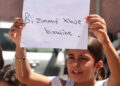
Dakok has also reported how peaceful demonstrations in the UK have been monitored by the Iraqi Embassy and provided visual proof of protestors being filmed from its windows: “While protesting peacefully outside the Iraqi Embassy in London, Dakok members reported being monitored, photographed, and filmed from the embassy’s upper floors. This surveillance raised serious safety and privacy concerns for activists and their families…We came to speak out against injustice in our homeland, only to find ourselves being watched and recorded by the very government we are protesting against,” said one Dakok member. “This behaviour is deeply alarming.” 21
Media and Internet control by Iraq’s political parties

Once an opposition activist has come to the adverse attention of Iraqi or Kurdish state agents, because the political parties ruling Iraq and the KRI also own and control Internet provision and mobile phone companies, tracking IP addresses and users is straight forward. A SIM card in Iraq can only be obtained with proof of identity, a passport for foreigners or national ID card for citizens. This also then links to billing and bank account details, bank cards etc:
ISPs in the Kurdistan region, many of which have close ties to the ruling political parties, may also monitor online activity. According to a local ISP employee, telecommunications companies in the region store and monitor user data and information. Specifically, technicians have been able to access old Facebook accounts belonging to customers and monitor how many times they were logged in and out, how many devices were logged in, and the location of users’ devices.
Journalists and activists are frequently harassed and intimidated online, and they are at times subjected to physical violence—including assassinations—by state and nonstate actors in reprisal for the content they post. Those who perpetrate physical attacks and assassinations often go unpunished. 22
State agents can threaten any activist directly; they can also threaten their relatives, particularly when the activist him or herself is living abroad. Threatening texts, mobile phone voice messages and threats reviling the activist on social media have become commonplace. The elite ruling Iraq has also issued directives to social media companies to impose criminal penalties for use of positive LGBT+ material etc. and the same can be done on any number of political issues. A specific Random House report Iraq Freedom on the Net observed in 2024:
The Iraqi government and the KRG exercise control over the internet infrastructure and regularly restrict connectivity during times of protests or unrest. Iraqi authorities have admitted in the past to cutting internet access during national exams, elections, and mass demonstrations. Because the Kurdistan region has some ISPs that operate separately from those in the rest of Iraq, it is not necessarily affected by internet disruptions in the south.
Similarly, in the Kurdistan region, the two ruling parties’ ownership of ISPs and the fiber-optic backbone can facilitate government-ordered internet shutdowns. For example, O3 Telecom, which has close ties to the family of KRG president Nechirvan Barzani and his Kurdistan Democratic Party (KDP), is based in Erbil and Duhok and is the only company allowed to import fiber-optic services through Turkey, which it then distributes to smaller companies like Newroz and FastLink.
Several major companies in Sulaymaniyah Governorate, such as IQ Group, Kurdtel, and Fancy Net, have close ties to or are owned by members of the Patriotic Union of Kurdistan (PUK) and the family of that party’s leader, Bafel Talabani.
The development of the NIP, specifically the Ministry of Communications’ management of the fiber-optic network, could further centralize the internet backbone under the national government (see A1)…
Many telecommunications companies operating in the Kurdistan region and the rest of Iraq are linked to powerful political parties or militias, which provide them with the necessary protection from any legal accountability for disruptions (see A5).
The CMC regulates the telecommunications sector but is neither fair nor independent. There is no clear separation of powers between the CMC and the Ministry of Communications, and both suffer from overwhelming political interference.
There is no legal framework regulating telecommunications services in the Kurdistan region, and the KRG Ministry of Transport and Communications oversees the sector in practice. The Barzani family and the Talabani family have been criticized in recent years for their control of the market.
Security forces at times delete content from activists’ and journalists’ phones and social media accounts. In June 2024, after the coverage period, several journalists and activists who are part of Protect Goyzha, a civil society organization, had their phones confiscated by security forces during a gathering in Sulaymaniyah Governorate. Several of the Protect Goyzha members reported that security agents deleted photos from the confiscated phones.
In June 2022, the KRG’s Ministry of Culture issued a statement warning media organizations and social media platforms to abstain from publishing articles that criticize the Kurdistan region or any other content that they believe would incite fear among residents or raise concerns about regional stability. The ministry also promised to sanction those who do not comply.
Media outlets and service providers with favorable connections to government officials tend to be more economically viable. In many cases these connections extend to the officials’ political parties or affiliated armed militias.
Privately owned media face financing obstacles. Patronage systems in the Kurdistan region and the rest of Iraq allow outlets that align their reporting with powerful figures to receive funding and advertising revenues that smaller, independent, or opposition-aligned outlets lack. The latter outlets cannot afford the staff or facilities that government-affiliated outlets enjoy, and they are consequently uncompetitive against organizations like Rudaw, Kurdistan 24, and KurdsatNews, all of which receive funding from prominent KRG political figures or parties.
Online journalists and activists are routinely detained and arrested in the Kurdistan region and the rest of Iraq. While long prison sentences for online content remain relatively rare, they have recently grown more common. 23
Use of FRT at checkpoints
The UK Home Office Country Policy and Information Note (CPIN), Iraq: Internal relocation, civil documentation and returns, of October 2025 acknowledged the use of FRT at checkpoints even if the technology was not yet fully in use at all of them.24 It will, however, only be a matter of time until it is so.
Surveillance
As FRT is being rolled out across Iraq, its borders and checkpoints, it is also being put into effective use in both legal and extrajudicial surveillance. During the height of the Tishreen protests in 2019, protestors were being traced to their registered addresses by the system already in place. The technology in use has since become increasingly more sophisticated. The Freedom House report cited from above on Freedom on the Net, 2024, also stated:
In October 2023, prominent civil society activist Ali Mahmoud Abboud al-Sabayi was assassinated in central Baghdad. Al-Sabayi had been active in mobilizing protests in 2019, and his killing was likely a response to Facebook posts in which he urged citizens to participate in further demonstrations. Shortly before his assassination, he participated in a protest in Tahrir Square and posted a photo on his Facebook page that showed him with a banner listing the goals of the October Popular Movement.
The same Freedom House report also emphasised:
Intelligence services in the Kurdistan region, specifically the Parastin and Zanyari agencies, which are controlled by the KDP and PUK, respectively, are known to monitor communications, including the phones of employees. In September 2021, the president of the PUK confirmed that Zanyari had monitored phone calls in the past. In a press conference, he stated that members of the PUK were afraid to use Asiacell to communicate for fear of surveillance.
Evidently, the Orwellian state is alive and well in Iraq and there appears little likelihood of curtailing the security dominated control-dynamics of the elite. As one protestor with the Dakok Support centre noted after receiving death-threats from a Kurdish official threatening to cut off his head if he ever set foot in Kurdistan again, and who had reported this to the UK police (unable to act as the offenders are outside their jurisdiction) “I cannot go home. They will kill me for criticising them.”
1 See: https://www.ozforensics.com/ and thalesgroup.com
2 Authorities in Iraq may have purchased commercial spyware in recent years. According to a former KRG intelligence service member, spyware was purchased from Italy in 2021, and surveillance technology has also been purchased from the Chinese company Xiaomi.203 https://freedomhouse.org/country/iraq/freedom-net/2024#footnoteref3_IAZVSHd1Qp2q3fjszlveht6HJdm87-lLBvMHedsrc_lOLjGqoq2dJ0
3 https://idtechwire.com/kurdistan-region-updates-biometric-data-for-350000-citizens-in-major-id-drive/Sources: NRT English, BasNews
4 https://en.964media.com/34867/
5 https://kirkuknow.com/en/news/70534
6 Ibid.
7 https://www.biometricupdate.com/202501/veridos-celebrates-40m-digital-id-issuance-milestone-in-iraq See: https://www.linkedin.com/posts/veridos_eid-digitaltransformation-secureidentities-activity-7289953356729503747-j1Wm/
8 https://shafaq.com/en/society/Iraq-appoints-spokesperson-for-religious-pilgrimage-committees
9 https://cpj.org/2025/07/iraqi-authorities-shut-down-iraq-alhadath-channel-without-clear-explanation/
10 https://www.rudaw.net/english/middleeast/iraq/09112025
11 See also moves between Iraq and Syria’s al-Sharaa on co-operation: “Although Syrian Democratic Forces (SDF) maintain security in much of northeast Syria, the central government retains control over segments of the Iraqi-Syrian frontier, where coordination with Iraqi forces remains crucial. Security experts suggest that greater intelligence sharing and joint patrols could play a pivotal role in countering transnational militant movements. The inclusion of Iraq’s intelligence service in this round of talks signals a shift toward deeper operational coordination.” https://npasyria.com/en/124922/
12 https://english.enabbaladi.net/archives/2025/09/iraq-adopts-construction-of-walls-along-syria-border/
13 https://ina.iq/en/44332-smc-we-arrested-the-link-transporting-weapons-and-terrorists-from-syrian-camps-to-the-iraqi-border.html
14 https://ina.iq/en/44244-iraqs-border-crossings-embrace-digital-modernization-to-boost-trade-and-security.html
15 https://www.iraqhorizons.com/p/dhi-qar-protests-renewed-unrest-amid
16 https://english.aawsat.com/arab-world/5072897-widespread-protests-southern-iraq-over-arrest-activists
17 https://dakok.org.uk/kurdish-activists-monitored-and-recorded-by-iraqi-consulate-staff-during-manchester-protest/
18 https://dakok.org.uk/uk-parliament-members-back-dakoks-advocacy-campaign-for-jailed-journalists/#comment-61
19 https://dakok.org.uk/dakok-holds-nationwide-demonstrations-and-launches-advocacy-campaign-in-support-of-jailed-journalists-sherwan-sherwani-and-omed-baroshki-in-manchester/
20 https://dakok.org.uk/censorship-on-abdulla-mala-nuris-mashkhali-jiyanawa-intensifies-following-dakok-seminar-in-the-uk/
21 https://dakok.org.uk/iraqi-embassy-in-london-monitored-peaceful-kurdish-protesters-amid-uk-wide-demonstrations/
22 https://freedomhouse.org/country/iraq/freedom-net/2024#footnoteref3_IAZVSHd1Qp2q3fjszlveht6HJdm87-lLBvMHedsrc_lOLjGqoq2dJ0
23 https://freedomhouse.org/country/iraq/freedom-net/2024
24 https://assets.publishing.service.gov.uk/media/6908d48219a898f0b18981bf/IRQ+CPIN+Internal+relocation+civil+documentation+and+returns.pdf
25 Private email correspondence, December 24, 2025
Sheri Laizer, a Middle East and North African expert specialist and well known commentator on the Kurdish issue. She is a senior contributing writer for iKurd.net. More about Sheri Laizer see below.
The opinions are those of the writer and do not necessarily represent the views of iKurd.net or its editors.
Copyright © 2025 Sheri Laizer, iKurd.net. All rights reserved
Masrour Barzani tried buying U.S. zero-click spyware, faces lawsuit: report
Related posts:
 Iraq: A State of Surveillance – Databases, Tracking And Corruption
 The Resurrection (Ba’ath) Party – Before the Iran-Iraq War
 Iraq: Revenge and Corruption
 Iraq – The Cynical Swindle
 Saddam Hussein’s Enemies: Paving the Road to the Invasion of Iraq
 Saddam Hussein was a Friend to the West
 Business with ISIS – Updated
 Iraqi Kurdistan – “Sold Out!” – Part II
 The Truth About The Saddam Hussein Affair
 The Double Cross of Iraq And The Discordant Death of WMD Inspector, Dr David Kelly – The 17th Anniversary