ISLAMABAD,— A suicide bomber attacked a Shi’ite mosque in the Pakistani capital on Friday, first firing shots at its entrance before blowing himself up inside the prayer hall, killing at least 31 people and injuring more than 170 in the worst such attack in Islamabad in over ten years.
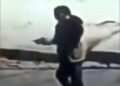
The Islamic State group later claimed responsibility in a message shared on its Telegram channel. It also posted a photograph it said showed the attacker holding a rifle with his face hidden. Reuters said it could not immediately verify whether the image was authentic.
Local officials said security guards confronted the man as he tried to enter the Khadija Tul Kubra Imambargah, a large Shi’ite religious compound on the edge of the city. The explosion happened moments later inside the mosque.
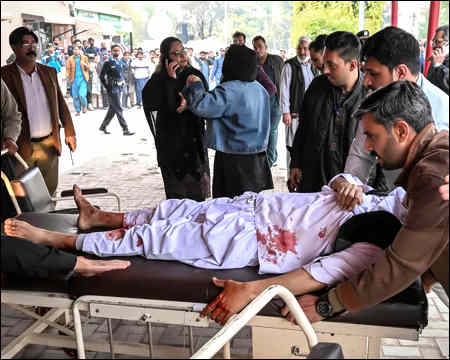
Video and pictures from the site showed a shocking scene, with bodies lying on the carpeted floor, broken glass scattered everywhere, and worshippers in panic.
Dozens of wounded people were seen lying in the mosque gardens while others screamed for medical help.
Several survivors said they heard gunfire shortly after Friday prayers began, followed seconds later by a massive blast that shook the building.
Pakistan’s Defence Minister Khawaja Asif wrote on X that the attacker detonated his bomb in the last row of worshippers. He also claimed the bomber had previously traveled to Afghanistan and accused India of backing the assault, but provided no evidence.
India’s foreign ministry condemned the attack and rejected Pakistan’s accusation. In a statement, New Delhi said Islamabad should focus on its internal security problems instead of blaming others.
At Islamabad’s main public hospital, the Pakistan Institute of Medical Sciences, families waited anxiously in hallways and outside buildings for news.
Among them was Sarfraz Shah, 46, who said he had attended prayers with his brother Manzar, 39.
“I heard gunshots and before I could understand what was happening, there was a huge explosion,” Shah told reporters. “People were thrown around. There was thick smoke and confusion. Then I saw blood everywhere.”
He later learned at the hospital that his brother had been killed.
The independent conflict monitor ACLED said this was the deadliest suicide bombing in Islamabad since 2014.
Police officer Shahid Malik, who helped transport victims to hospitals, described the scene as terrifying.
“I have worked many crime scenes, but this was extremely disturbing,” he said, estimating that 600 to 700 worshippers were inside the mosque.
Pakistan is a mainly Sunni Muslim country, but Shi’ites form a significant minority. They have been targeted in past attacks by groups such as Islamic State and the Tehreek-e-Taliban Pakistan.
While Islamabad is normally one of the most secure cities in the country, Pakistan has seen rising militancy in recent years, especially in areas near the Afghan border.
Afghanistan’s government condemned the bombing and again denied allegations that it shelters militants who attack Pakistan.
Islamabad’s Deputy Commissioner Irfan Memon said 31 people had been killed and 169 injured were brought to hospitals, though earlier officials said more than 170 people were wounded.
Security in the capital was already heightened because Uzbekistan’s President Shavkat Mirziyoyev was in Pakistan for an official visit.
Police checkpoints were set up across the city, and many roads were blocked.
The attack came after a violent weekend in Balochistan province, where Pakistan accused India of supporting militant raids. India rejected the claims.
In that region, separatist fighters launched coordinated attacks on government offices, hospitals, and markets, killing 58 civilians and security officials. Pakistan’s military said it later killed 216 militants in operations across Balochistan.
Earlier on Friday, the military also reported killing 24 militants linked to the TTP in Khyber Pakhtunkhwa province.
Islamabad’s last major suicide attack took place on Nov. 11, when a bomber killed 12 people and wounded 27 others. Pakistan said the attacker was Afghan, and no group claimed responsibility.
(With files from Reuters)
Copyright © 2026 iKurd.net. All rights reserved.
Related posts:
 Iraq: Revenge and Corruption
 The Resurrection (Ba’ath) Party – Before the Iran-Iraq War
 Business with ISIS – Updated
 Iraq’s Internal Enemies: Shi’a rivalries and the fallout from the US-led invasion
 The 19th Anniversary of the U.S. Invasion of Iraq, 20 March 2022
 Pakistan’s Policy blunders have turned the Taliban into an adversary
 Syria: The Hijacking of the Arab Spring: From ISIS to Hayat Tahrir al-Sham
 Sabotaging Syria
 Pakistan Army: An Expert in Deception
 Pakistan Should Realise That Taliban is Out of its Orbit