


Why Do Iraqis and Citizens of the Kurdistan Region Not Trust Banks? A Legal and Political Analysis
Luqman Mustafa Salih | Exclusive to iKurd.net
Translated by iKurd.net from Kurdish Awene
Trust in the banking system is one of the main indicators of political and economic stability in any country. In countries where citizens trust banks, individual wealth flows into the banking system and becomes a source of investment and economic development.
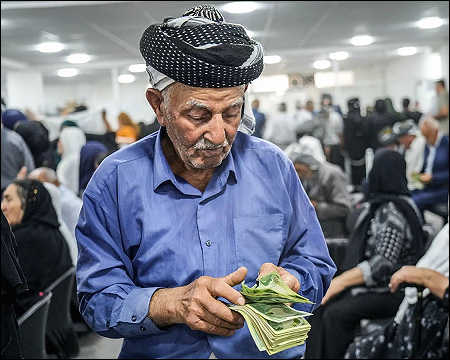
However, in Iraq and the Kurdistan Region, despite the growth in the number of banks and the expansion of financial services, a large part of the population still keeps their money outside the banking system.
This situation is not only a banking problem, but also the result of a combination of historical, legal, and political factors.
First, Iraq and the Kurdistan Region have gone through decades of war, political crises, government changes, and financial instability. These experiences have made many citizens believe that keeping money at home is safer than depositing it in banks.
Second, weak enforcement of laws. According to the Central Bank of Iraq Law No. (56) of 2004, the Central Bank is responsible for maintaining the stability of the banking system and supervising banks.
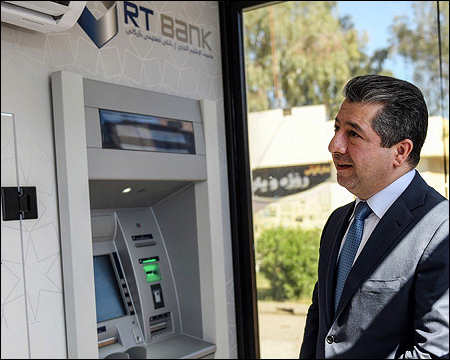
Also, the Banking Law No. (94) of 2004 defines the rules governing how banks operate and protects customers’ rights. However, in the perception of many citizens, there is still a gap between what the law states and how it is actually implemented.
Third, corruption and lack of transparency. No banking system can succeed without public trust. Whenever citizens feel there is weak oversight, corruption, or a lack of clarity in financial transactions, they tend to withdraw from the banking system.
Fourth, experiences of financial crises, especially in the Kurdistan Region. After the 2014 financial crisis and delays in salary payments, many citizens felt the weakness of financial institutions in terms of capacity and stability. Although banks were not directly responsible, this situation still had a negative impact on the level of public trust.
Fifth, weak banking culture. In most commercial and private transactions, cash is still dominant. This has limited citizens’ daily interaction with banks and reduced reliance on banking services.
From a legal perspective, protecting deposits and customers’ rights is the most important foundation for building trust.
Although the Central Bank of Iraq has taken various steps to supervise and regulate the banking sector, strengthening the rule of law, increasing transparency, speeding up the resolution of customer complaints, and developing an effective deposit protection system remain essential priorities.
What is the solution?

The experience of developed countries shows that trust is not built through orders or slogans, but through three main pillars:
- Strong law: A “deposit insurance” law must be enacted, as in many countries worldwide, to ensure that citizens are reassured that if a bank fails, their money will not be lost.
- Independent judiciary: To ensure the quick and fair resolution of disputes between customers and banks.
- Effective and transparent supervision: The Central Bank should publish regular reports on the condition and performance of banks.
In conclusion, restoring trust in banks is directly connected to restoring trust in state institutions in general. When citizens see that the law is applied equally to everyone, they will feel confident enough to take their money out from under their mattresses and place it in banks.
Sources:
– Central Bank of Iraq Law No. 56 of 2004.
– Banking Law No. 94 of 2004.
– Iraqi Constitution of 2005, articles related to the economy and private property.
– Central Bank guidelines regarding customer protection.
– World Bank and IMF reports on banking sector reform in Iraq.
This article was originally published in the Kurdish language in Awene Newspaper on June 1, 2026.
The opinions are those of the writer and do not necessarily represent the views of iKurd.net or its editors.
Copyright © 2026 iKurd.net. All rights reserved.
Related posts:
 Saddam Hussein was a Friend to the West
 The Dangers of Banning Cash: A Threat to Financial Freedom
 Iraqi Kurdistan: The Emperors’ New Clothes
 Iraq – The Cynical Swindle
 The Capture of The State of Iraq
 Saddam Hussein’s Enemies: Paving the Road to the Invasion of Iraq
 Under the Pillow Economy: Iraq’s Crisis of Trust in Banks
 Iraqi Kurdistan – “Sold Out!” – Part II
 Business with ISIS – Updated
 Iraqi digital currency push grows amid salary delays and cash crisis